Quick Verdict
We’ve spent roughly 100 hours combined across Early Access and 1.0 with Soulmask, and our b iggest takeaway is that it’s one of the few crafting survival games we genuinely enjoyed, but also one of the easiest to walk away from. Developer CampFire Studio has clearly put in the work since we wrote our first impressions back in June 2024, with much-improved tribesmen AI, a building overhaul that meaningfully expands creative freedom, and the long-overdue ability to craft directly from storage chests. The Valheim-like core loop of building, exploring, and toppling bosses still works, and there’s a unique sense of place to the jungle that stands out in the genre.
The problem is that the very systems Soulmask is built around end up trivializing it. Companions are so capable that combat largely consists of throwing them at a boss while you stand back with a bow. The tribe reputation grind that gates progression turns into camp farming for tiny rep payouts, and after a while, every new biome and crafting station starts to feel like more of the same. We were originally excited to dive into the free Shifting Sands DLC after rolling through the base game, but burnout caught up before we got there. We might revisit Soulmask down the line, but for now, we’ve had our fill.
Welcome Back to the Jungle
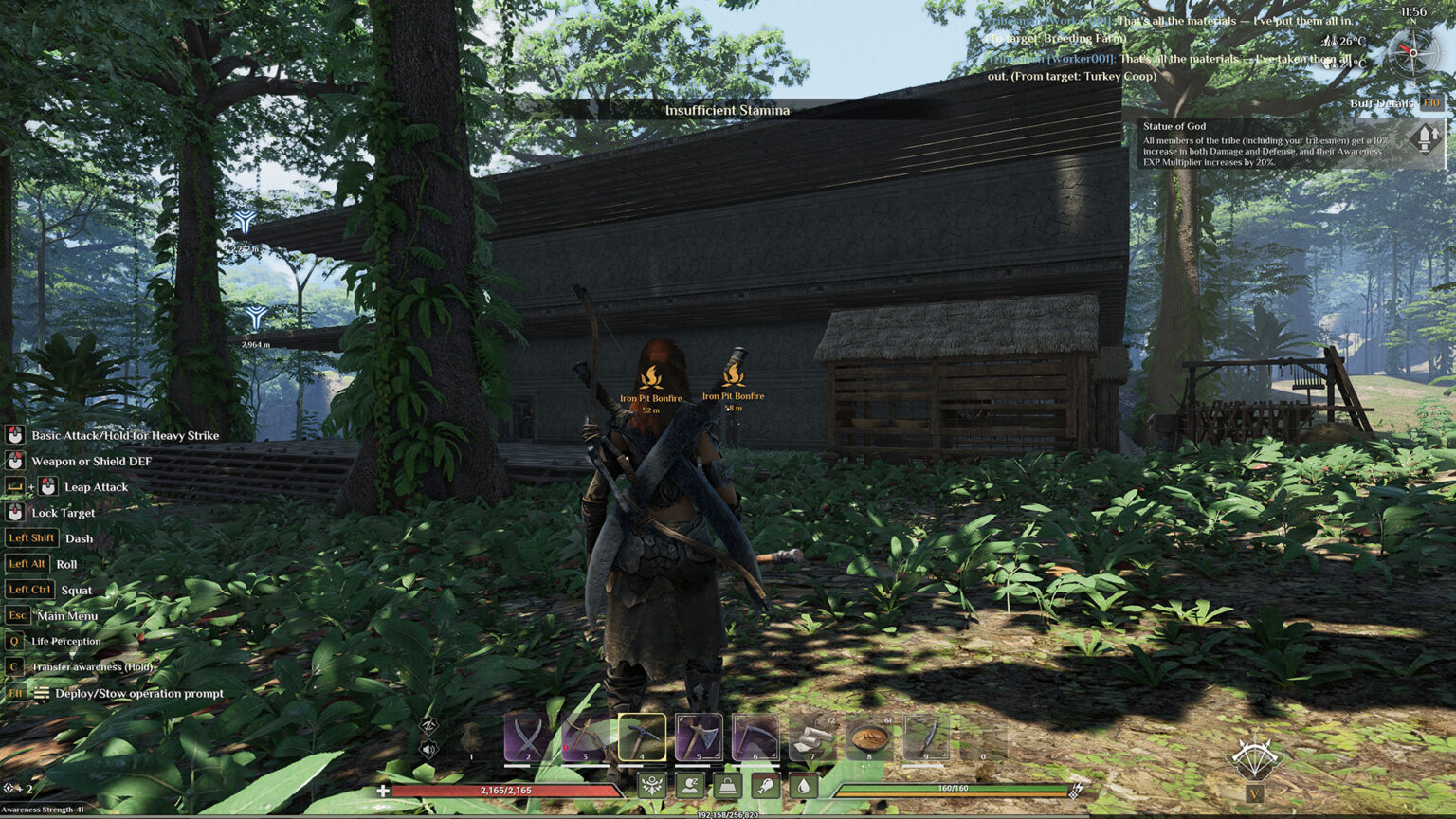
When we wrote our first impressions of Soulmask in June 2024, we ended on a hopeful note. The foundation was there for a great game, the developer just needed to streamline the tedium and address some persistent design problems. We also explicitly said we had “little hope for the janky combat,” which felt like a signature trap of the crafting survival genre. Two years and a free Shifting Sands DLC launch later, Soulmask 1.0 is here, and we sunk roughly 80 more hours into it as a co-op group to see what’s changed.
The short answer is that a lot has, but the core design philosophy hasn’t shifted as much as we hoped. With over 1,500 additions and improvements over the past two years according to the studio’s own messaging, you can feel the work in the hundred-or-so quality-of-life touches scattered throughout. Crafting from chests works now, which on its own would have been a good day in 2024. The building system is genuinely better. The new in-game encyclopedia makes it much easier to figure out what materials you need for what without alt-tabbing to a wiki. None of these are headline features individually, but together they take a lot of the friction out of the moment-to-moment experience.
What hasn’t changed is that Soulmask still wants you to play through your tribesmen rather than as a player character, and that philosophical choice continues to clash with how the rest of the genre conditions you to play. There are also some baffling holdovers we’ll get into later, but the overall shape of the game is still very recognizable from where it was in 2024. Whether that’s good or bad depends on how much you bought into the original premise.
Solid Foundation
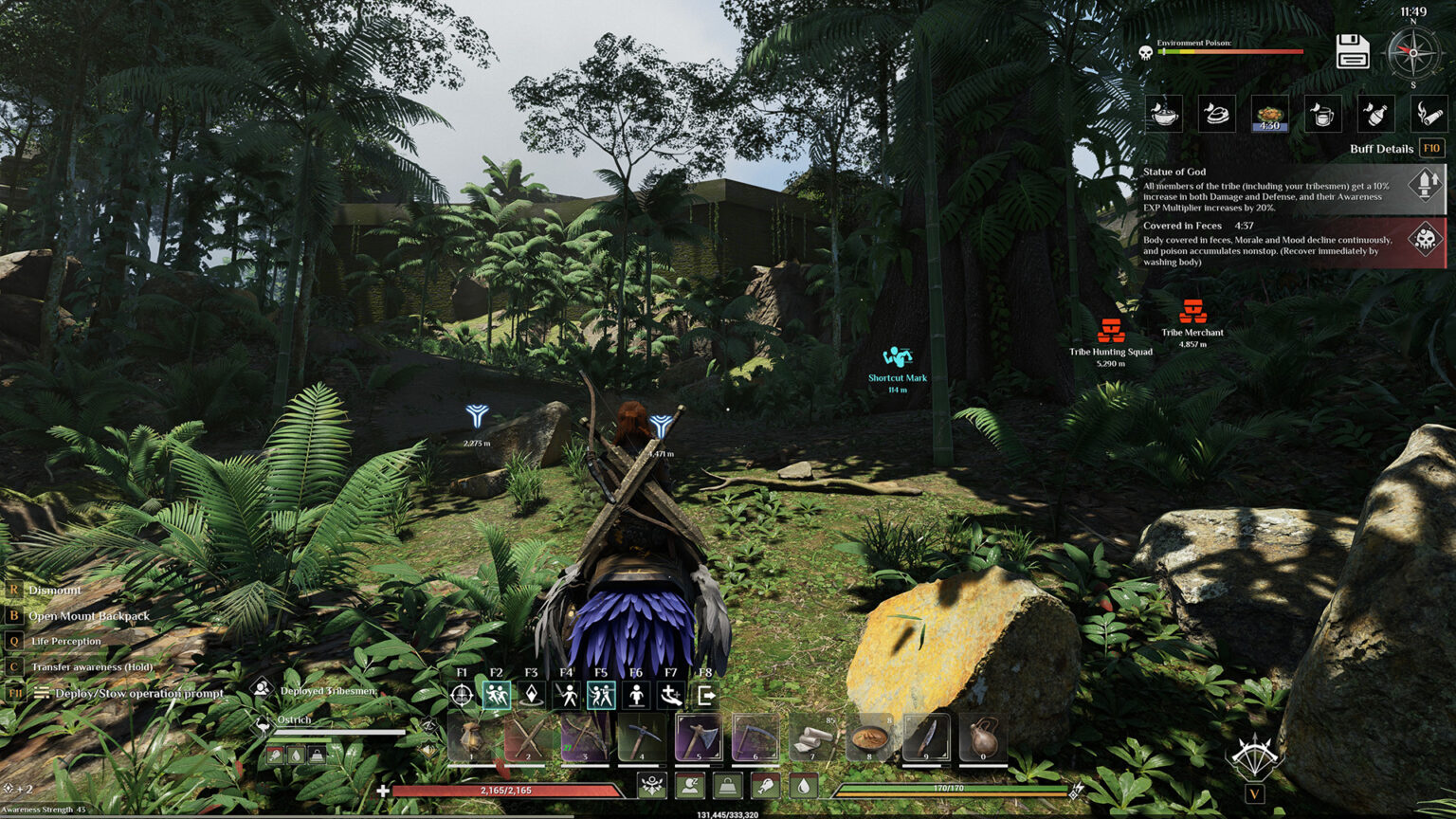
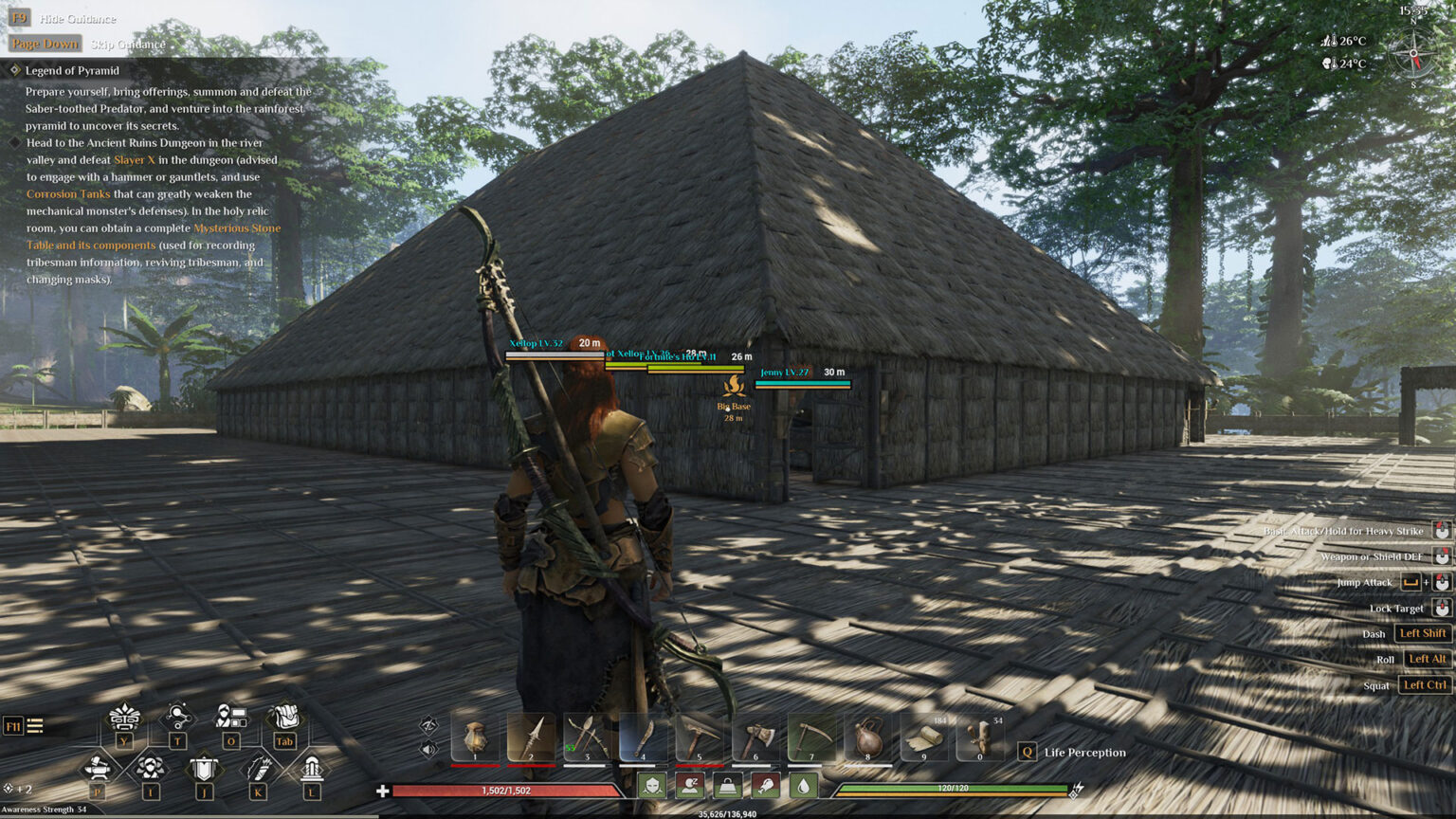
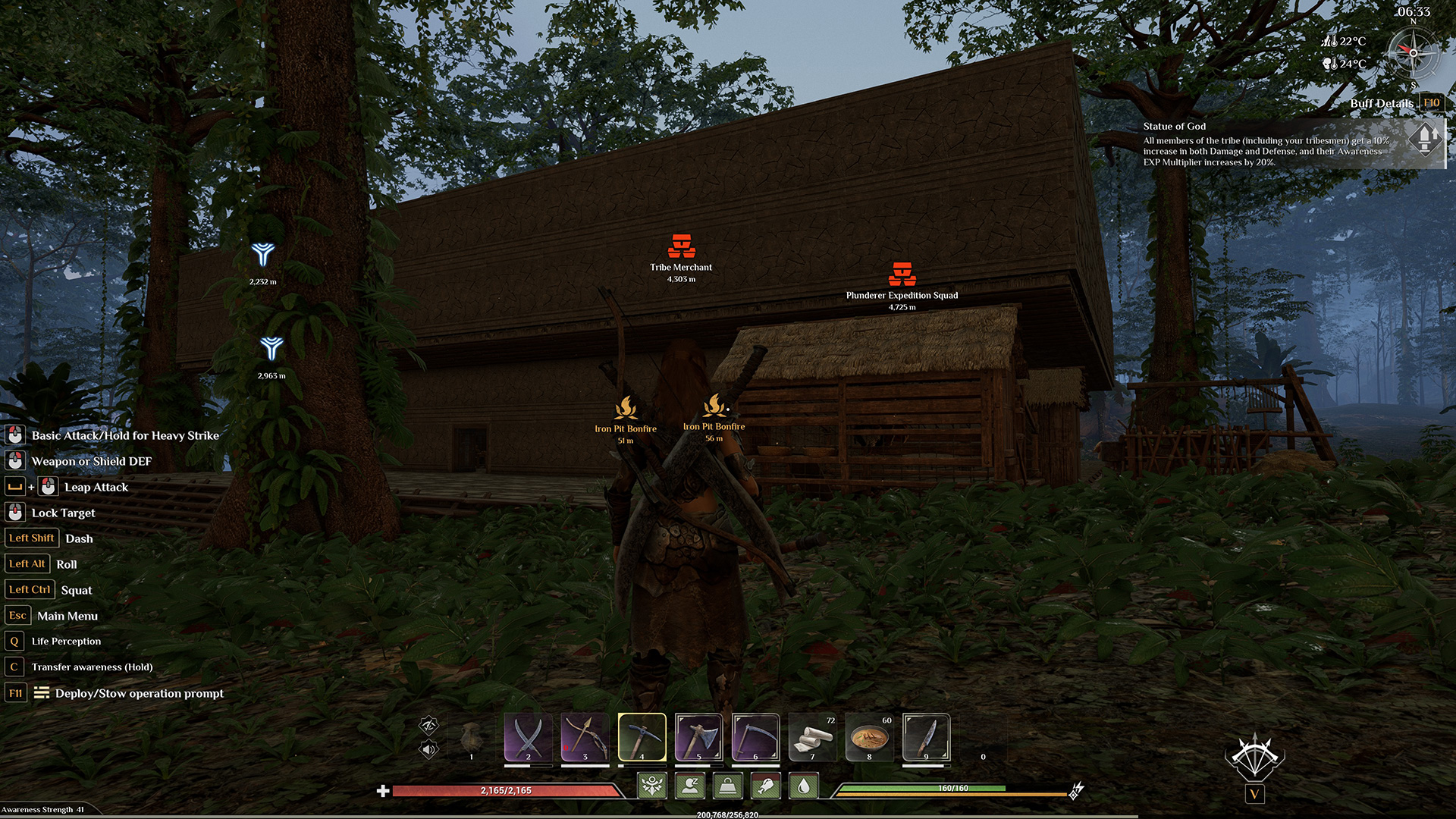
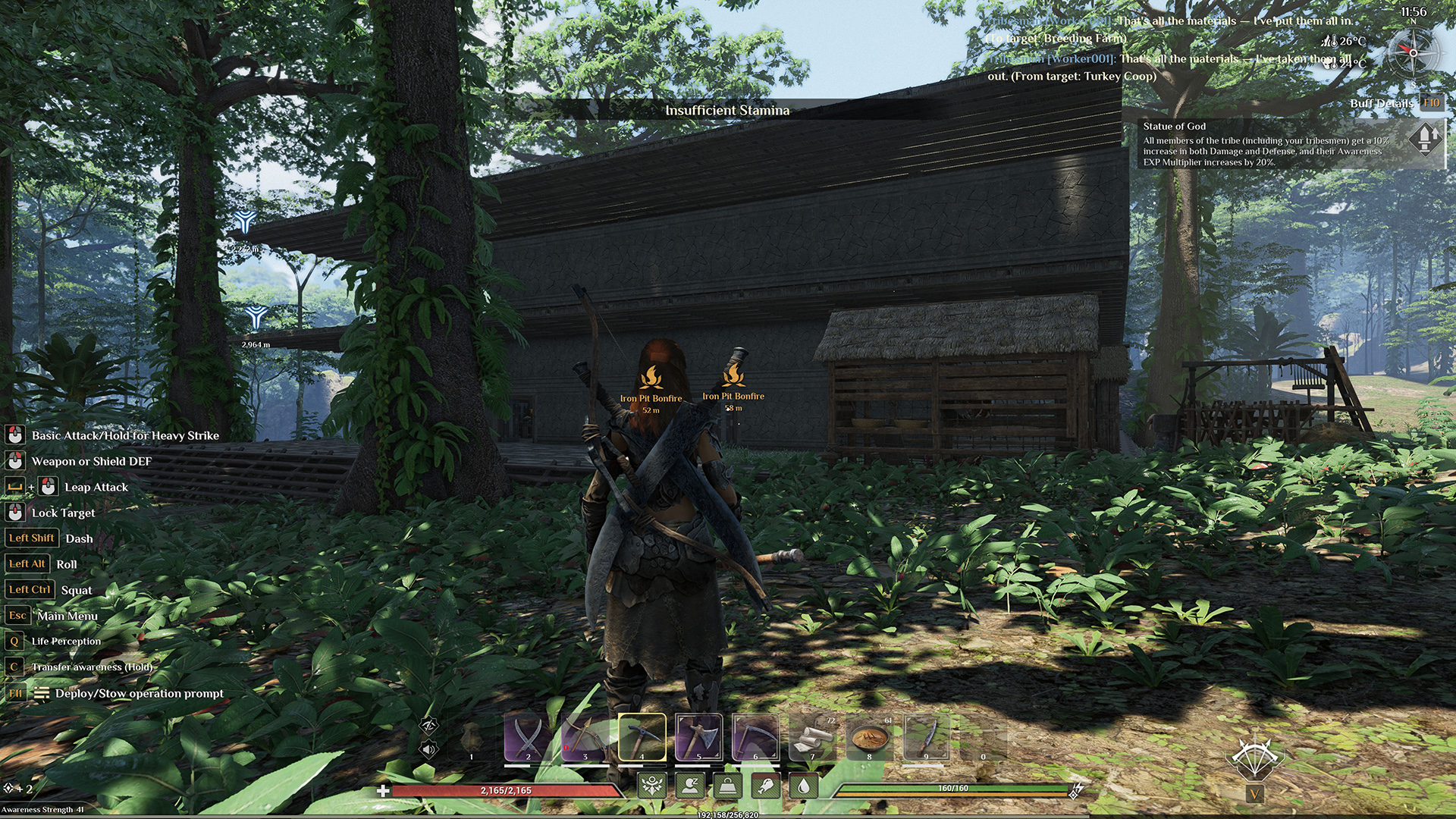
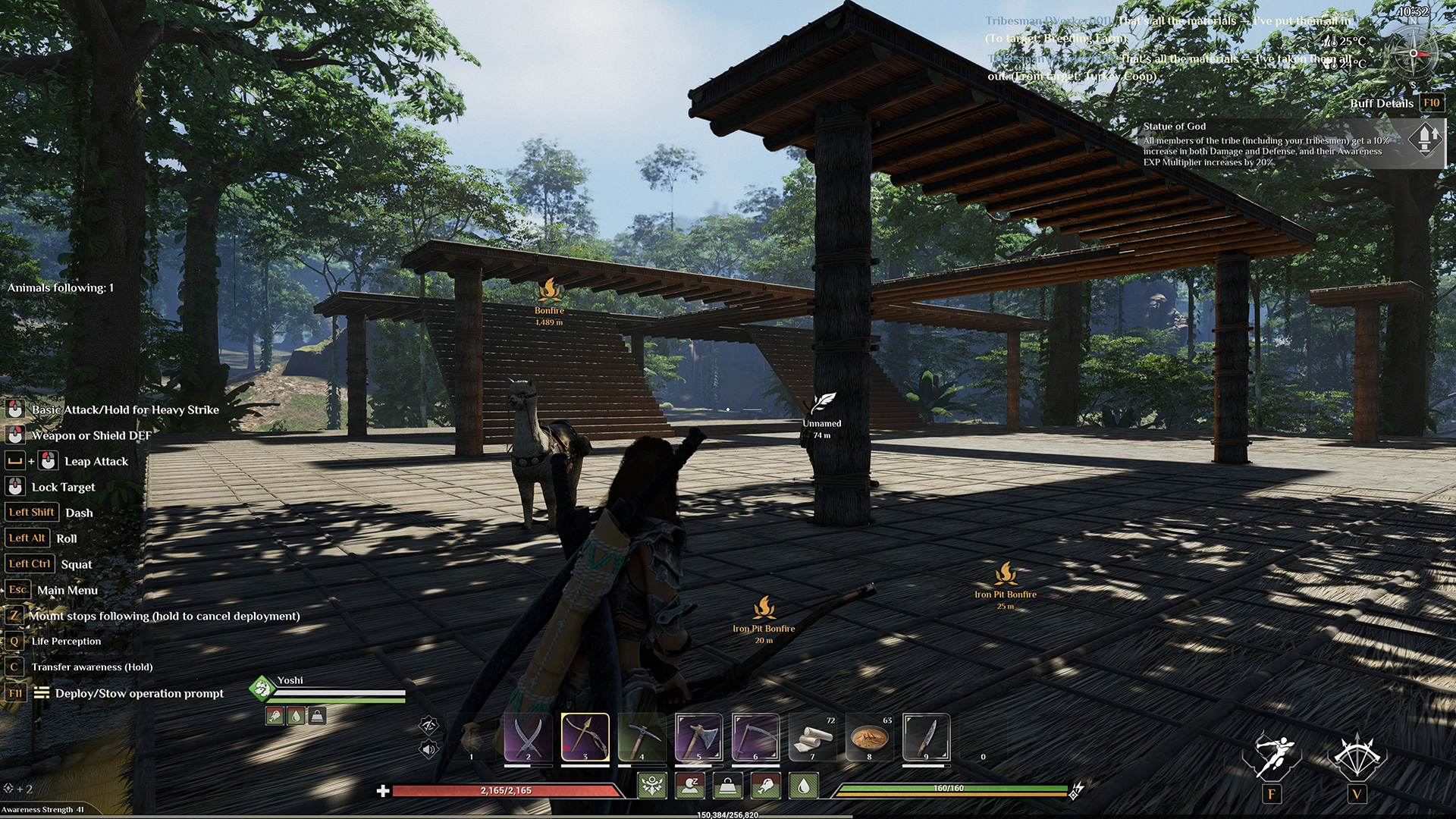
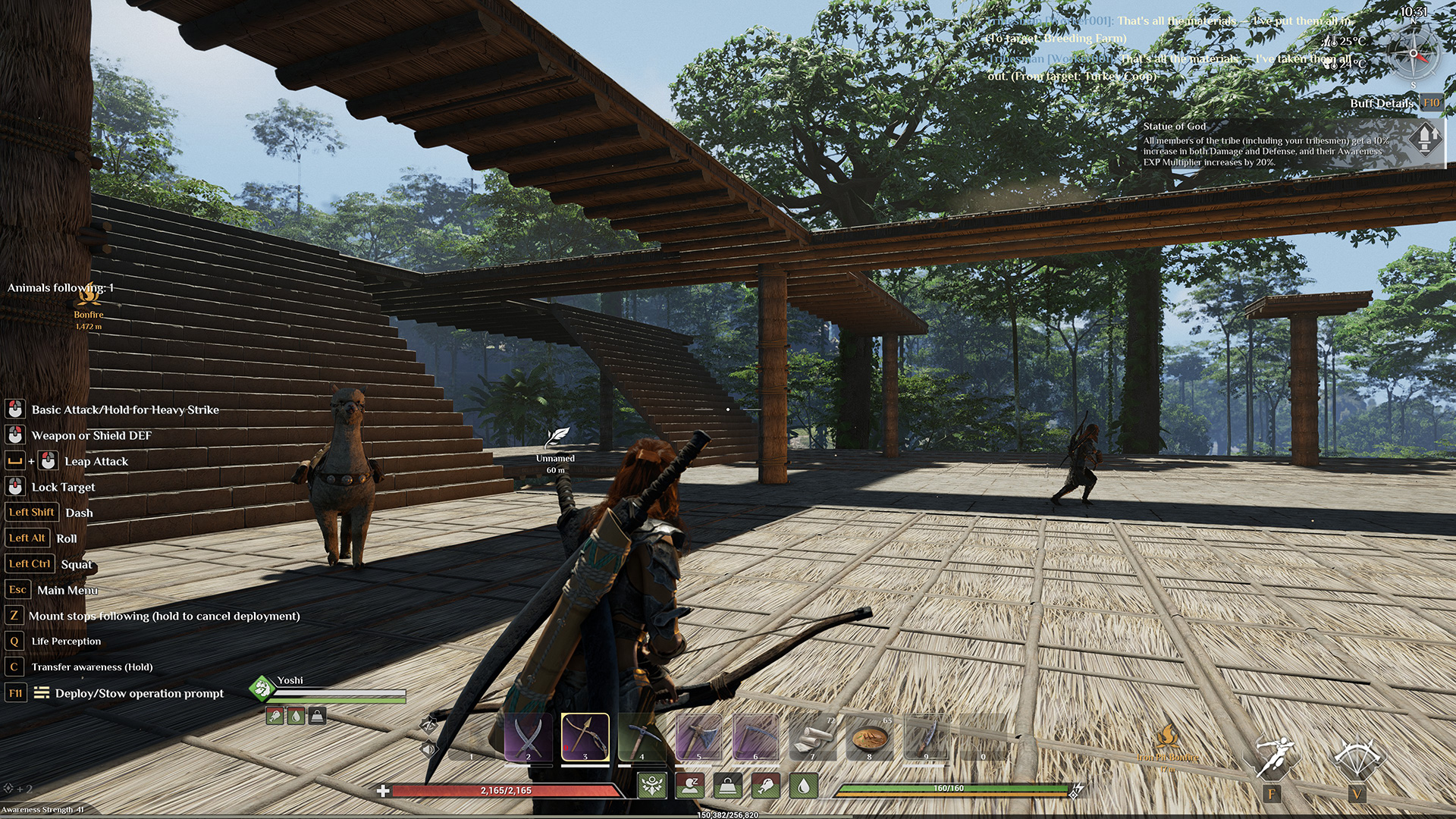
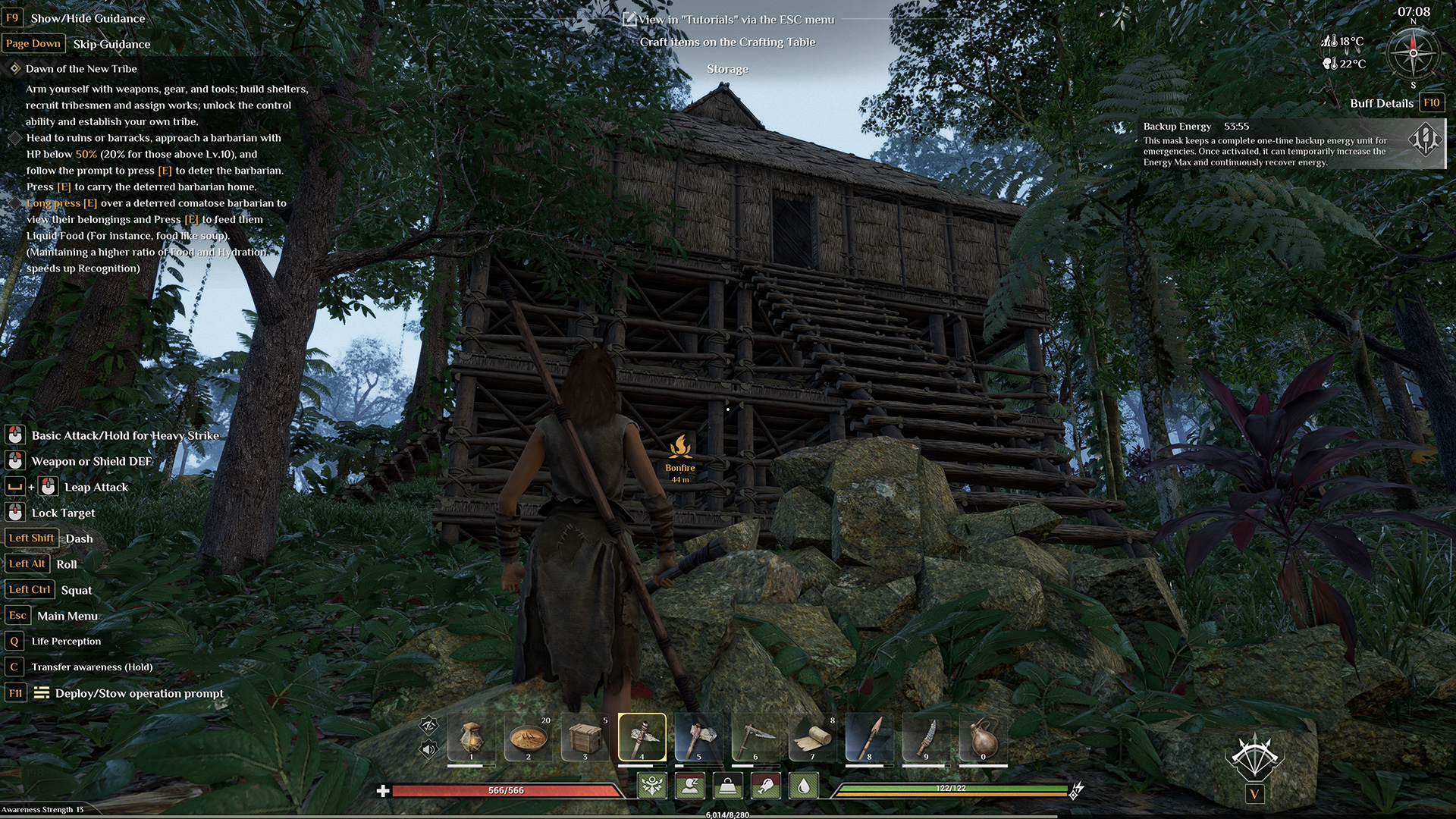
Where the 1.0 update lands the cleanest is in the building system. The overhaul gives you a lot more freedom in how you place and rotate pieces, with auto-alignment that takes the fiddliness out of getting walls and floors to snap together properly. We ended up putting together a three-story base that we genuinely enjoyed designing and building out, but overall the base-building experience is similar to other games. AI pathing within the base also feels noticeably better, with tribesmen actually navigating multi-story structures sensibly instead of getting stuck on stairs. If you’re someone who plays crafting survival games primarily for the building, you’ll have a decent enough time with Soulmask.
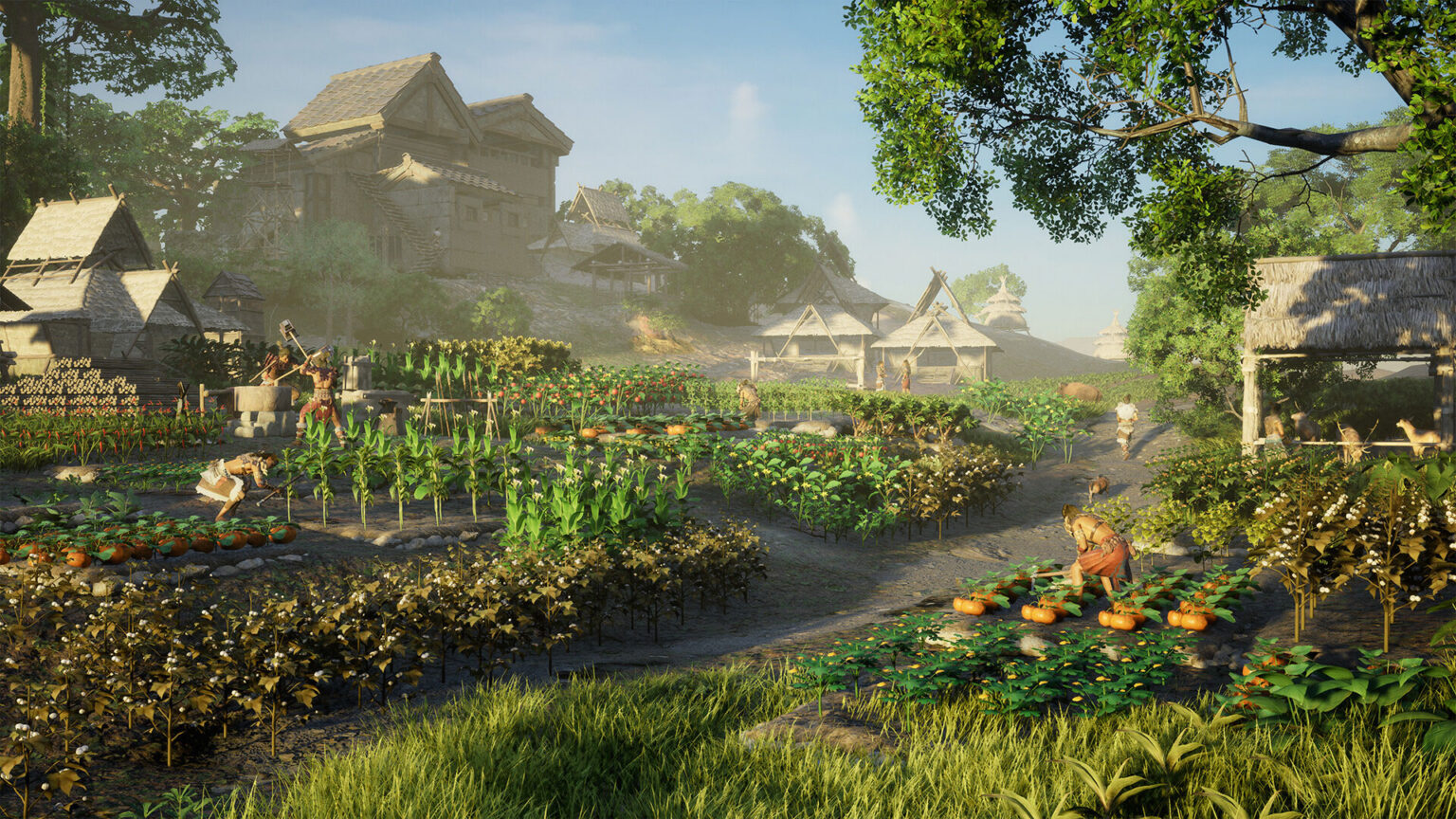
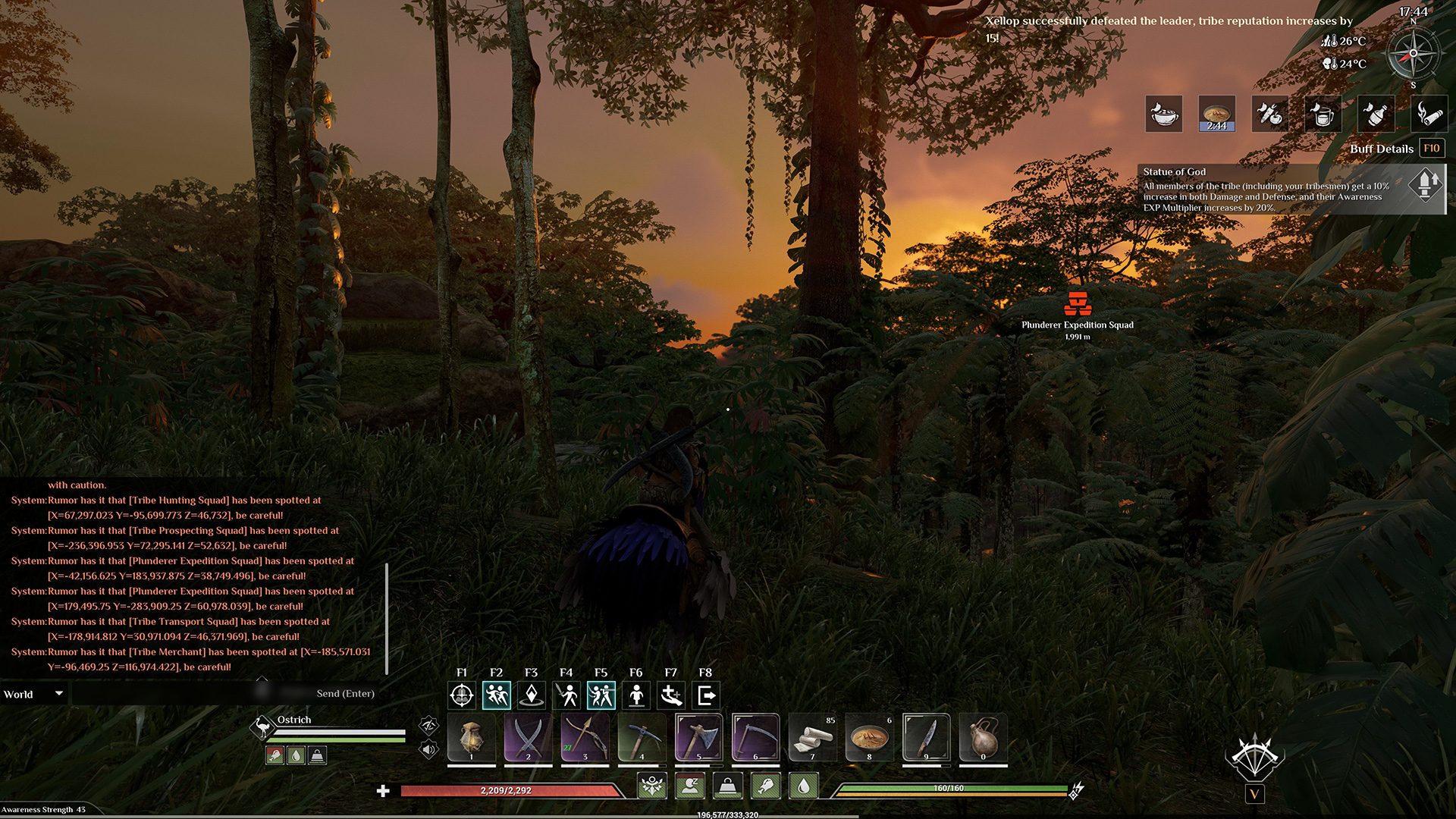
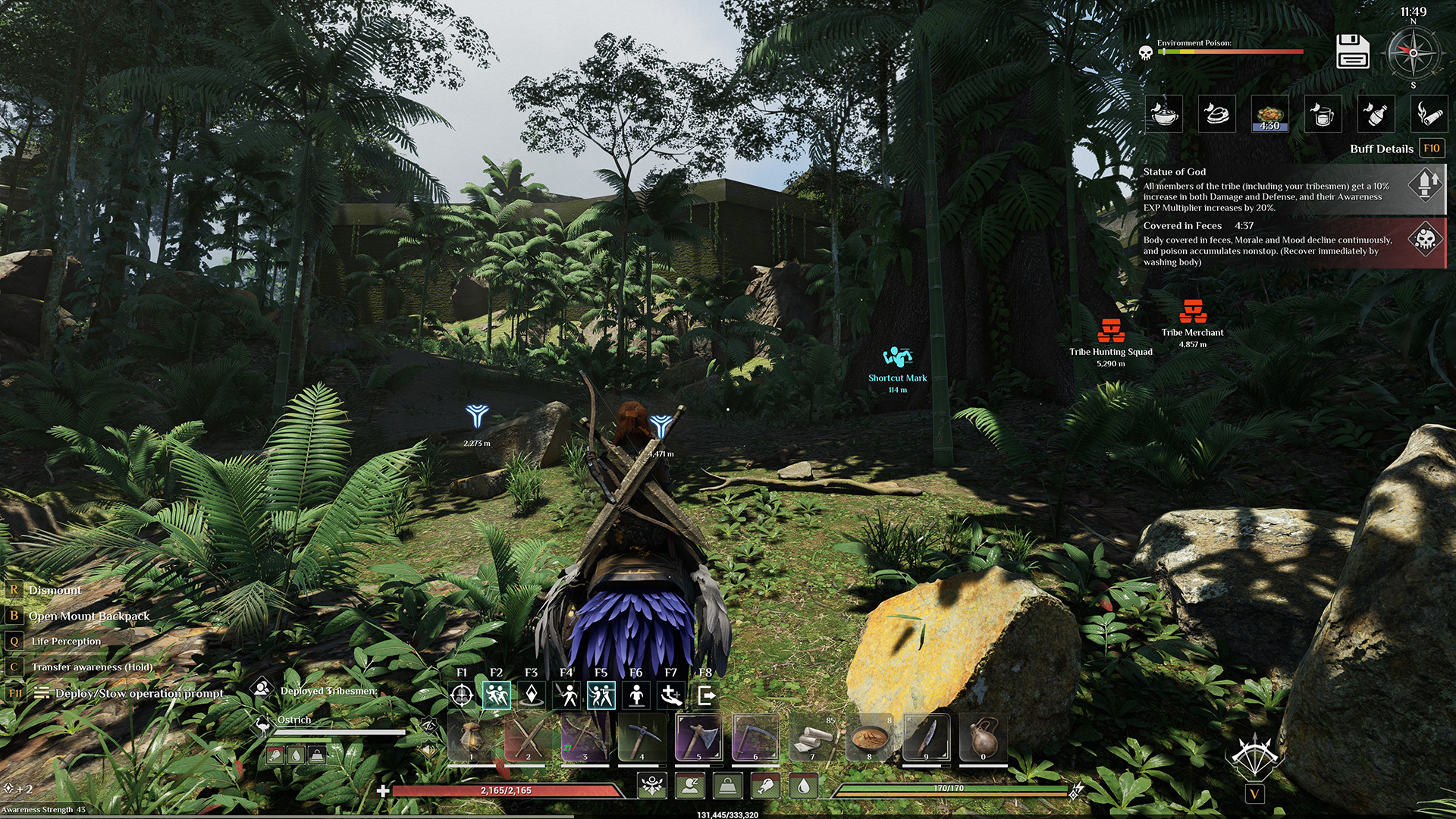
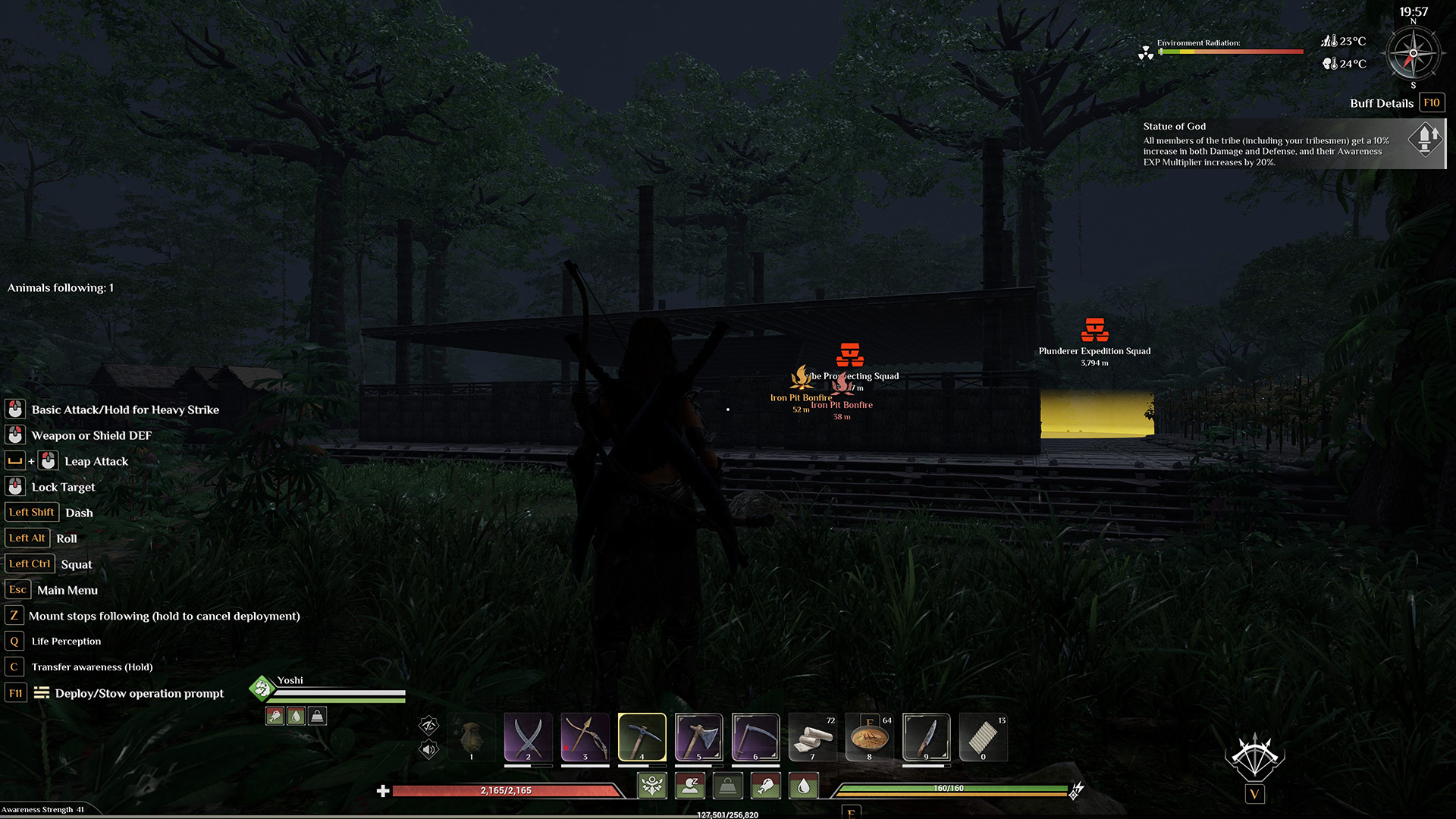
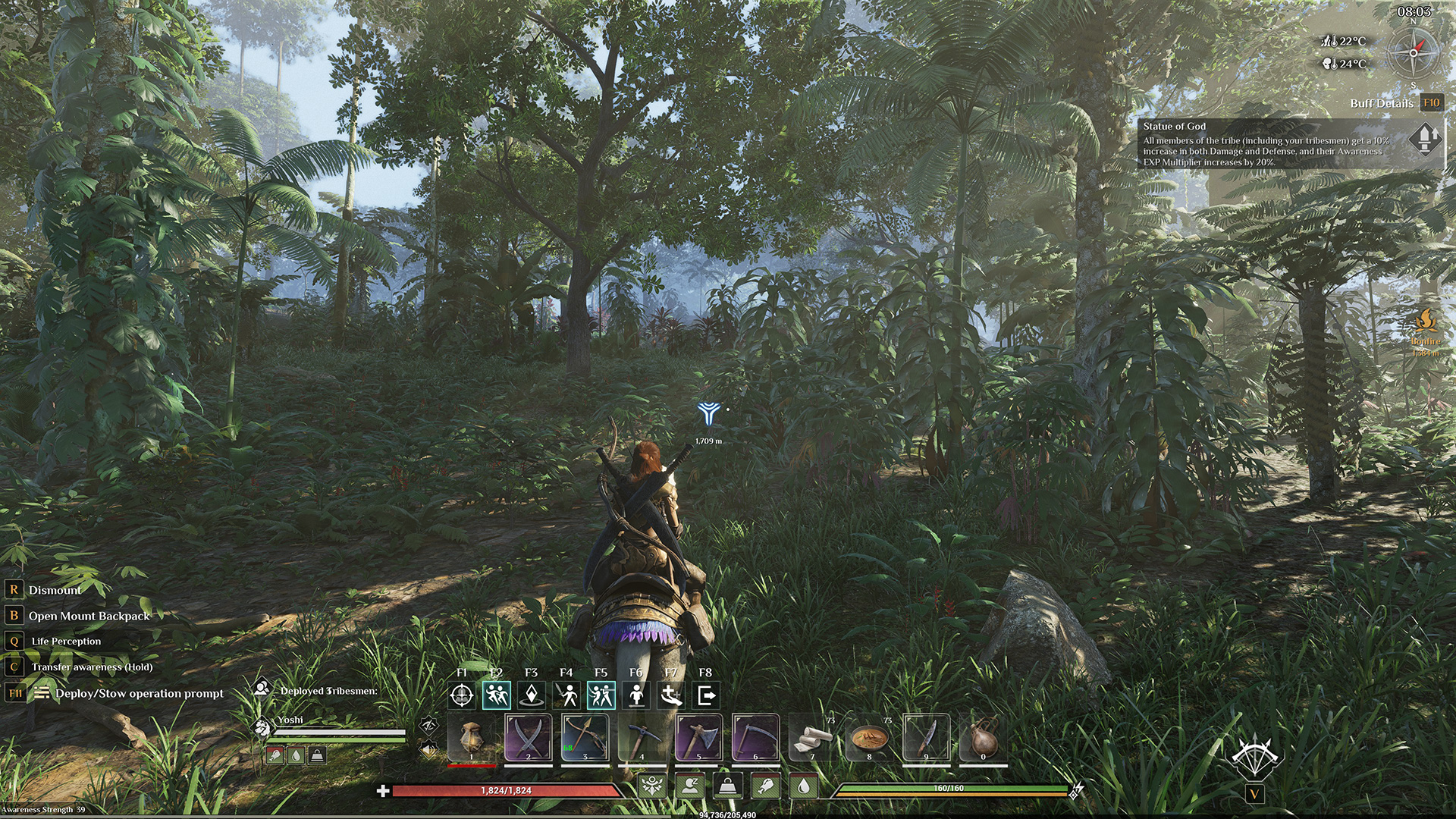
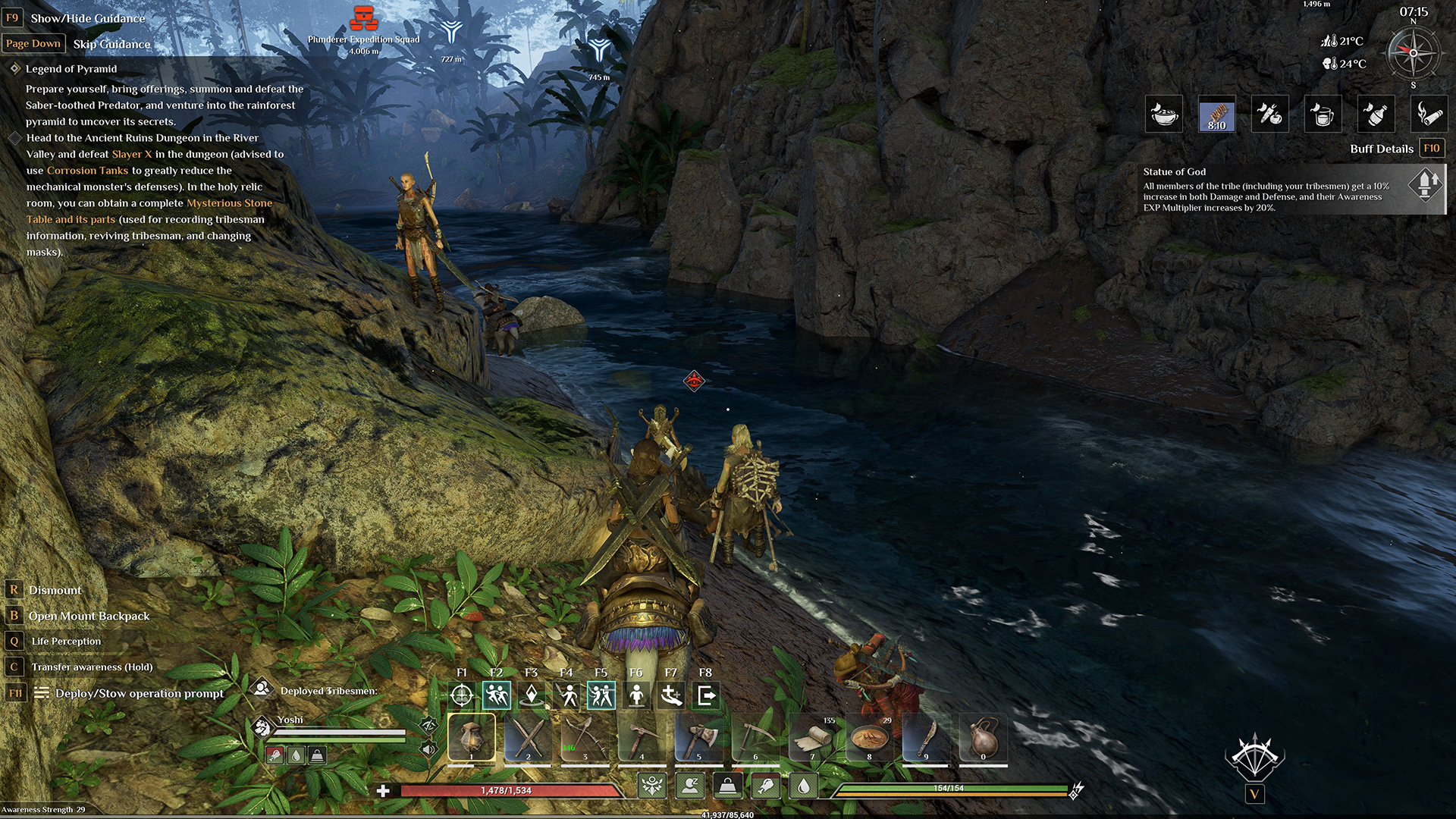
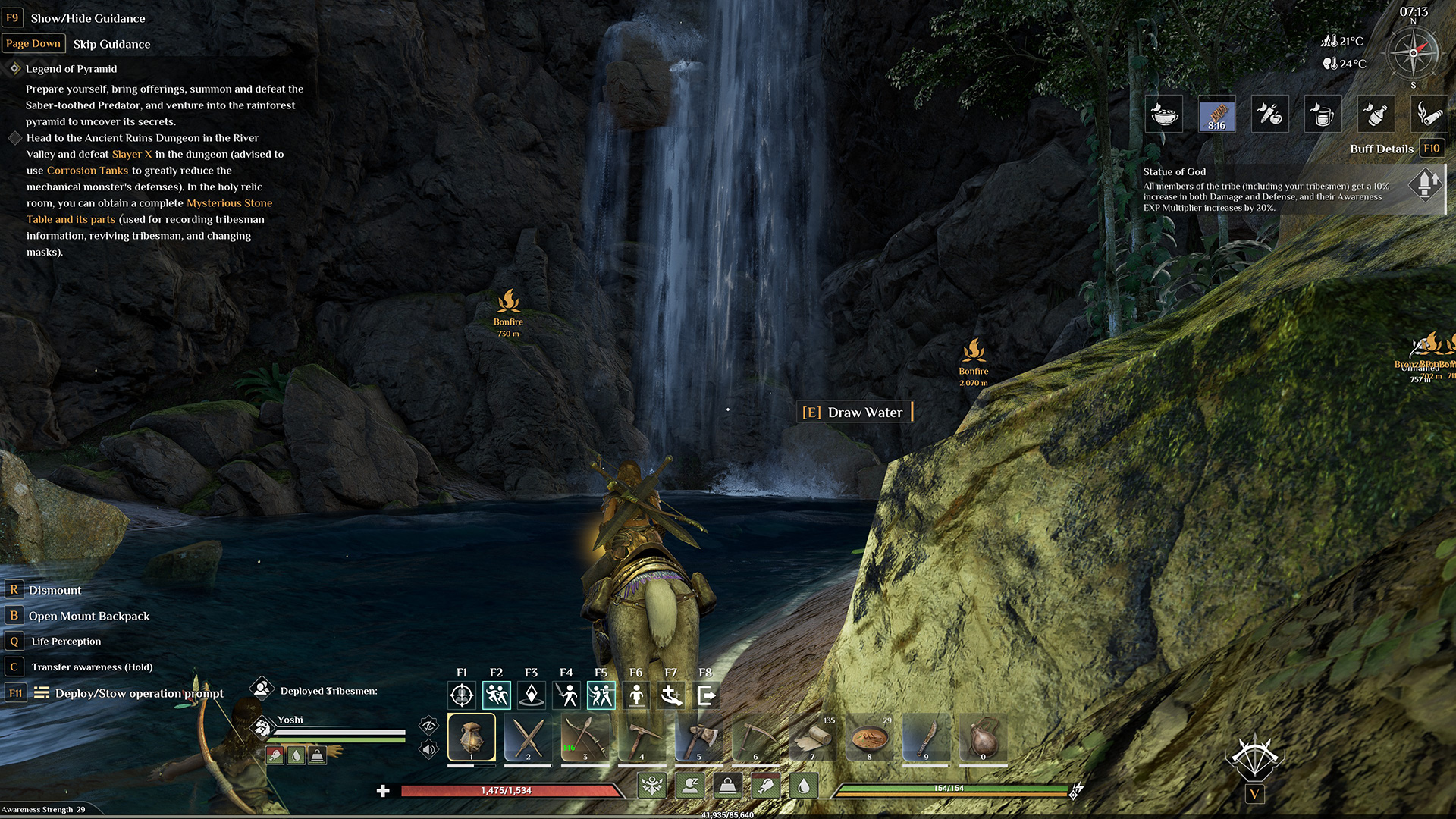
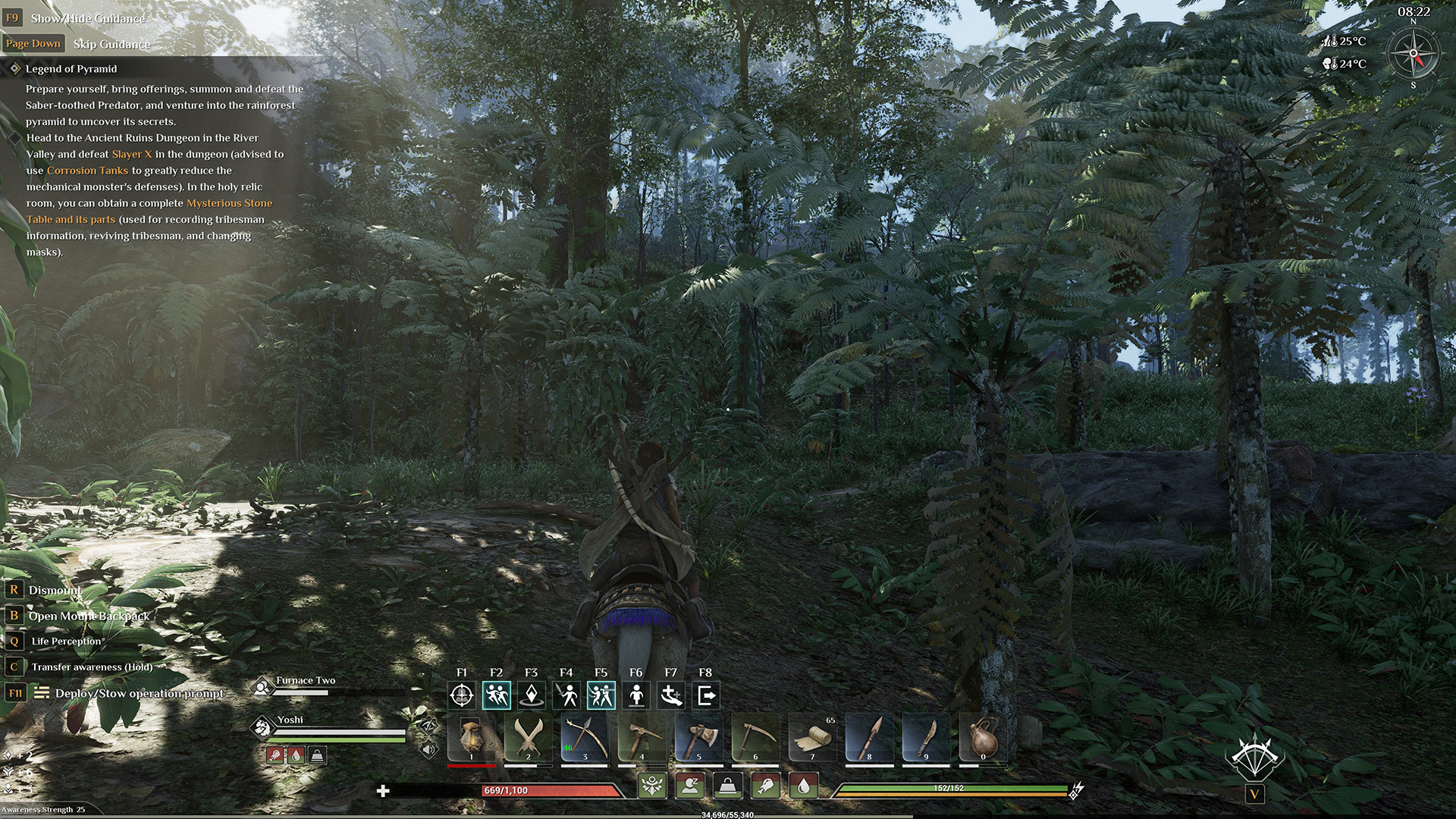
The world itself is still a real strength. Soulmask’s jungle setting has personality, with weather effects and lighting that hold up against most other games in the genre. Progression follows the Valheim playbook closely, with materials gating boss summons and bosses gating the next tier of crafting and abilities, and that loop is still satisfying. Each new biome introduces new materials, enemies, and challenges, and the game is generous with the size of its map.
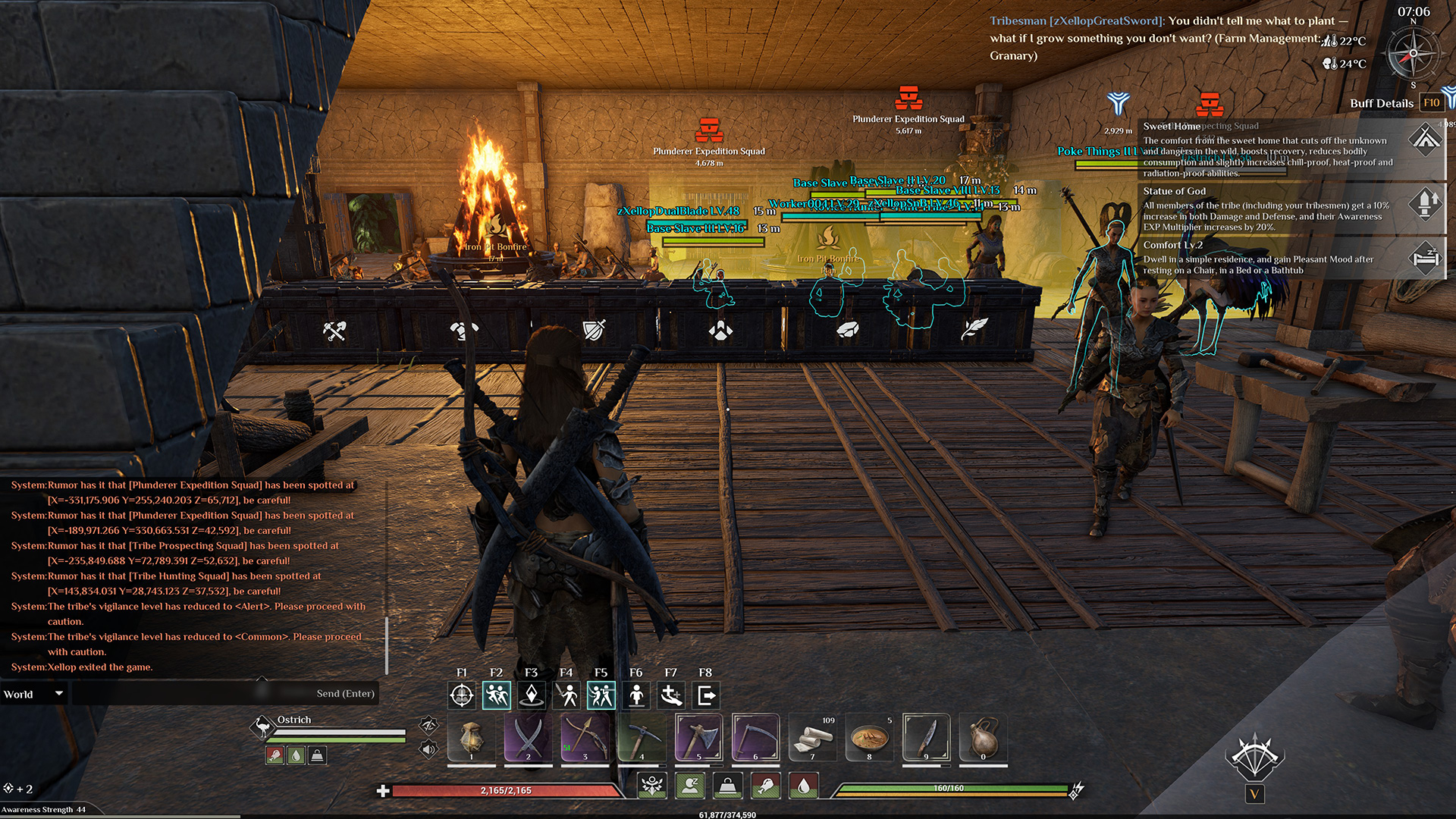
The tribesmen AI is also meaningfully smarter in 1.0. We played Tribe Mode (which is closest to the default Soulmask experience and didn’t bother with Survival or Warrior modes), and the new task assignment system lets you specify what each tribesman handles. Setting up production chains feels less like wrestling with a buggy job board and more like running a small village. The new in-game encyclopedia made our lives easier as well. Being able to look up what materials and stations a recipe requires without leaving the game eliminated one of the most consistent annoyances of the genre.
Camp Fatigue
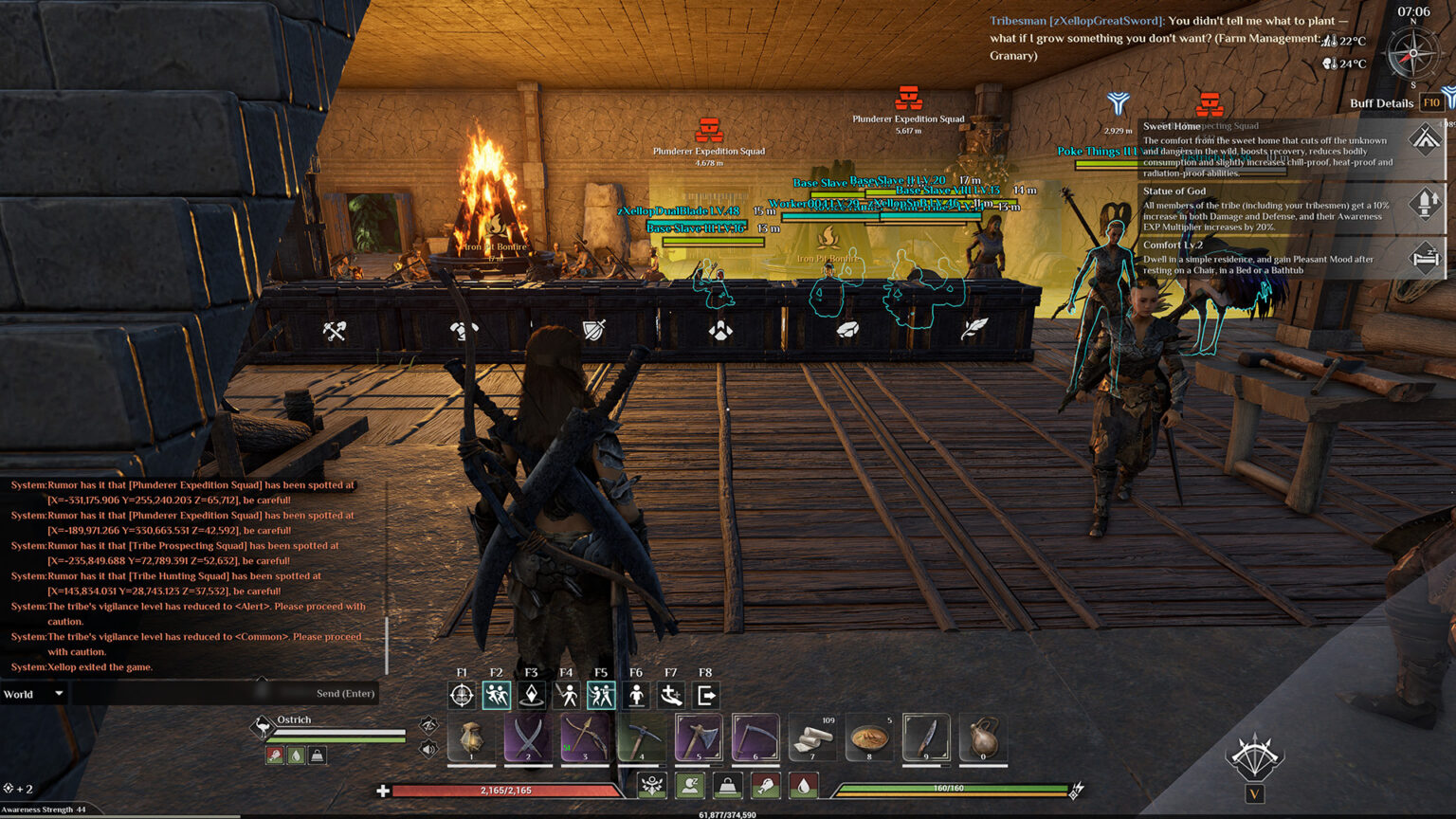
The tribe reputation grind is where things start to fall apart. As in Early Access, your base requires a bonfire to function and keep from degrading, and you’ll need to upgrade it as you progress. The catch is that higher-tier bonfires are gated behind tribe level, and tribe level is gated behind tribe reputation, which you grind by clearing camps and killing leaders and elites. The rep payout for these kills is small, the camps respawn, and you end up doing the same loop over and over to push your tribe to the next level so you can unlock the next thing you need.
This grind is the defining experience of the back half of Soulmask. Every new biome we unlocked, every new crafting station tier we wanted to access, ran into the tribe level wall. The math is bad enough that even with a competent companion squad and a coordinated co-op group, we were spending hours farming camps for incremental rep instead of doing literally any of the more interesting things the game offers. We’ve played enough crafting survival games to know that grinding is part of the genre, but Soulmask’s specific implementation here feels designed to pad playtime rather than to gate progression in a meaningful way.
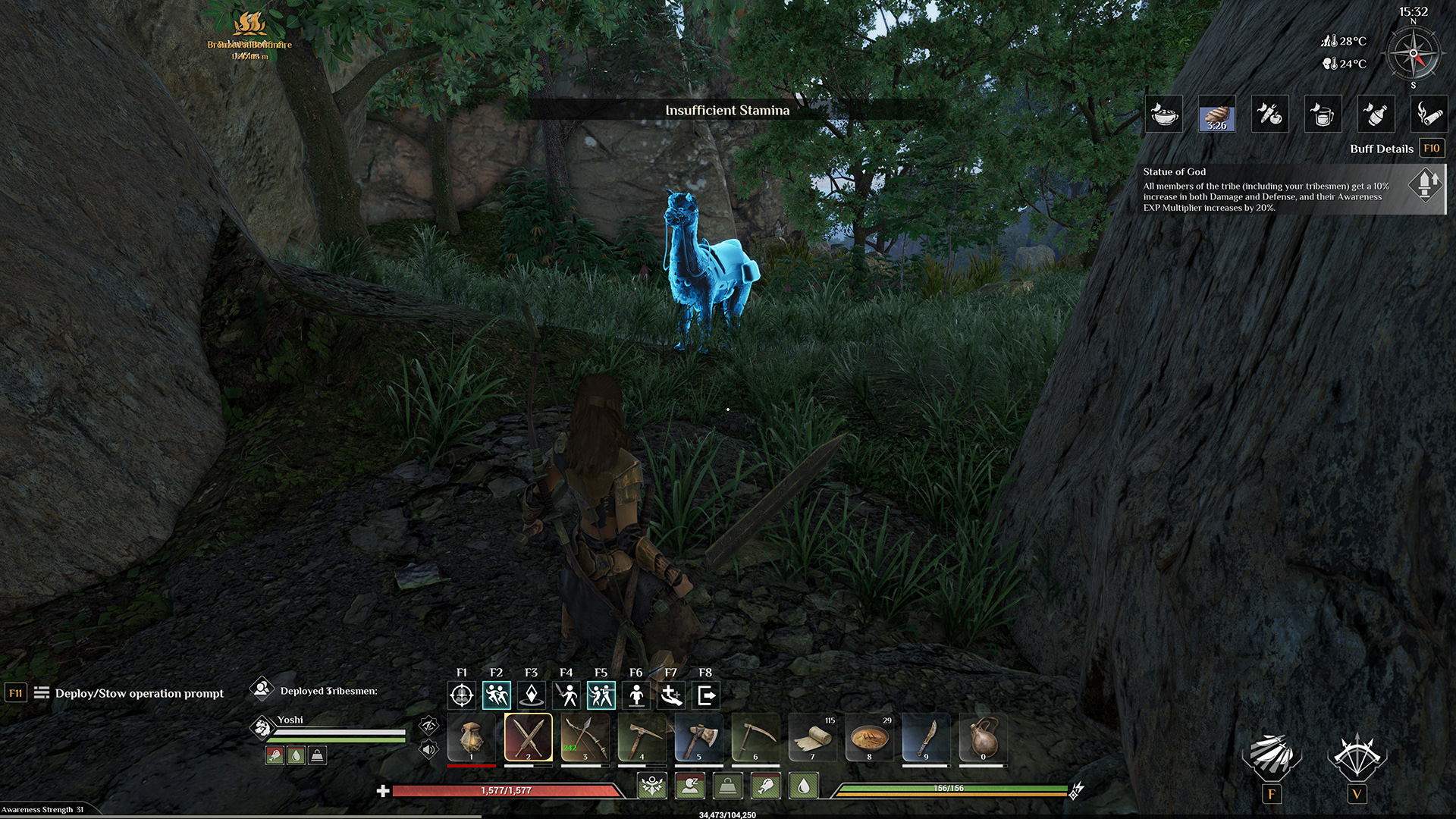
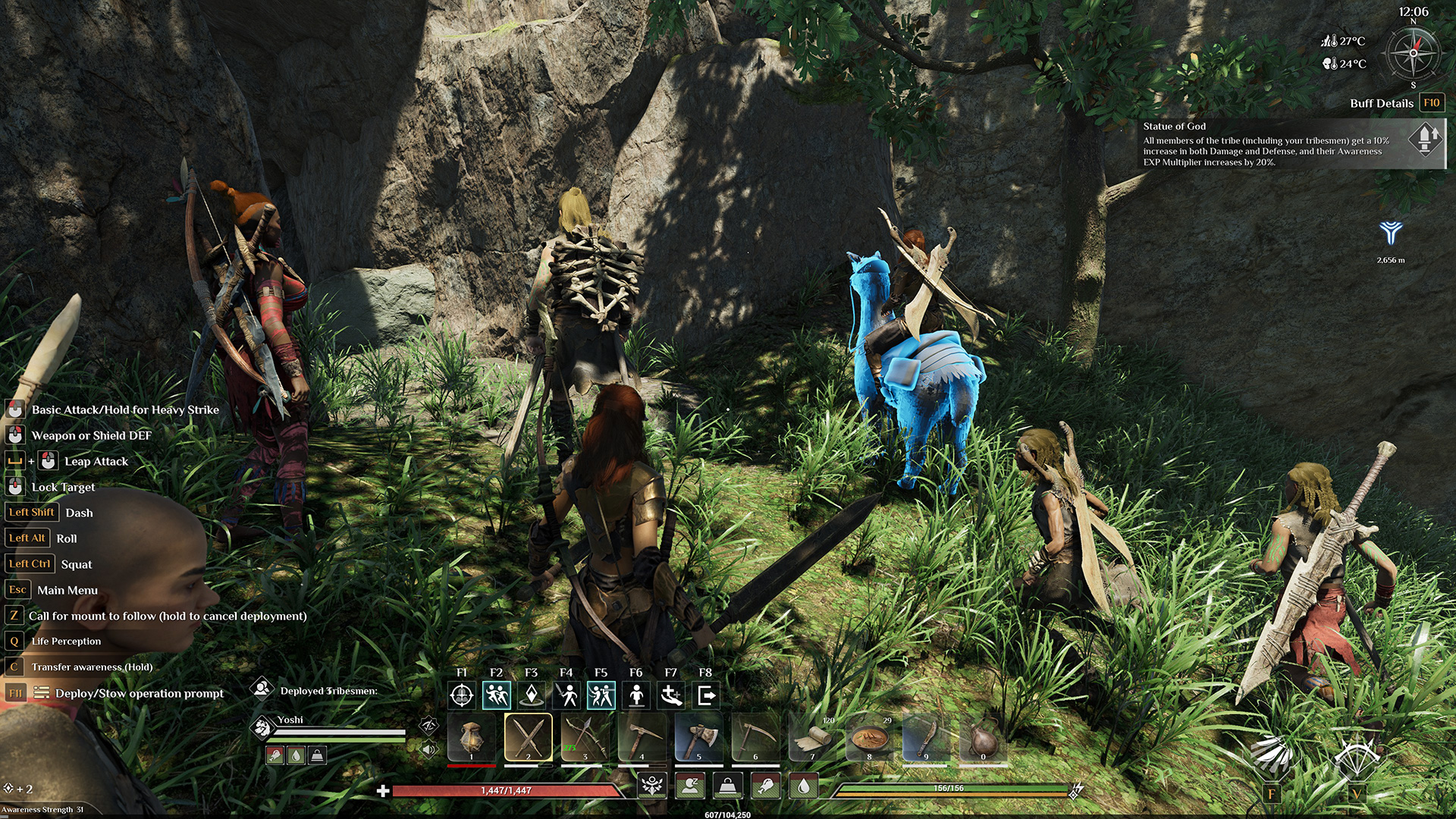
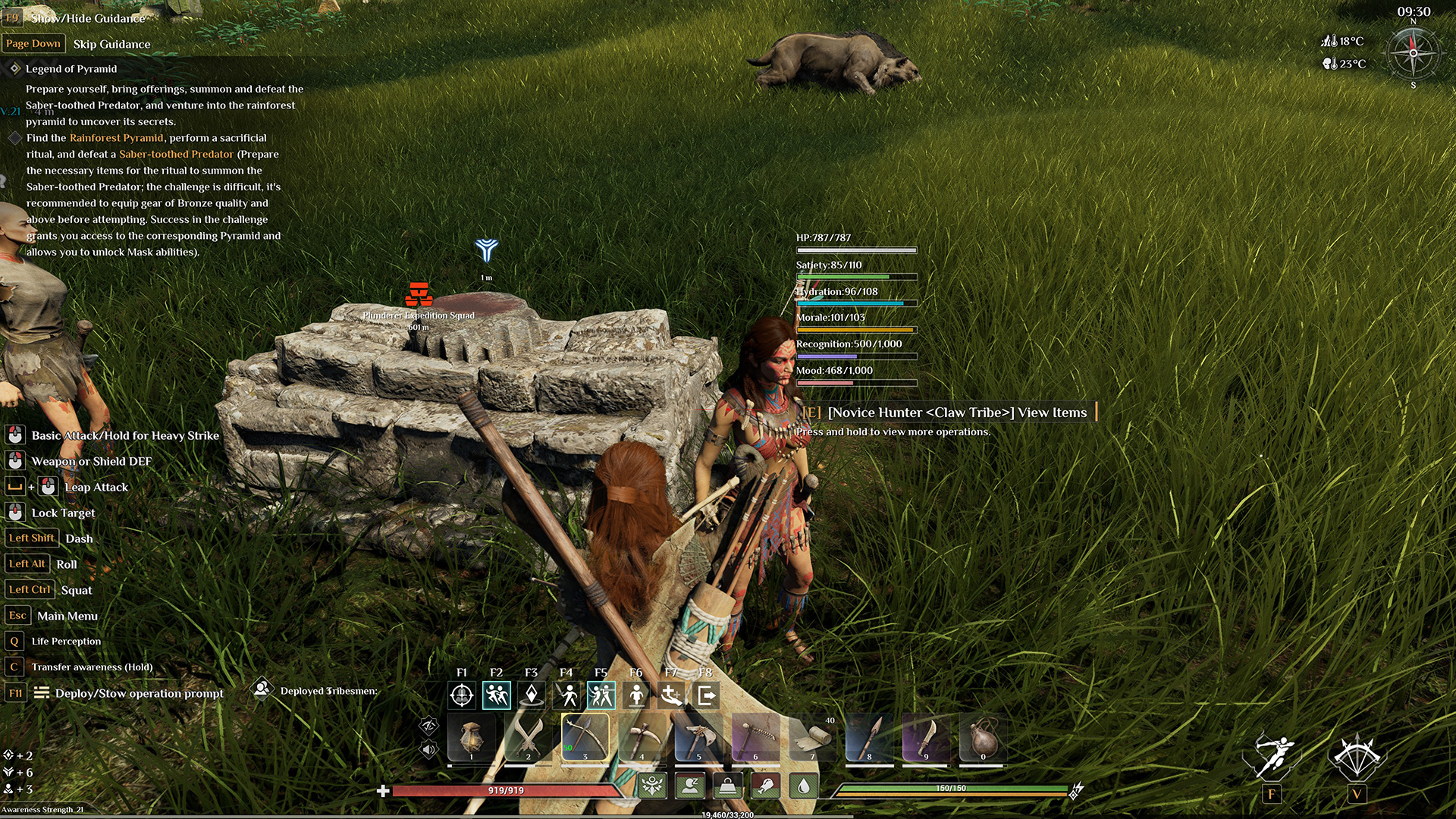
The other half of the grind is just getting tribesmen home in the first place. Soulmask wants you to build out a base with fifty-plus companions handling automation, but the process of actually recruiting that many feels like a chore long before you hit the goal. You’re capped at three at a time on foot, and while certain mounts like the llama can carry more, the entire process is the same tedious loop: scout, identify, knock out, convert, walk back, deposit, repeat. After enough trips, recruitment stopped feeling like building up a thriving tribe and started feeling like running a delivery service. The novelty of having a bustling village automating your production wears off fast when you’ve spent hours of your playtime just getting them there.
We had been excited to roll into the Shifting Sands DLC after wrapping the base game, but once burnout set in, the thought of doing it all again with airships and Egyptian masks just wasn’t appealing. Maybe we’ll come back to it someday.
Hands Off
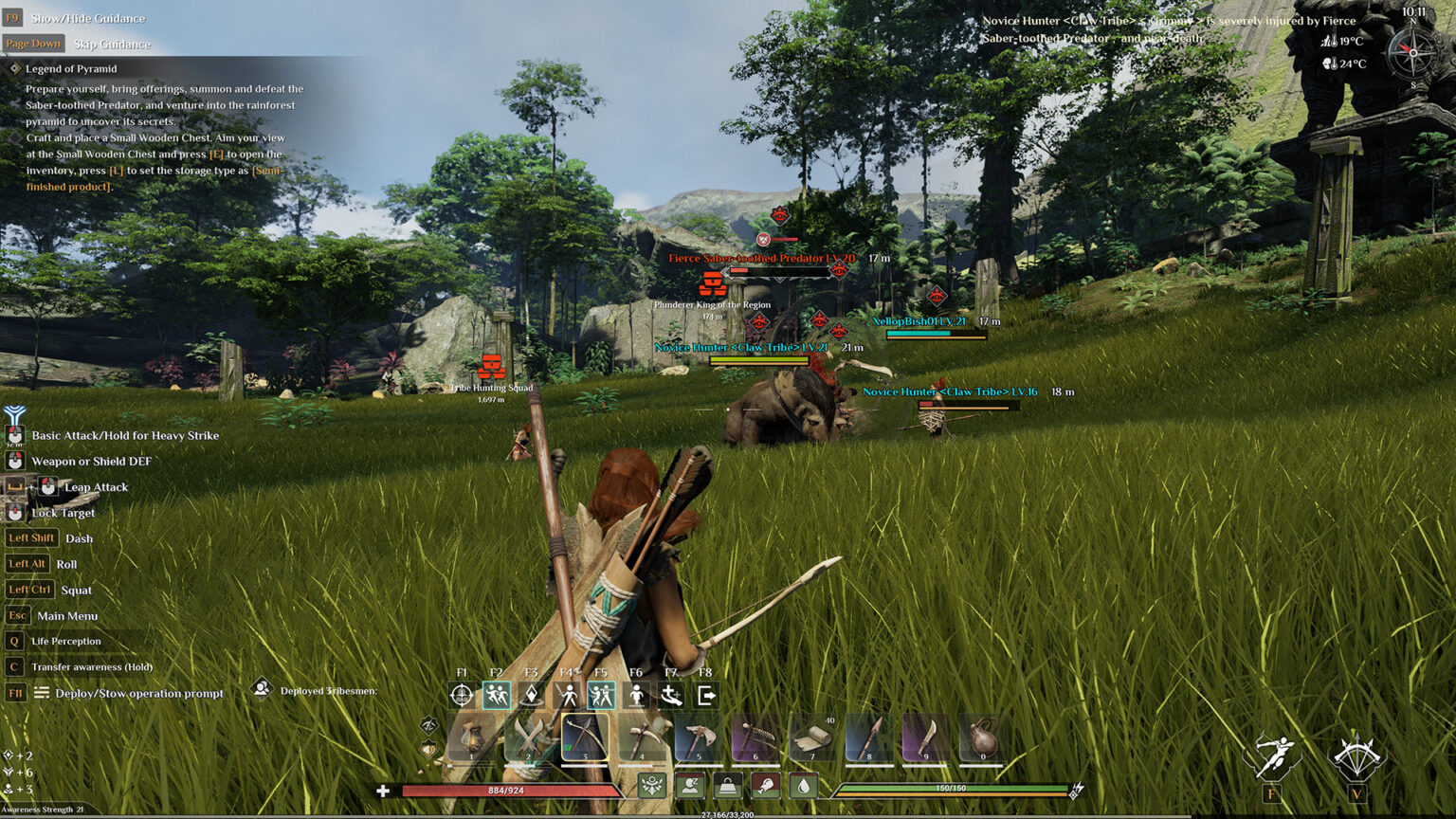
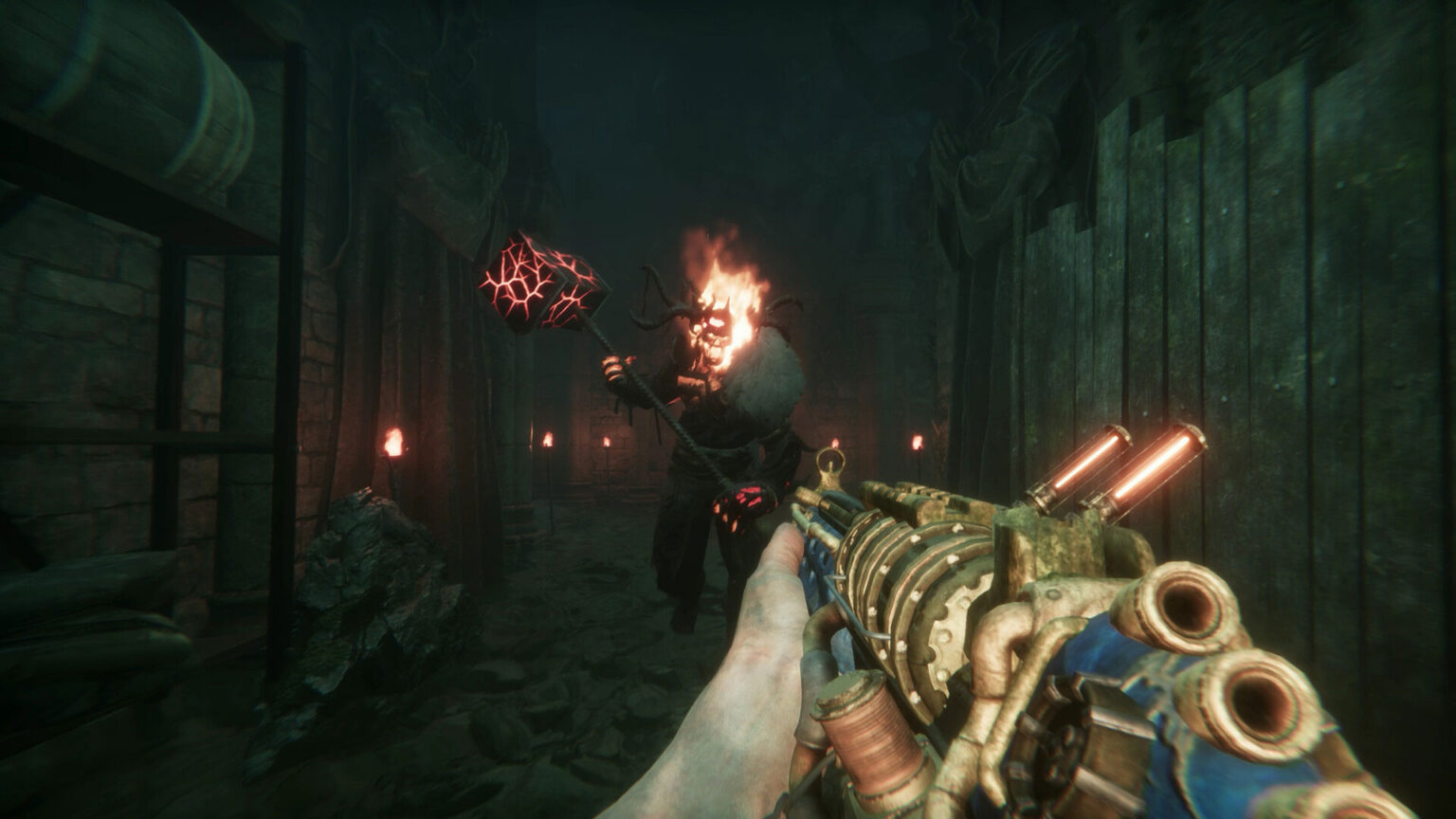
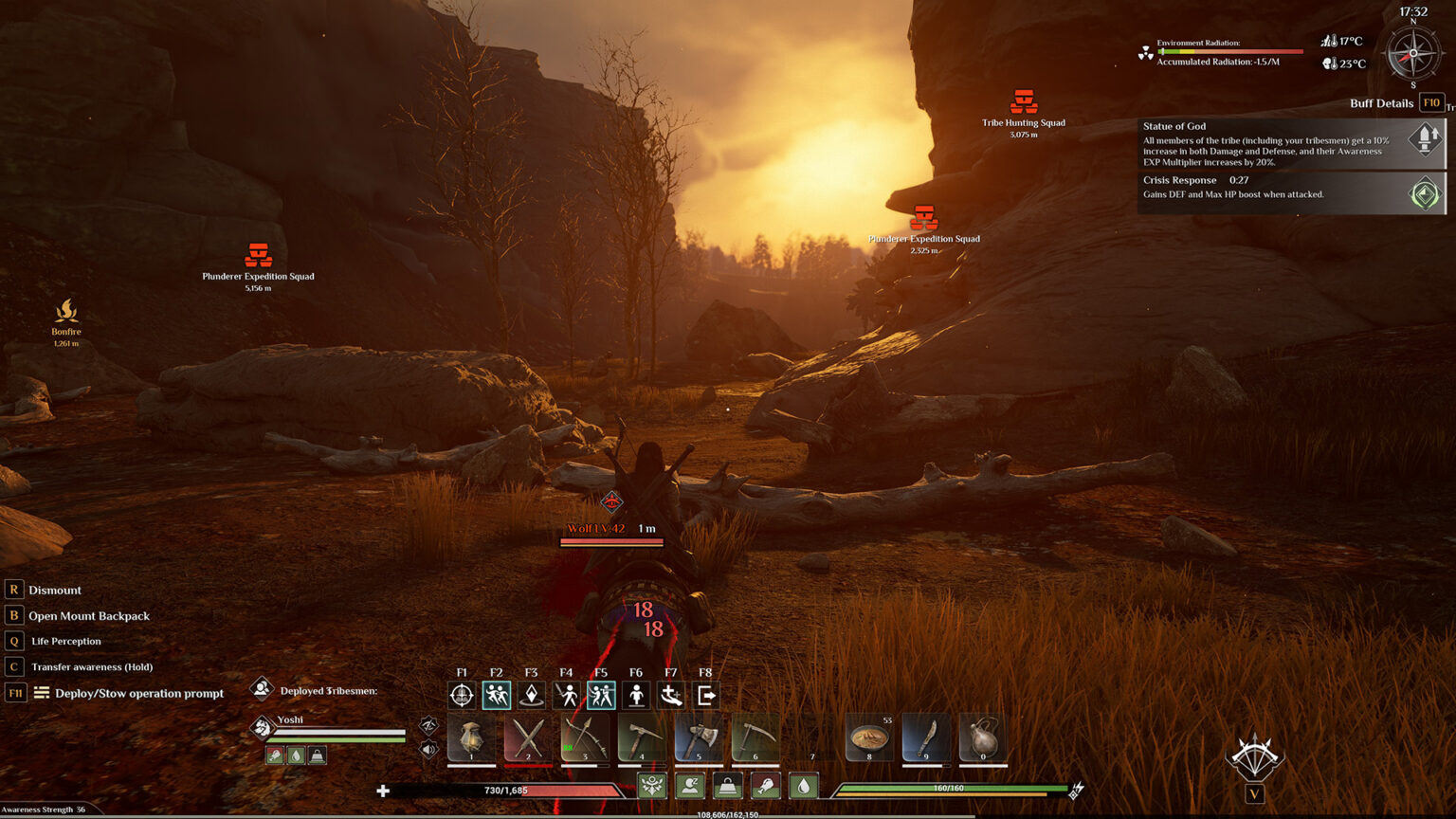
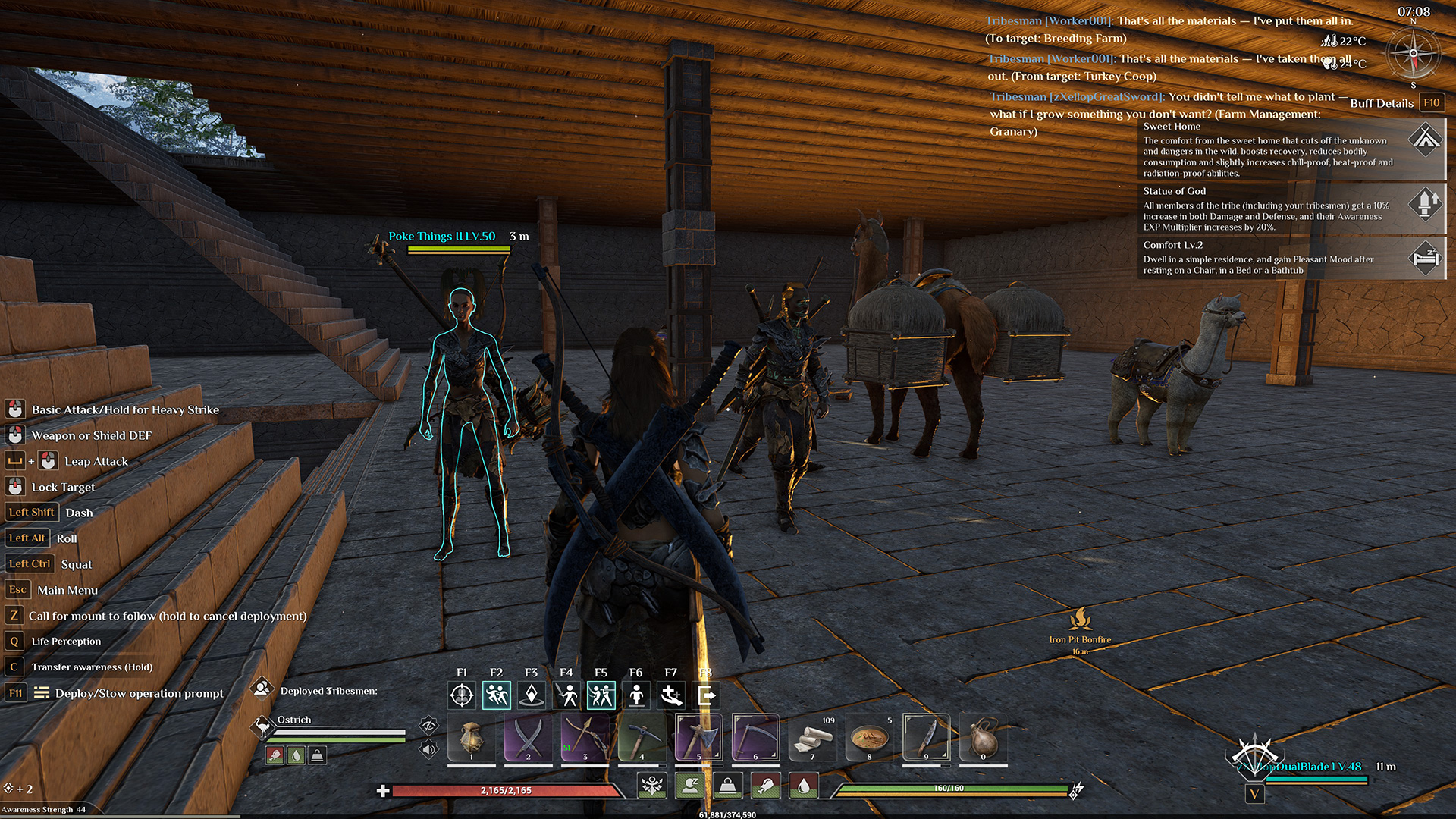
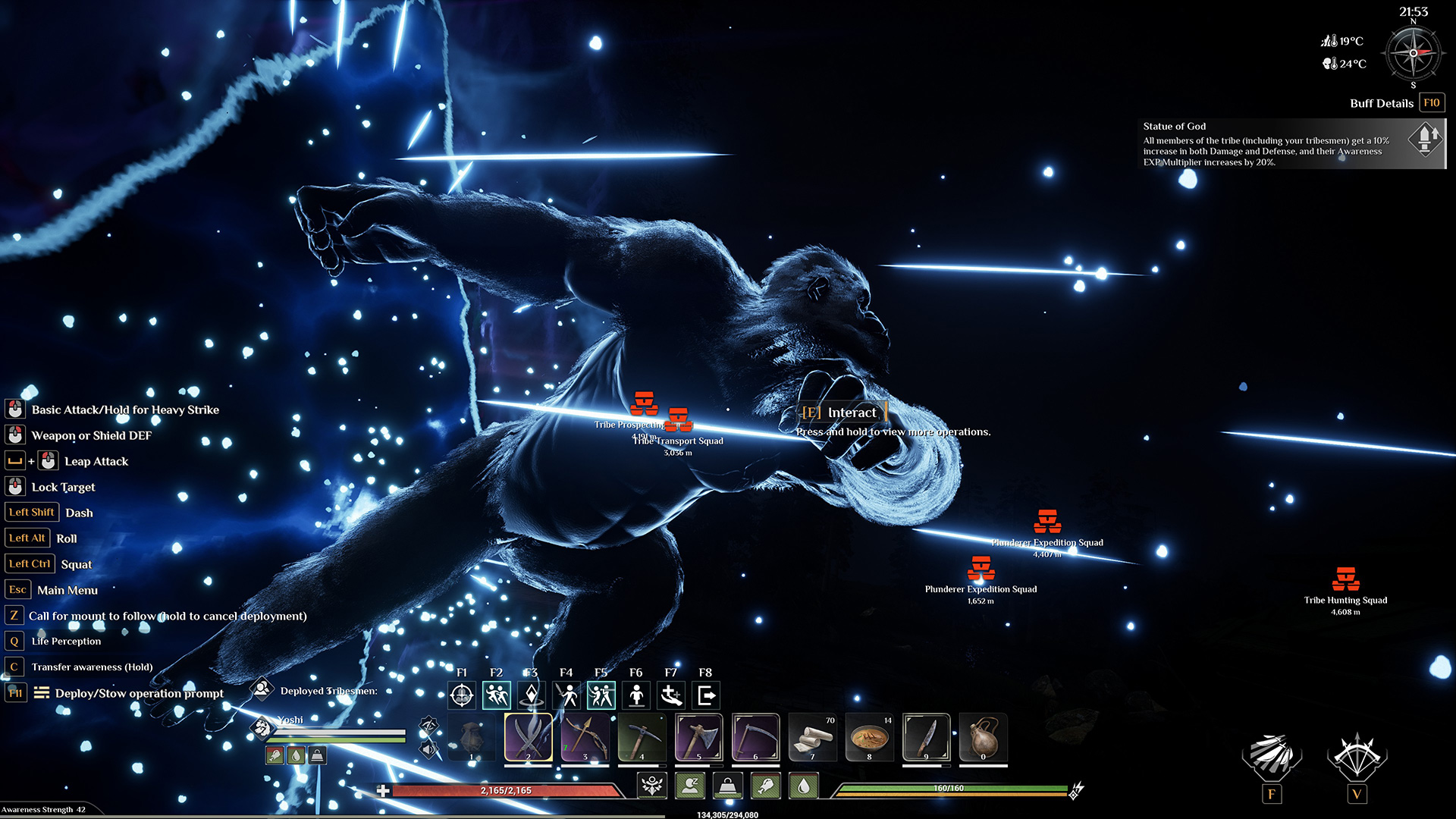
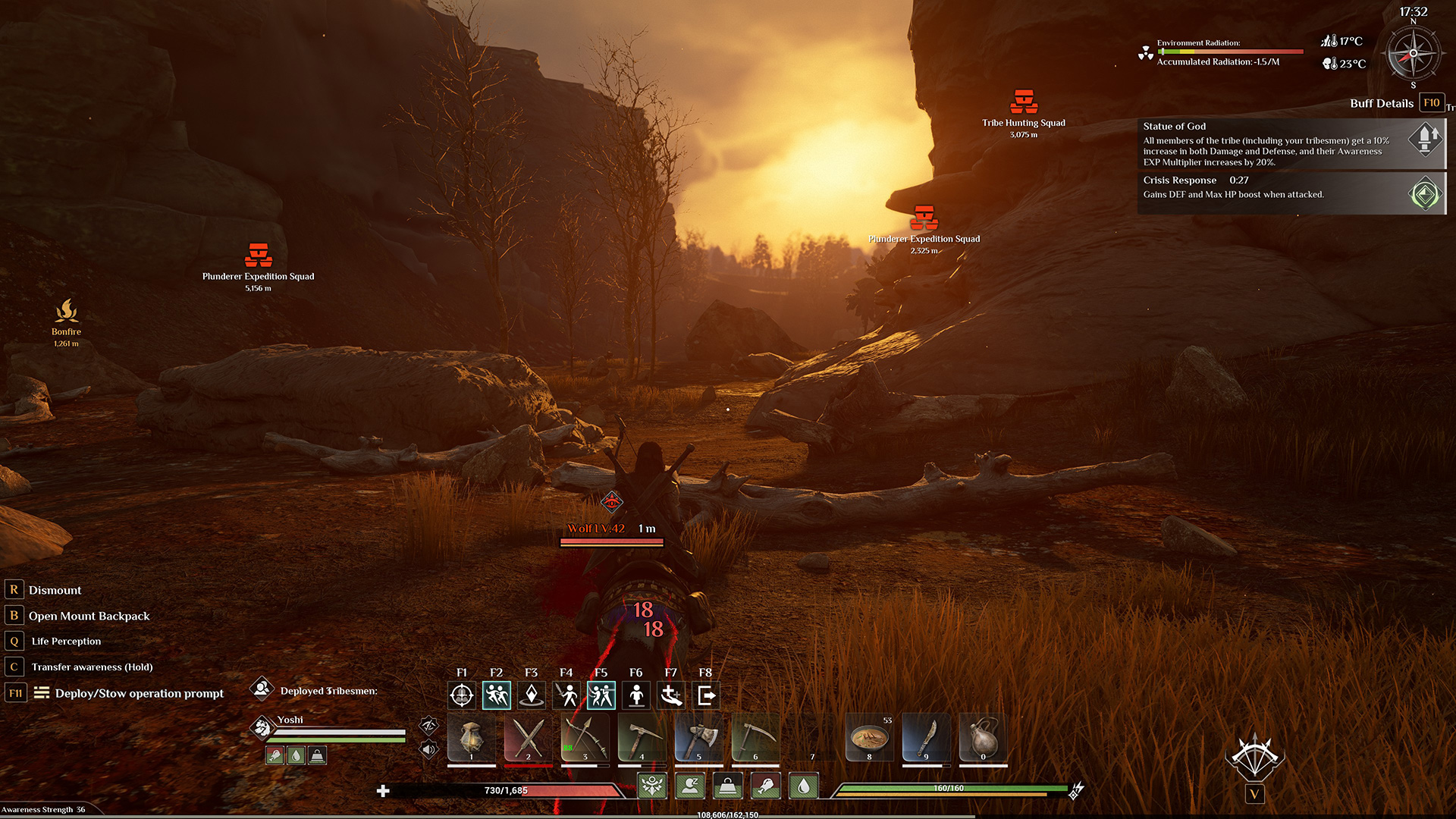
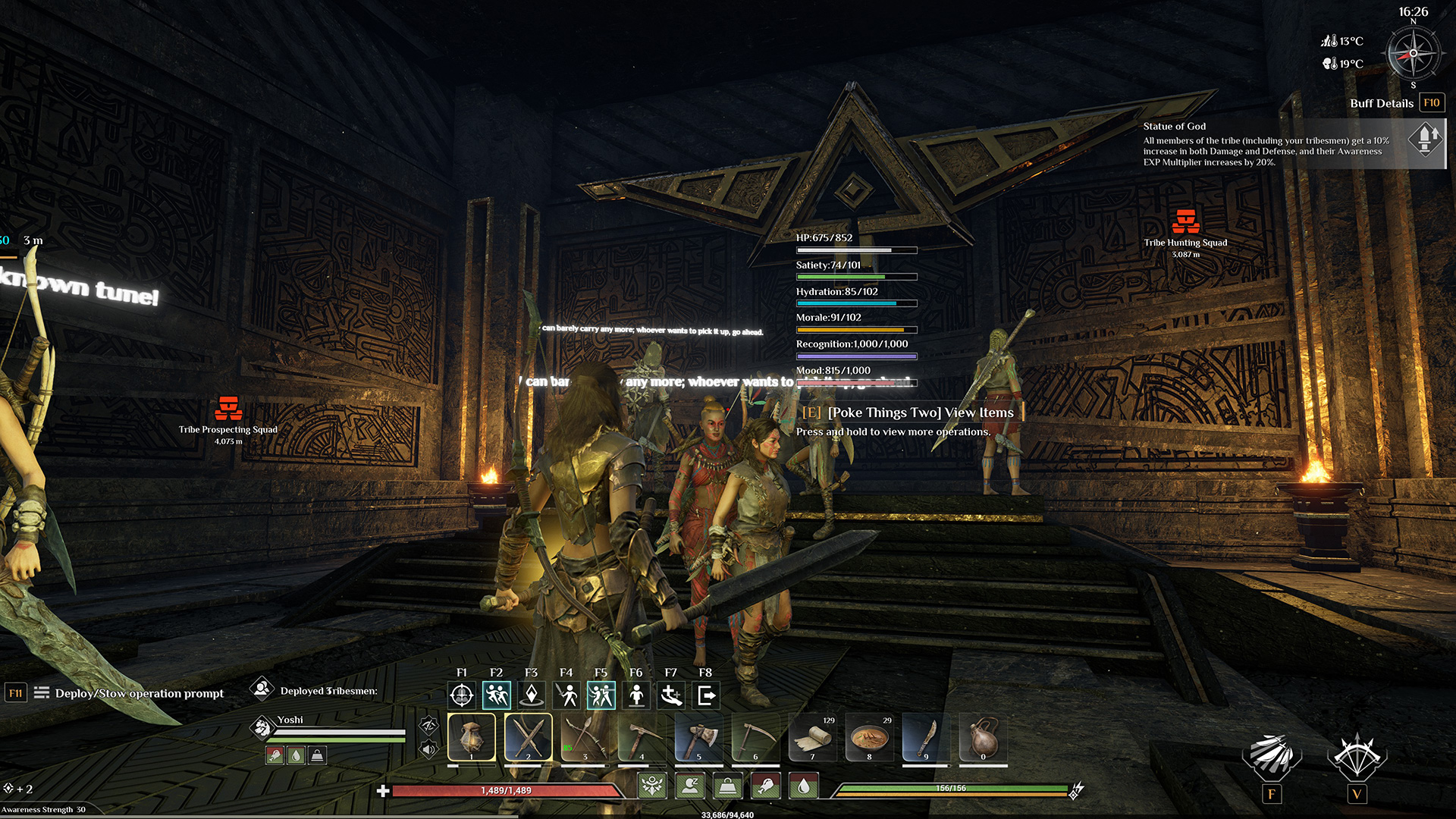
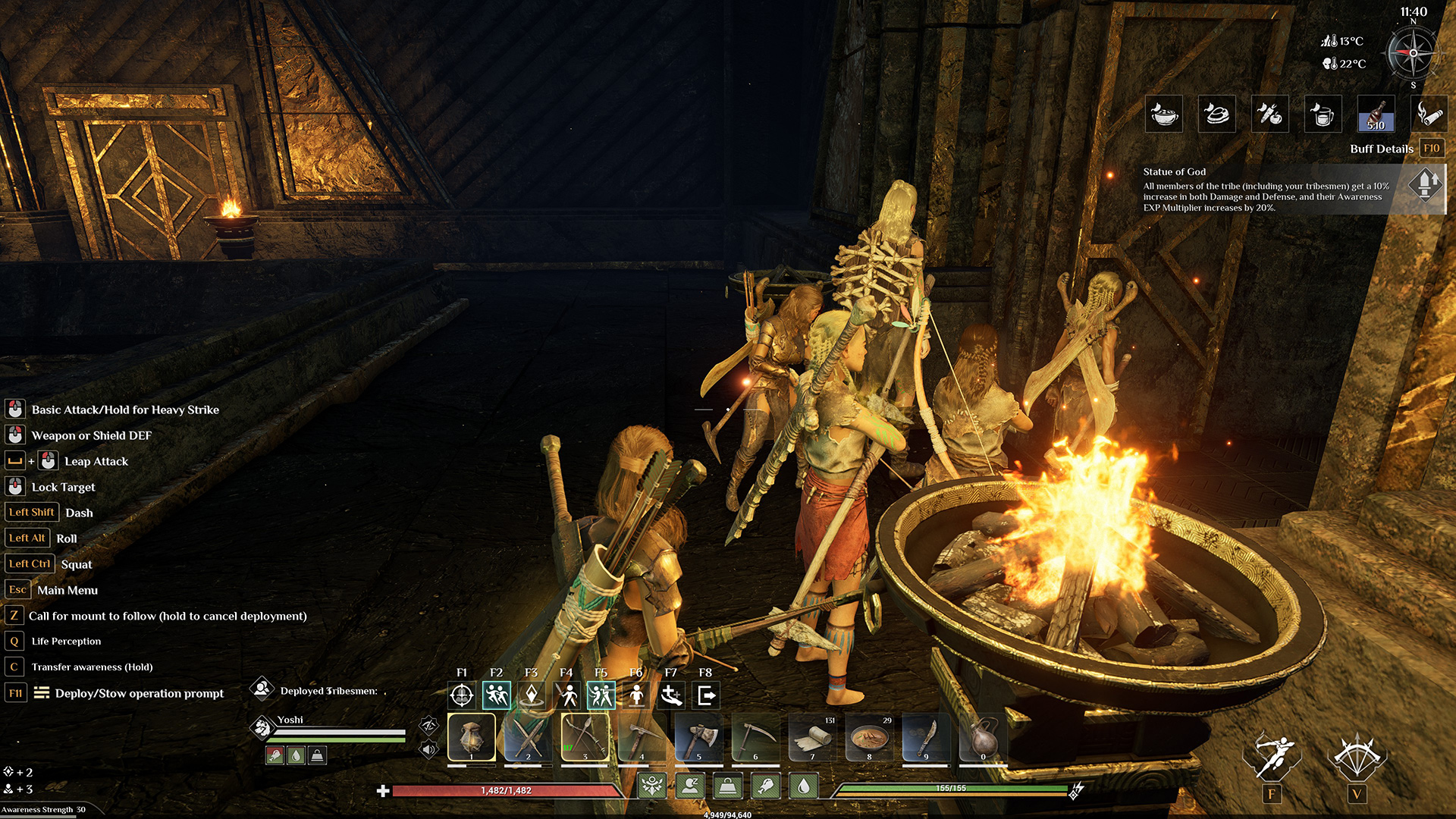
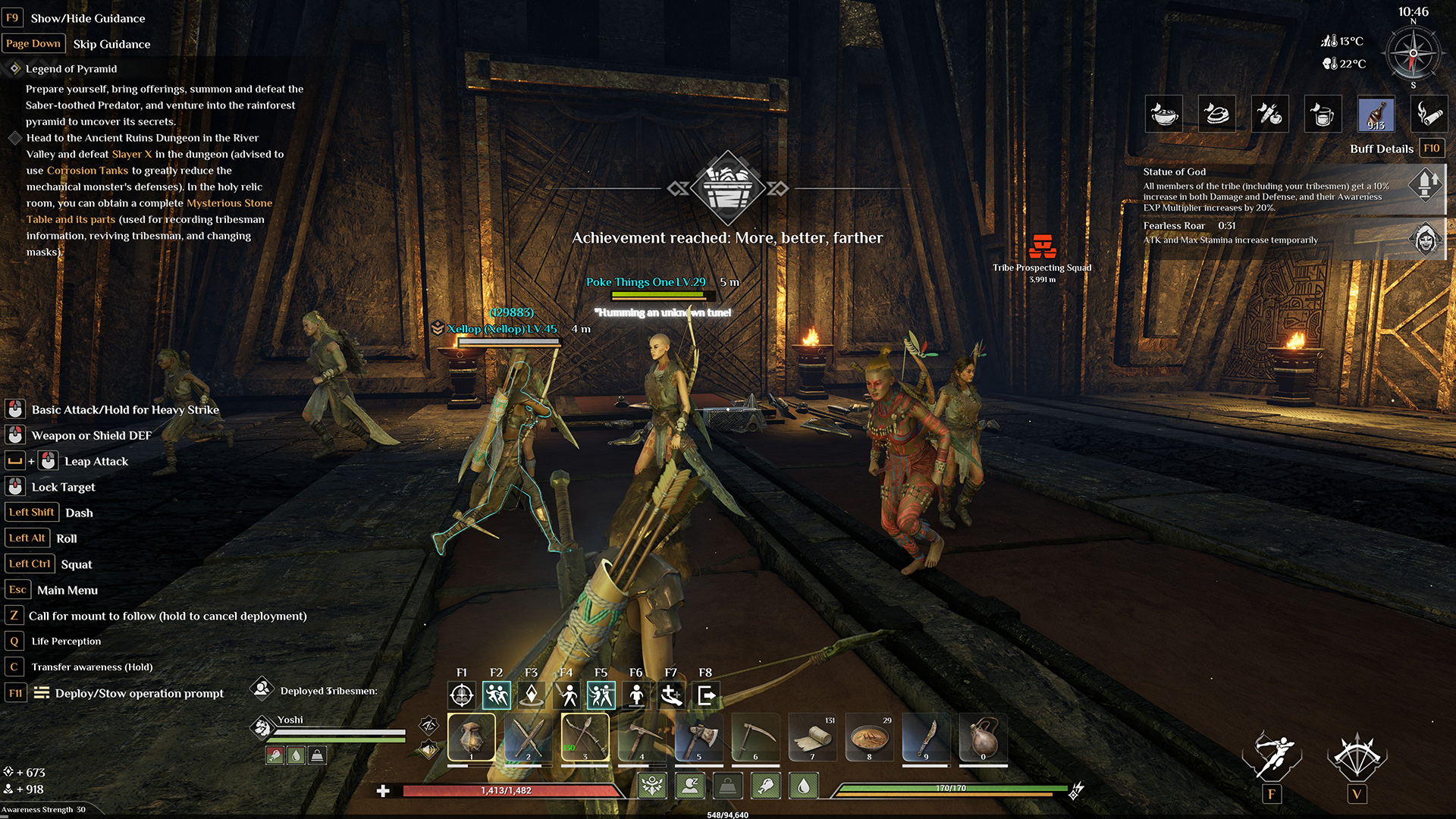
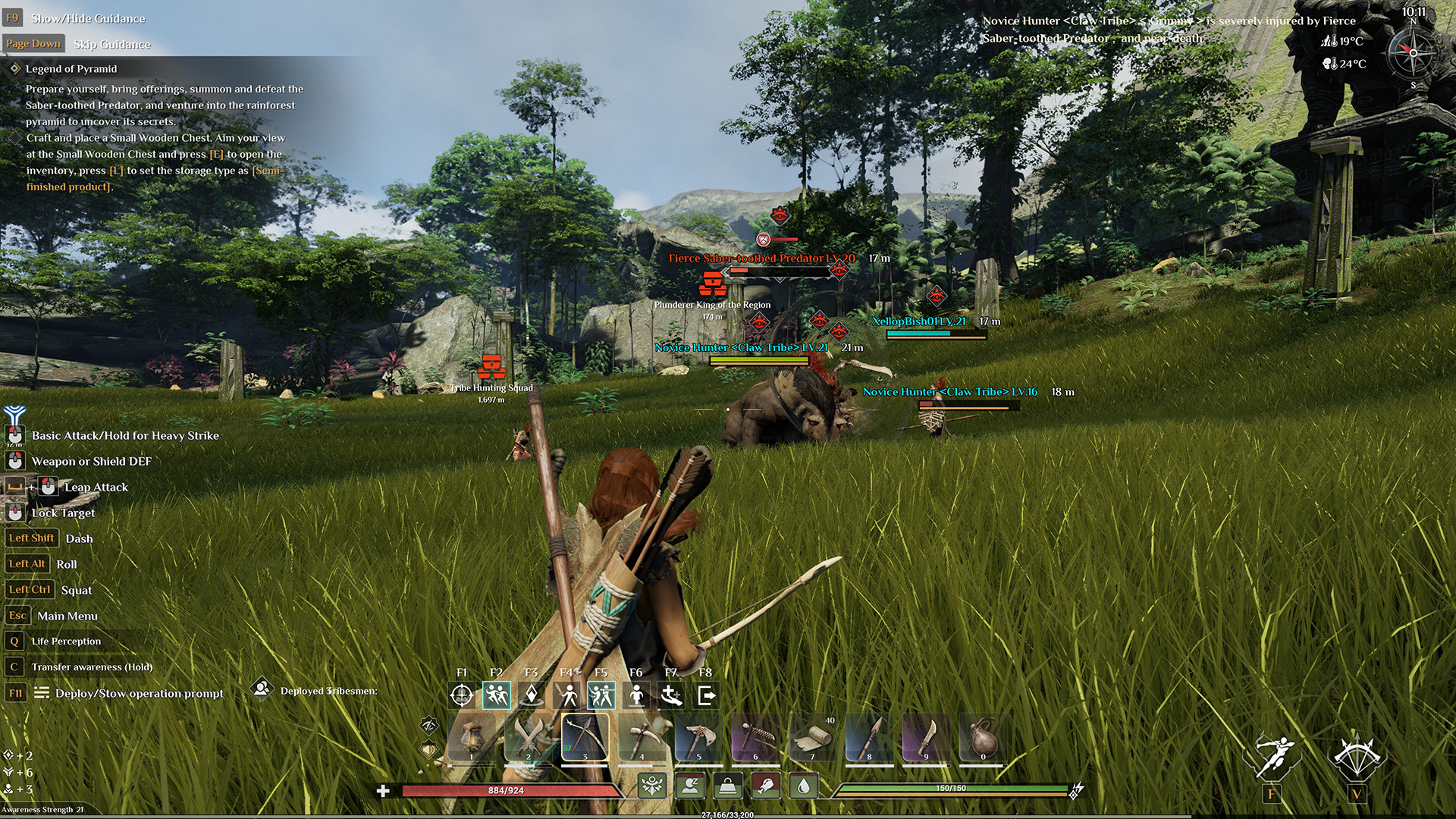
Combat technically feels better in 1.0. Hits register more reliably, weapons have a bit more feedback, and the boss fights have more discernible mechanics than they did in 2024. None of this matters, though, because of how powerful companions have become. Our standard boss strategy was depressingly simple: outfit three decent companions with the best gear we could craft, send them charging at the boss, and stand back with a bow firing the occasional arrow. Most fights ended quickly, with us barely engaging. Co-op makes this even more pronounced, because every additional player brings their own three companions to the fight. By the late game we were rolling into camps with a small army of AI-controlled tribesmen and watching everything melt.
That’s a problem because it makes both the player character and the combat itself feel optional. The game wants you to feel like a chieftain commanding a tribe, which conceptually is great. In practice, the asymmetry of giving the AI all the agency means you’re rarely doing anything mechanically interesting yourself.
One specific frustration we ran into repeatedly is that there’s still no clean way to stop your companions from killing enemies you need alive. Scouts are particularly important because interrogating them reveals fog of war, but our companions would routinely pulp them before we could get to them. We tried various commands and behavior settings, but nothing reliably prevented an overzealous tribesman from finishing off a target we wanted captured. It’s the kind of friction that should have been ironed out with this much development time. We ultimately just told our companions to stay put whenever we had to engage a camp with a scout, but that feels like it defeats the entire point of building up a capable tribe to fight alongside you.
Old Habits Die Hard
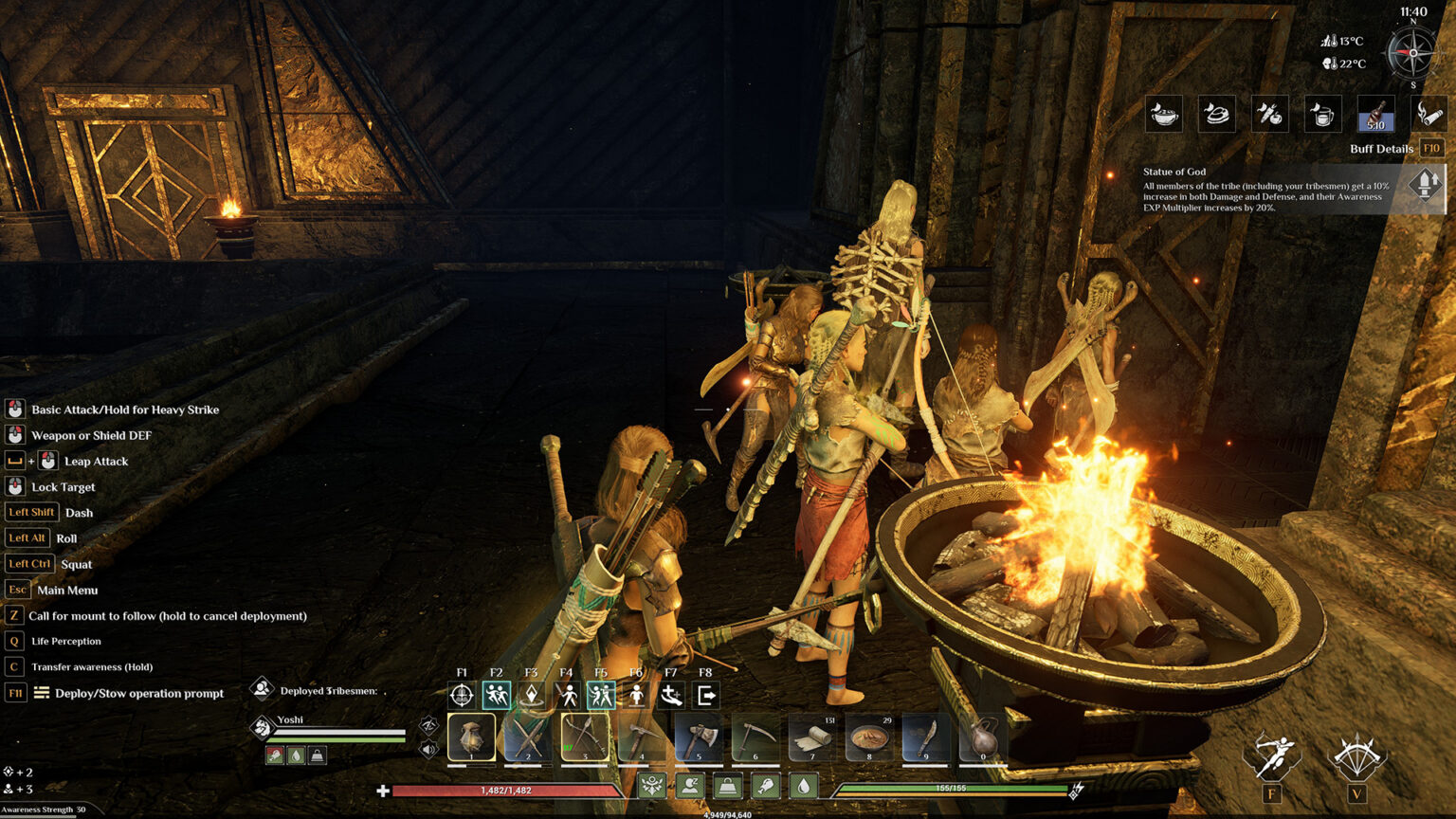
Some of Soulmask’s most baffling design decisions are still in 1.0 exactly as they were in Early Access. The repair process is the most egregious. You still have to remove the item from your toolbar, place it in your inventory, then drag it into the crafting station’s inventory, and only then can you start the repair. We checked multiple times to make sure we weren’t missing something, but no, this is somehow still the flow. Years of community feedback and a thousand-plus lines of patch notes later, the repair process is identical. The fact that crafting from chests now works makes this even stranger, because the QoL philosophy is clearly being applied unevenly.
The player character also still feels secondary to your tribesmen. Soulmask is clearly designed around automation. You set up production chains, assign companions to handle them, and let the system do the work. That’s almost certainly why crafting times feel as long as they do. What gets us is that companions earn the XP for those crafting actions, not you, which means handing crafting off to your tribe (which is what the game is built around) actively makes you feel like you’re falling behind on your own character. You’re left with two bad options: do your own crafting at glacial pace just to keep your character progressing, or let your tribe handle it and feel like you’re missing out on XP. Combat is the faster path to leveling either way, but the tension never goes away. Sharing some of the XP companions earn from crafting with the player would solve this, and it’s strange that it still hasn’t been addressed.
It’s a shame, because Soulmask has so many genuinely cool ideas: the mask possession mechanic, the tribesmen specialization system, the building tools, the world itself. We said in our first impressions back in 2024 that the foundation was there for a great game. Two years later, it still is. The foundation also still has the same cracks running through it, and 1.0 mostly papered over the small ones while leaving the big ones where they were. Soulmask is in the better half of crafting survival games we’ve played, but it’s also one we put down without starting the DLC and without much urge to go back. That’s the kind of feeling a 1.0 release isn’t supposed to leave you with.
Soulmask 1.0 launched on April 10, 2026 for PC. This review is based on a purchased retail copy of the game on PC (Intel i9-14900K, 96GB DDR5-6800 RAM, MSI RTX 5090 Gaming Trio OC). While FullCleared does have affiliate partnerships, they do not influence our editorial content. We may earn a commission for purchases made through links on this page.
Soulmask Review Gallery
Continue?
Like our content?
Subscribe to our newsletter and get video game news, reviews, features, and deals straight to your inbox.
You're subscribed!
Thanks for signing up. Look for an email from Substack at .
No email after a few minutes? Subscribe on Substack.
This newsletter may contain advertising, deals, or affiliate links. Subscribing to the newsletter indicates your consent to our Privacy Policy. You may unsubscribe from the newsletter at any time.