Quick Verdict
It says a lot that the only real complaint I had after the credits rolled on Dispatch was that I felt it was too short. All eight episodes took me just under nine hours, and I was left wanting more. Like all great comic book stories that revolve around superheroes and supervillains, Dispatch shines through its cast more than its predictable plot. It’s a tale you’ve heard before in Suicide Squad and Guardians of the Galaxy: take a ragtag team of former outcasts—in this case, villains—and put them on a road of redemption.
The reason Dispatch is such an excellent experience is its writing, dialogue, and voice acting for its cast of characters. It might be predictable at times, but I’m almost certain you’ll get attached to some of these characters and find yourself eager to know how it all ties together. Just know Dispatch isn’t heavy on gameplay. It’s very much a visual novel experience with choices, some of which affect the ending, as there are multiple conclusions. For the most part, though, it tells the story it wants to tell, and it’s a great one.
Shift Happens

As a huge fan of old Telltale Games, such as The Walking Dead, The Wolf Among Us, and Tales from the Borderlands, I’m not even sure I have the words to express how grateful I am that Dispatch exceeded my expectations. For those unfamiliar with classic Telltale games, they’re essentially visual novels where you, as the player, make decisions that affect your relationships with other characters throughout the story. Over the years, Telltale built its reputation on episodic releases, where each episode tends to end on a cliffhanger, so players looked forward to the next release. Unfortunately, sporadic release schedules and taking on way too many projects led to the company’s demise. While other developers have attempted similar-style games, such as Life Is Strange and, more recently, Lost Records: Bloom & Rage, they have failed to capture the same magic Telltale had.
I was extremely excited when I heard Telltale Games would be back and its first new title would be based on The Expanse, a sci-fi series I absolutely loved. I played that game in early 2024 and was so disappointed that I didn’t even bother writing a review. It was a fine enough experience, but it didn’t live up to the quality you’d expect from a game with Telltale in its title. Since then, I’ve assumed that very few developers would take the risk of making games in the same vein, because, truth be told, they don’t appeal to a mass audience. It turns out that if you make one with really good characters and great writing, the sales will come, since Dispatch has already sold over one million units, and for good reason.
Calls of Duty
Wanting to stick with episodic releases, AdHoc Studio laid out a clear release schedule for Dispatch. Over the span of a month, two episodes dropped each week for eight total, with the finale arriving on November 12. As overwhelmingly positive early impressions rolled in for the first couple of episodes, I became cautiously excited that AdHoc Studio had bottled the lightning that made Telltale Games so memorable. Still, I remained patient and decided to jump into the adventure closer to November 12. Going in as blind as possible, I picked the game up on November 6, assuming each episode would be around two hours long. They’re actually closer to an hour apiece, and I found myself so in love with the cast that it didn’t even take 24 hours to get caught up. This is where AdHoc Studio proved its point about choosing to stick with episodic releases. The wait kept me wondering what was going to happen next, perusing the internet and seeing how other people’s playthroughs were already different from mine based on the decisions that were made.
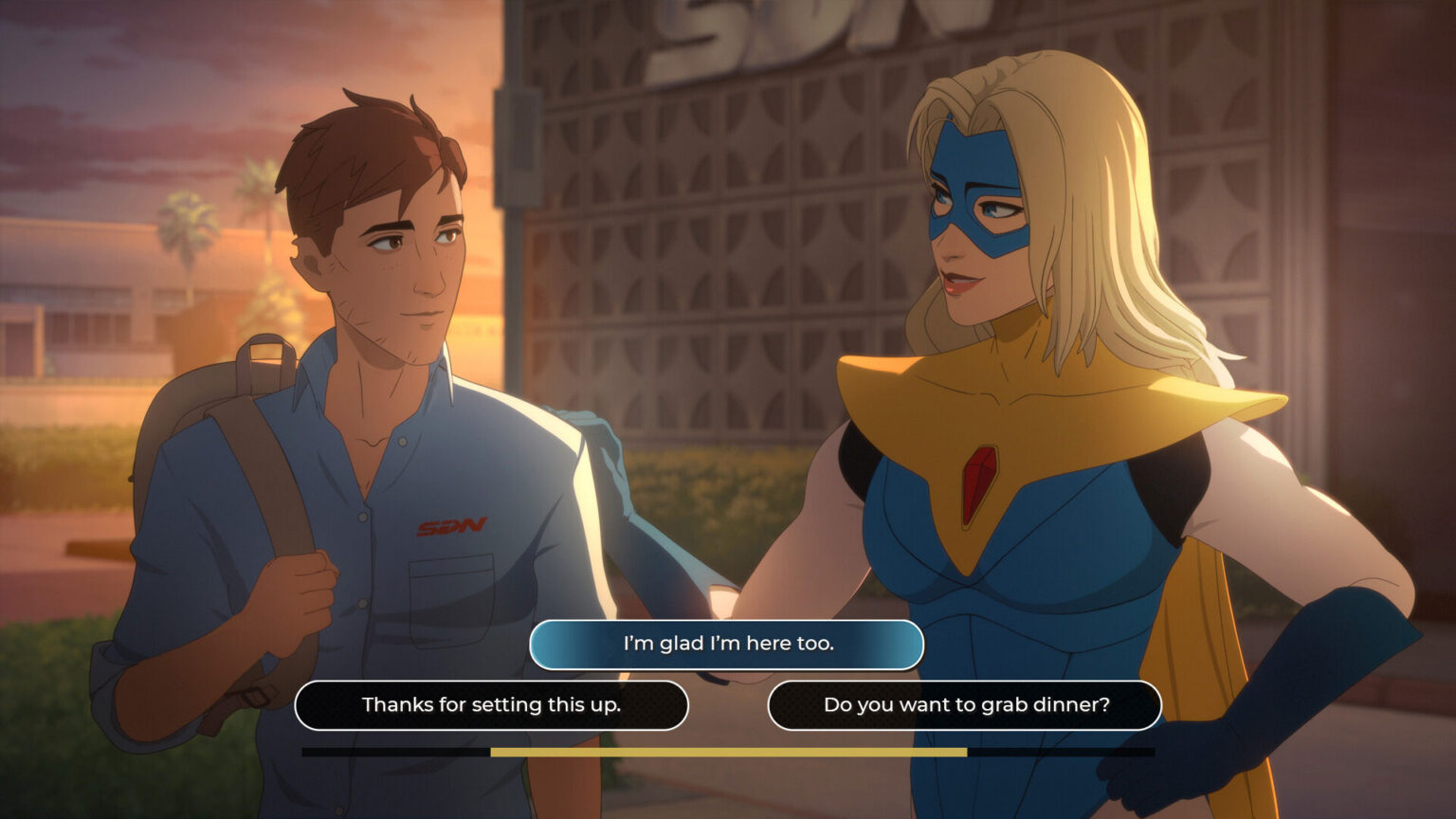
That’s a great segue to talk about those choices. Previous Telltale games were often criticized because the decisions didn’t really feel like they mattered. The ending of the game typically played out the same with some minimal changes here and there. With Dispatch, though, your choices will affect your entire playthrough and your interactions with the characters. There are multiple endings to the game, including romance paths, and it’s the first time that, as soon as the credits rolled, I wanted to jump into another playthrough to see how things would be different. So although the total runtime of a playthrough is less than nine hours, the game will rope you in for multiple playthroughs, especially since it won’t feel like a chore to relive the experience with this wonderful cast of characters.
Prime Beef

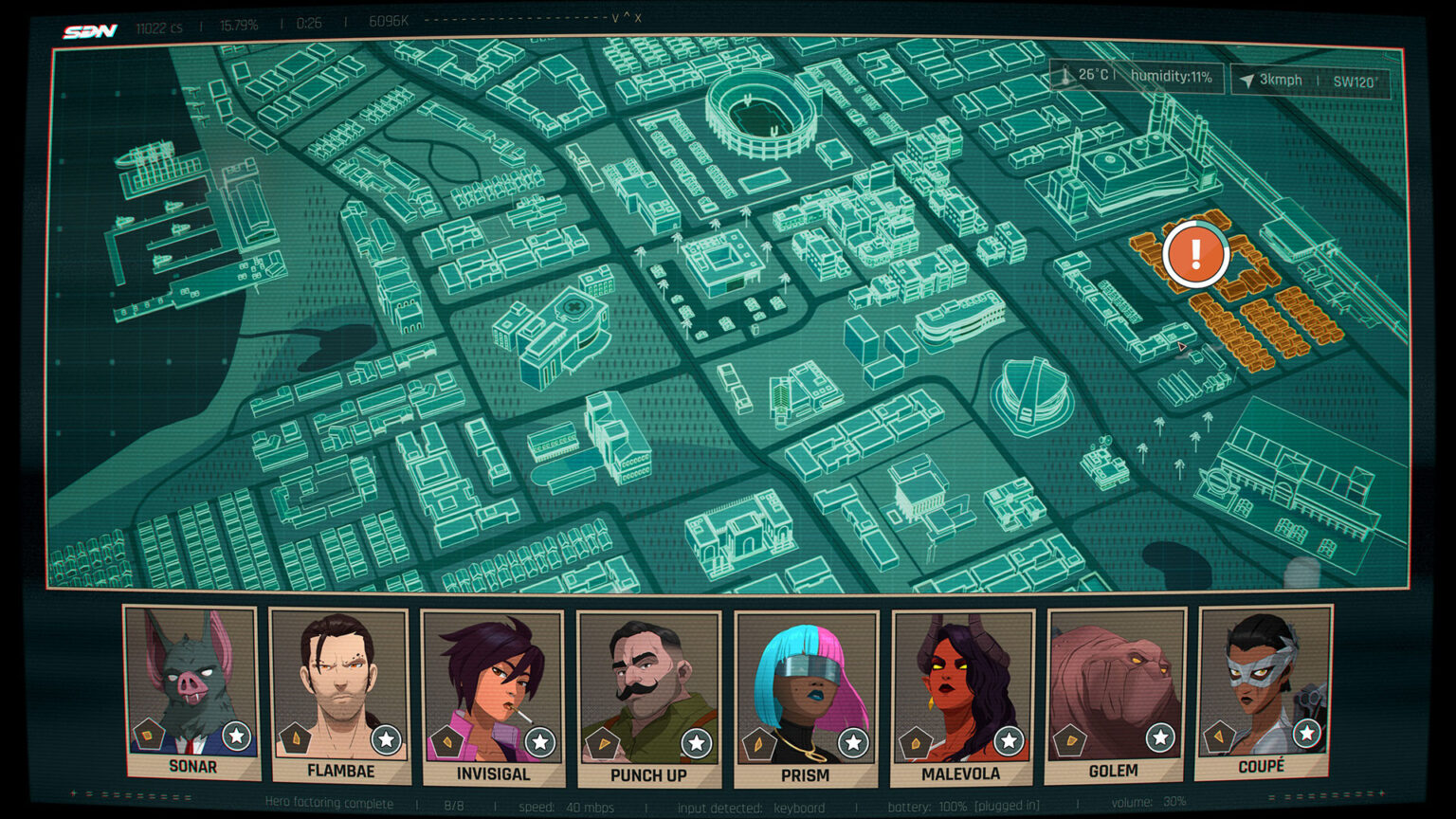
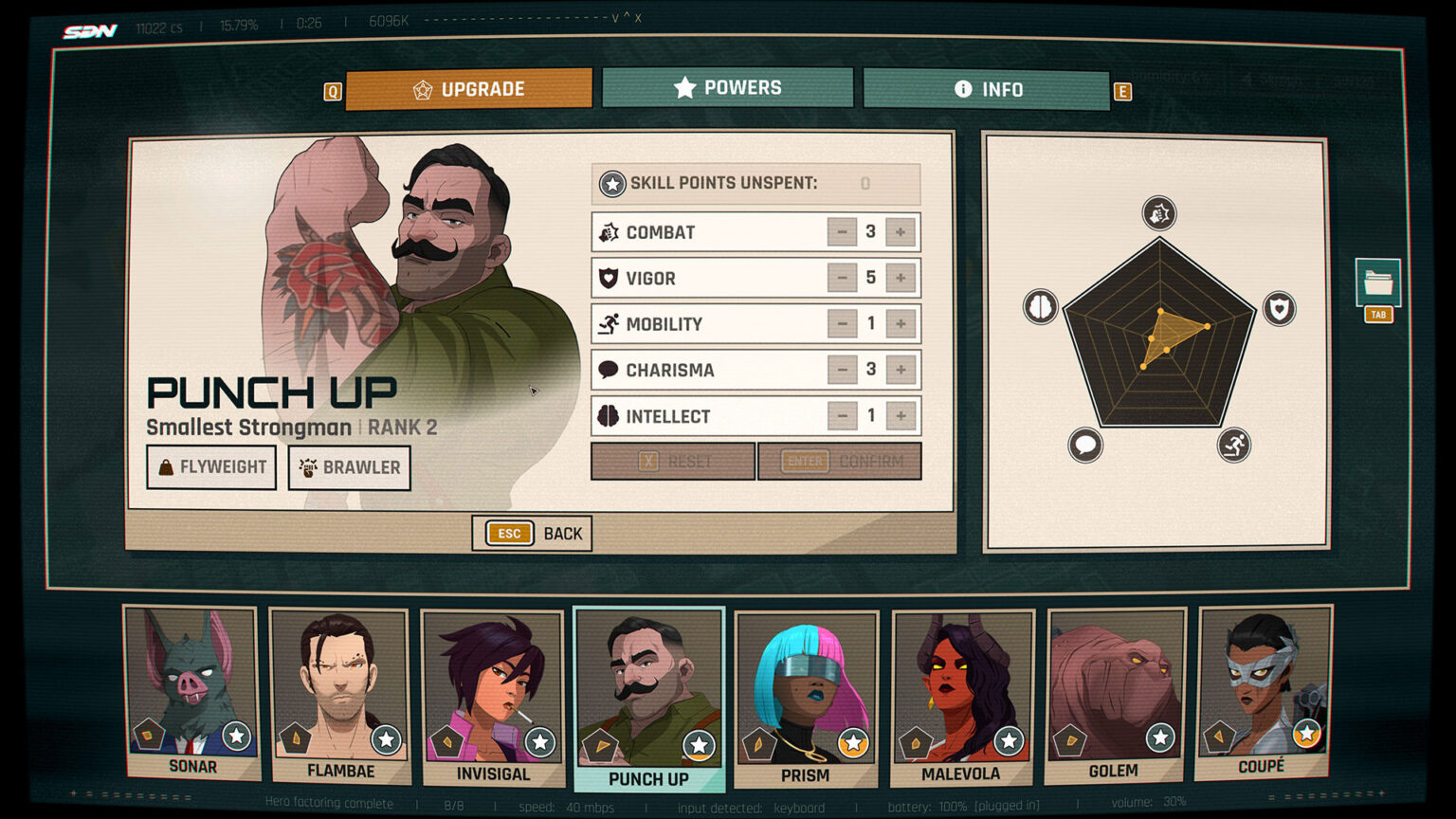
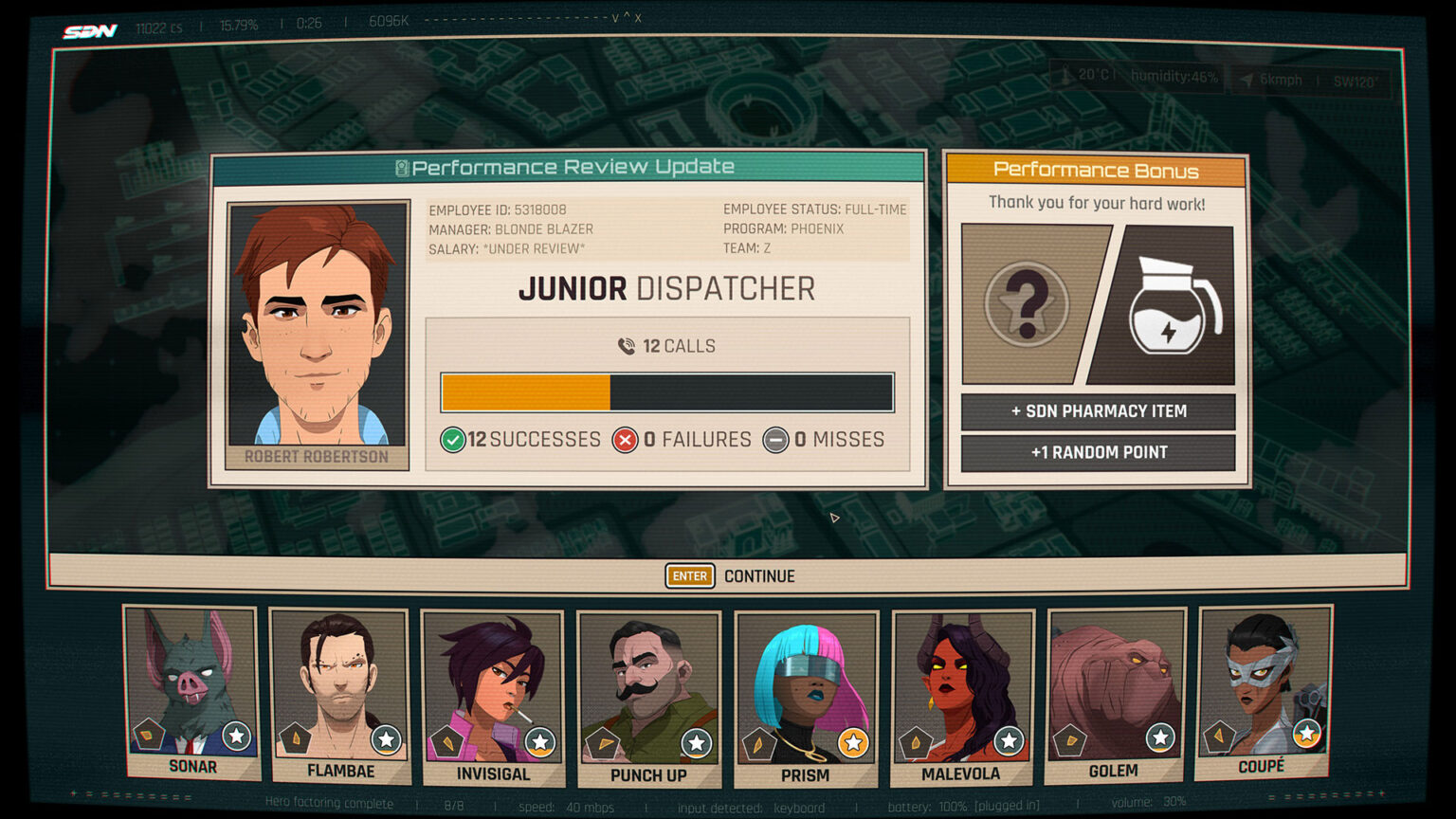
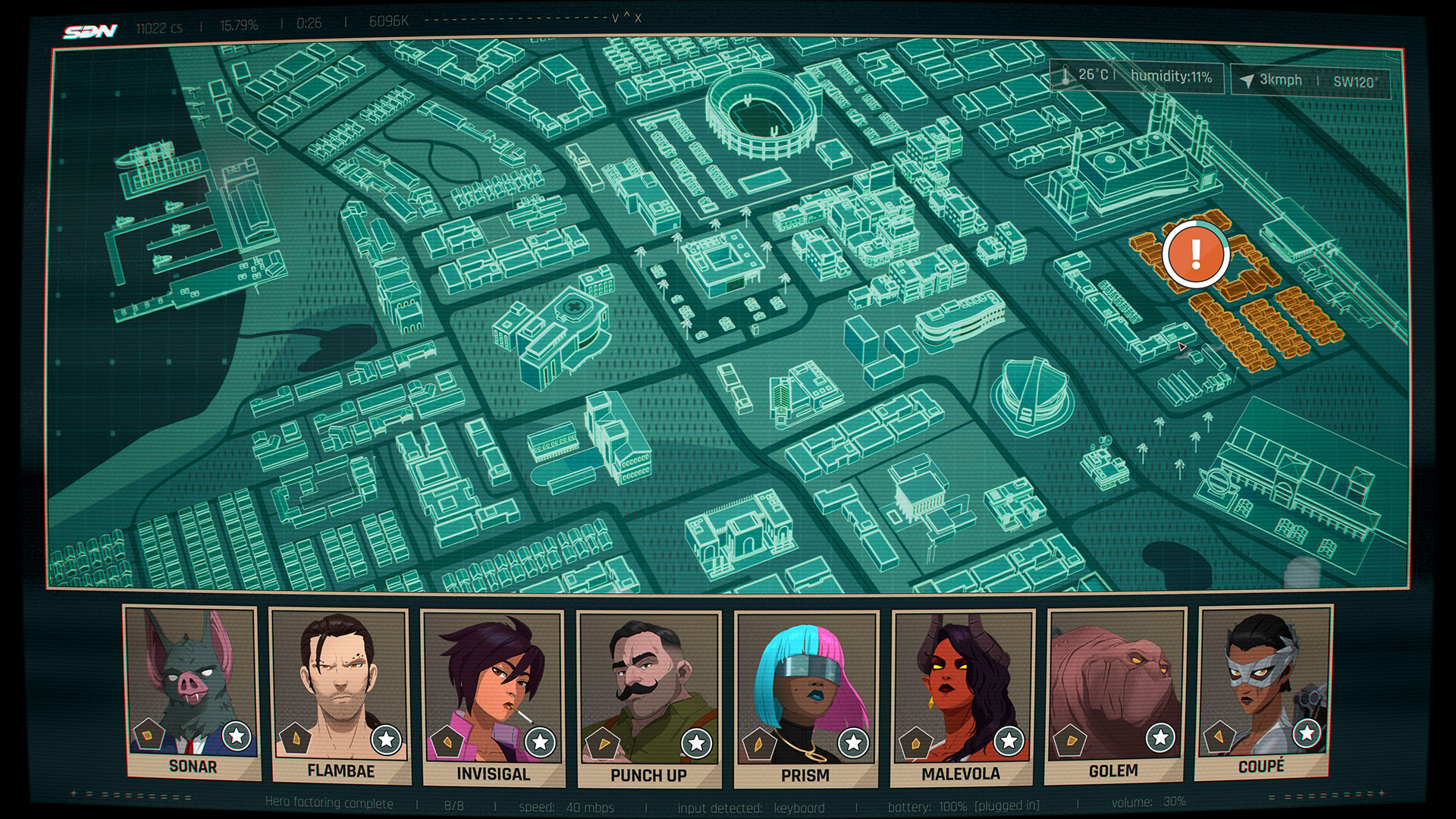
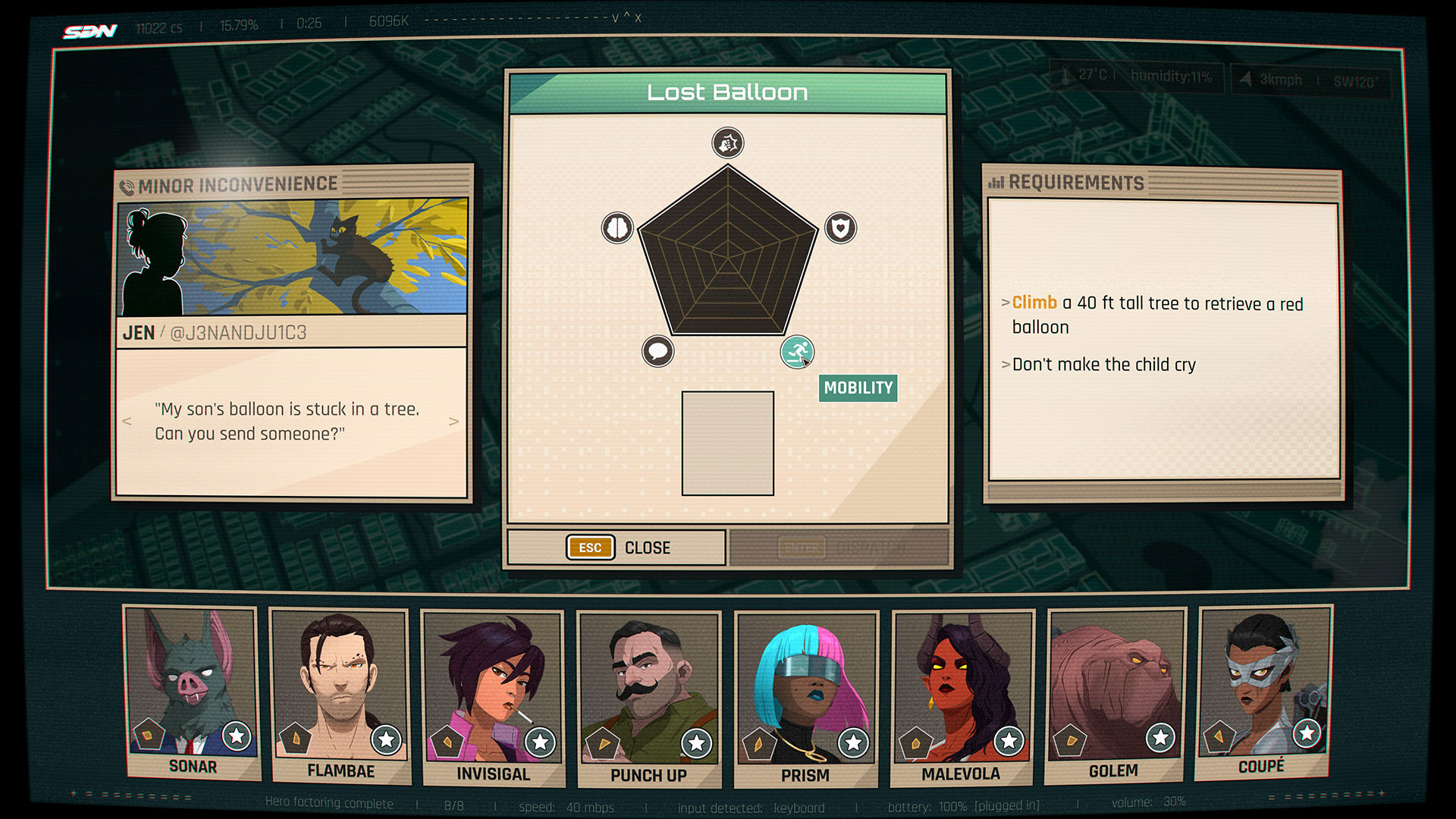
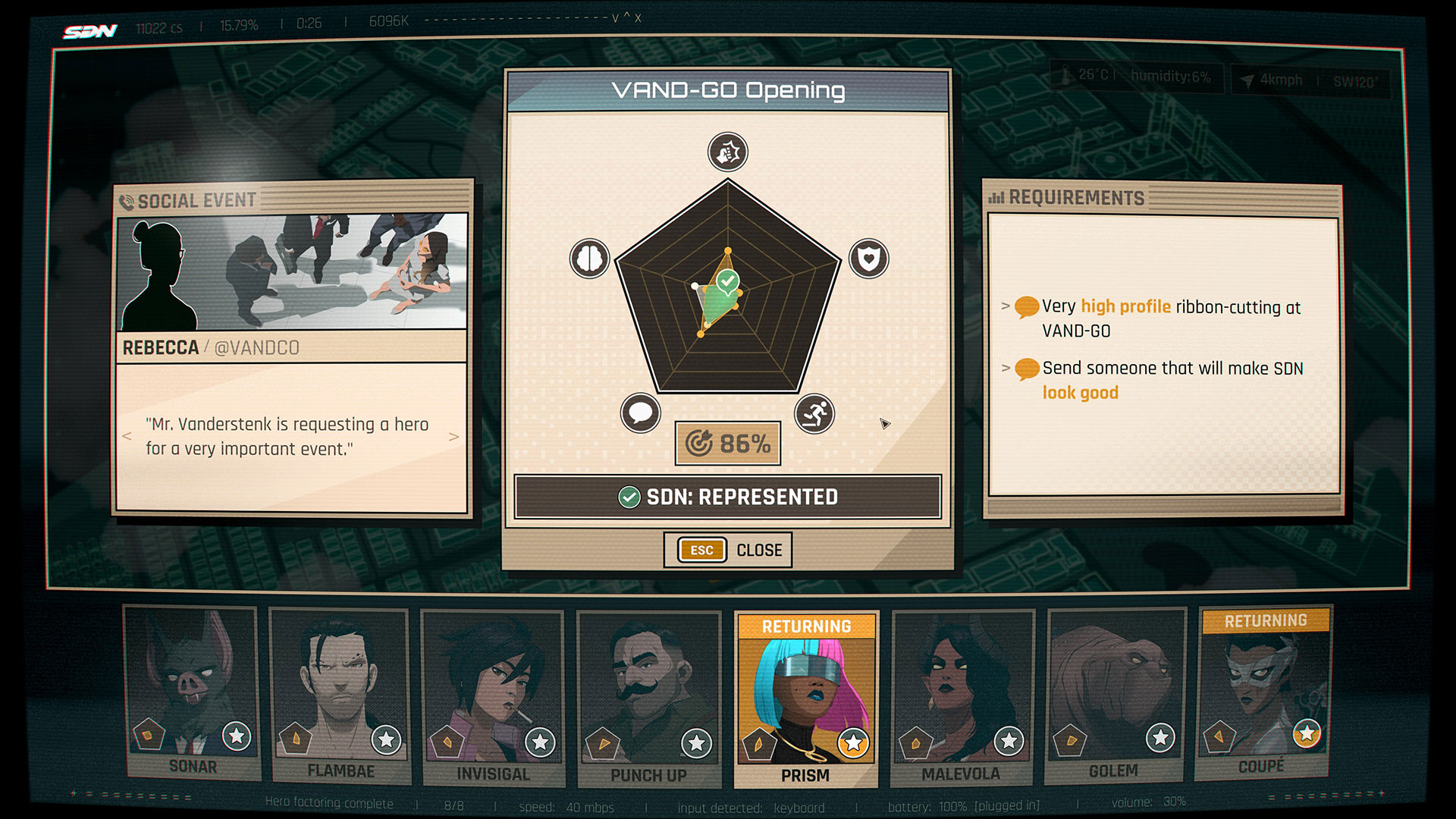
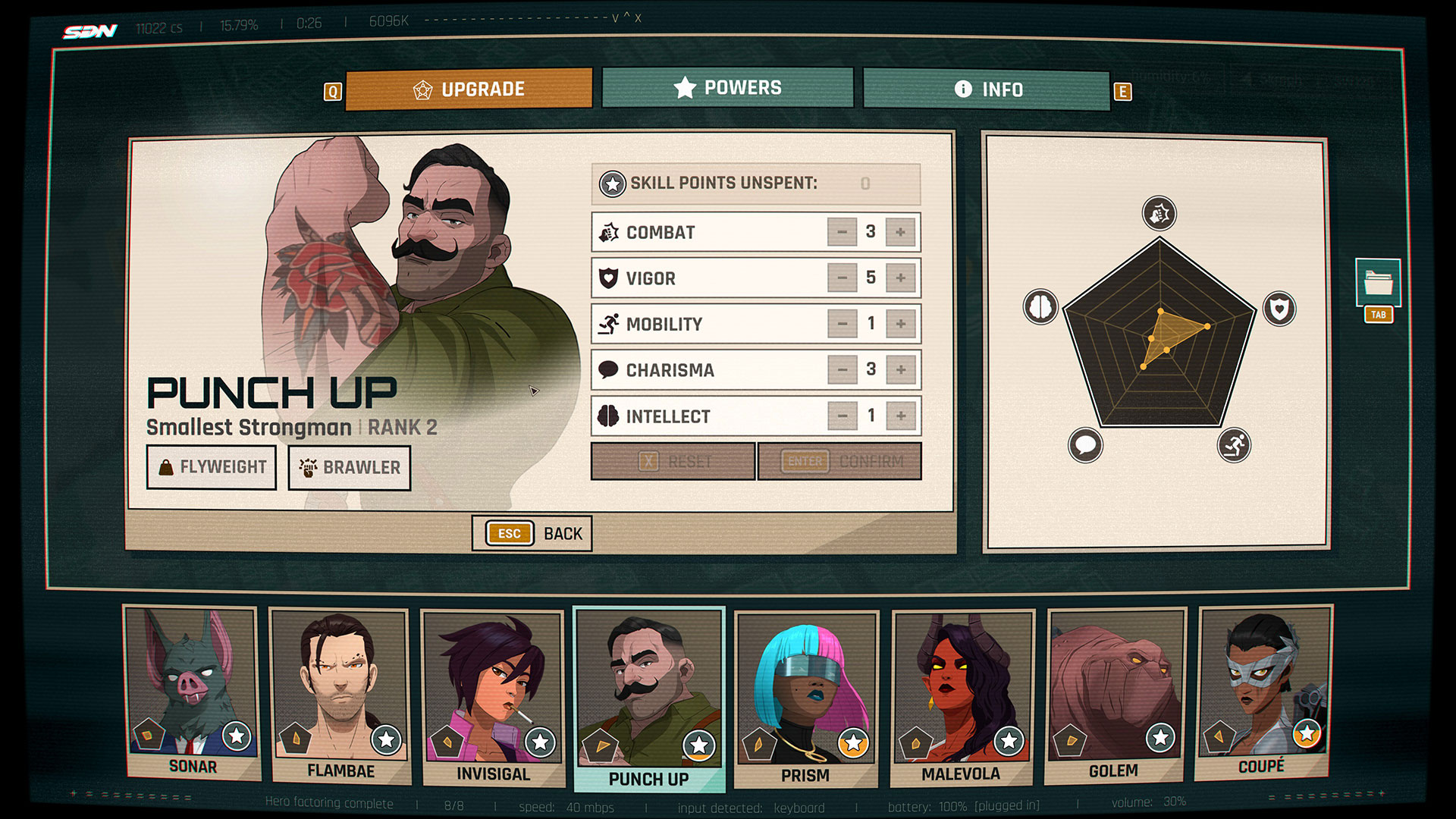
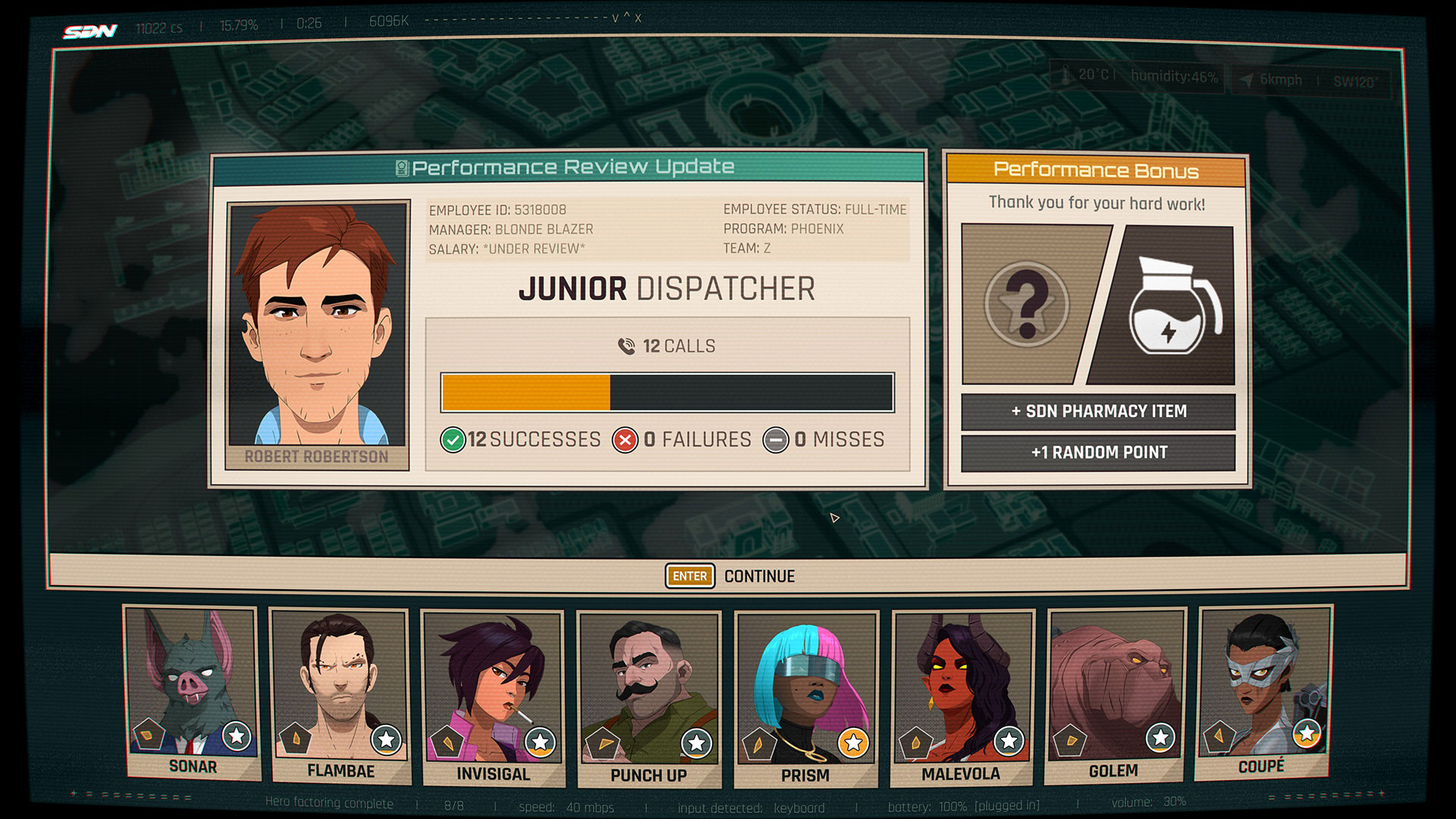
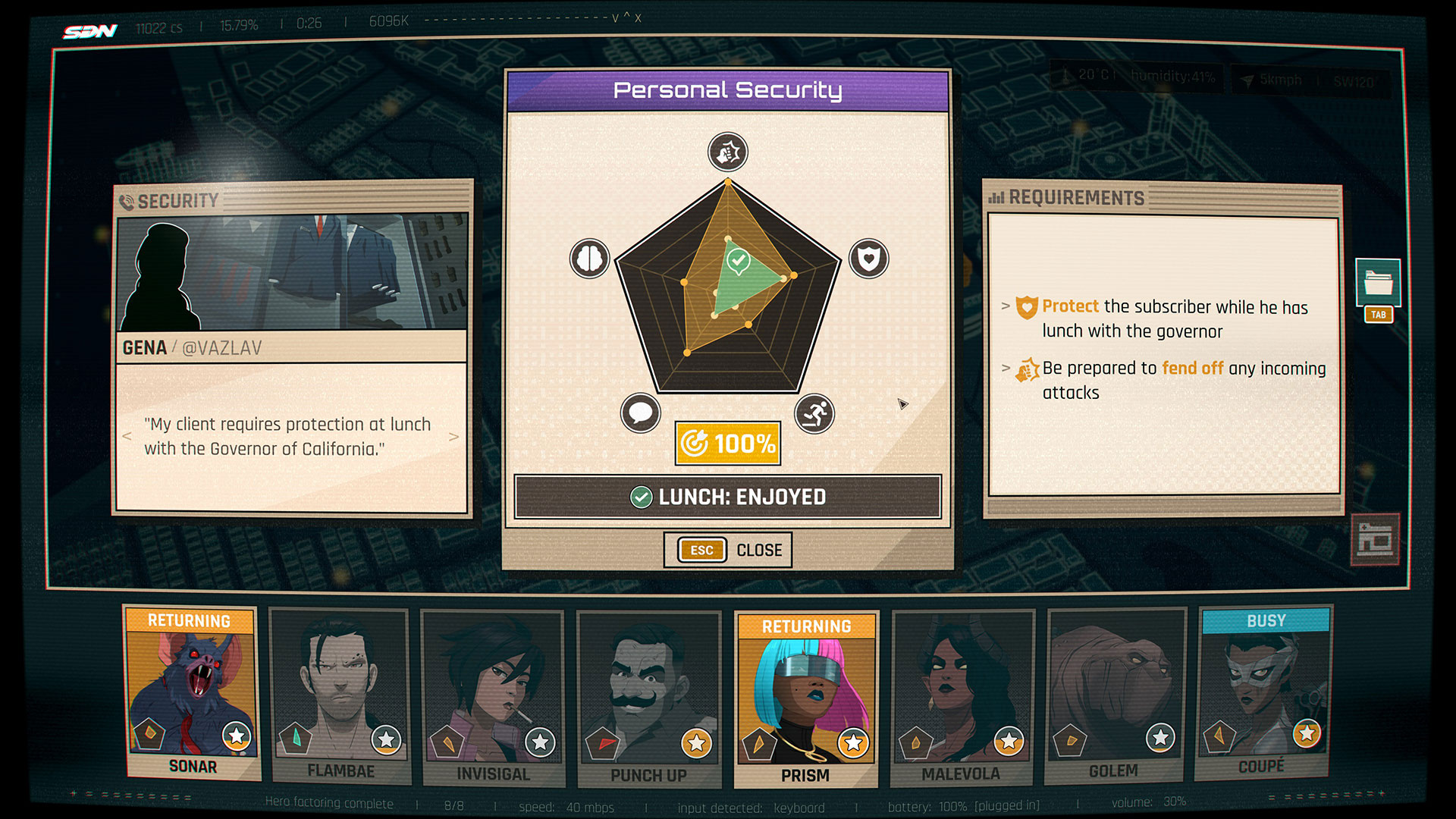
I’d say Dispatch is much more of an experience than a game. If it’s still unclear what you do, think of it as watching episodes of a superhero cartoon where you make certain decisions and dialogue choices that shape the rest of the events. It’s very much a choose-your-own-adventure-style game that sprinkles in some mechanics by dispatching members of the Z-Team to deal with crises around Los Angeles, more specifically, Torrance. These dispatch segments have you deciphering which team member to send to each event, based on minimal context. Each member has a mix of five stats: Combat, Intellect, Vigor, Charisma, and Mobility. After dispatching selected members to each event, your success rate is determined by how well your overall stat allocation overlaps with the requirements. That coverage is translated to a percentage, which is your chance of success. RNG comes in when a ball bounces within that area. If it falls outside the range, you fail. It’s possible to have 100 percent coverage to guarantee success, but often that requires sending multiple members to a single event.
It’s a bit of a juggle deciding which members, and how many, to dispatch because events can pile up. With successful dispatches, members can level up and you can increase any one of those stats. It’s up to you to decide whether you want to double down and continue increasing their natural stats, or bolster lower ones so you have a broader team that can cover more events. After each dispatch, there’s a period of time before the member returns, and then there’s another wait while they rest. This is where balancing matters, because if you have only one main Mobility character, they may be locked out of dispatching to an event, since an event can expire if you take too long to assign someone.
Truth be told, the dispatch gameplay mechanic isn’t all that compelling. I found it fun enough to break up the large story beats, and I enjoyed the banter between the characters and how they built their relationships during these sessions. However, I can also understand those who find it a chore. The good news is that it doesn’t affect your actual playthrough, meaning you can’t fail and get a game over. This also applies to the quick-time events that occur during cutscenes, which, again, you can turn off if you want to enjoy the game in cinematic mode.
Crypto-Night Shift
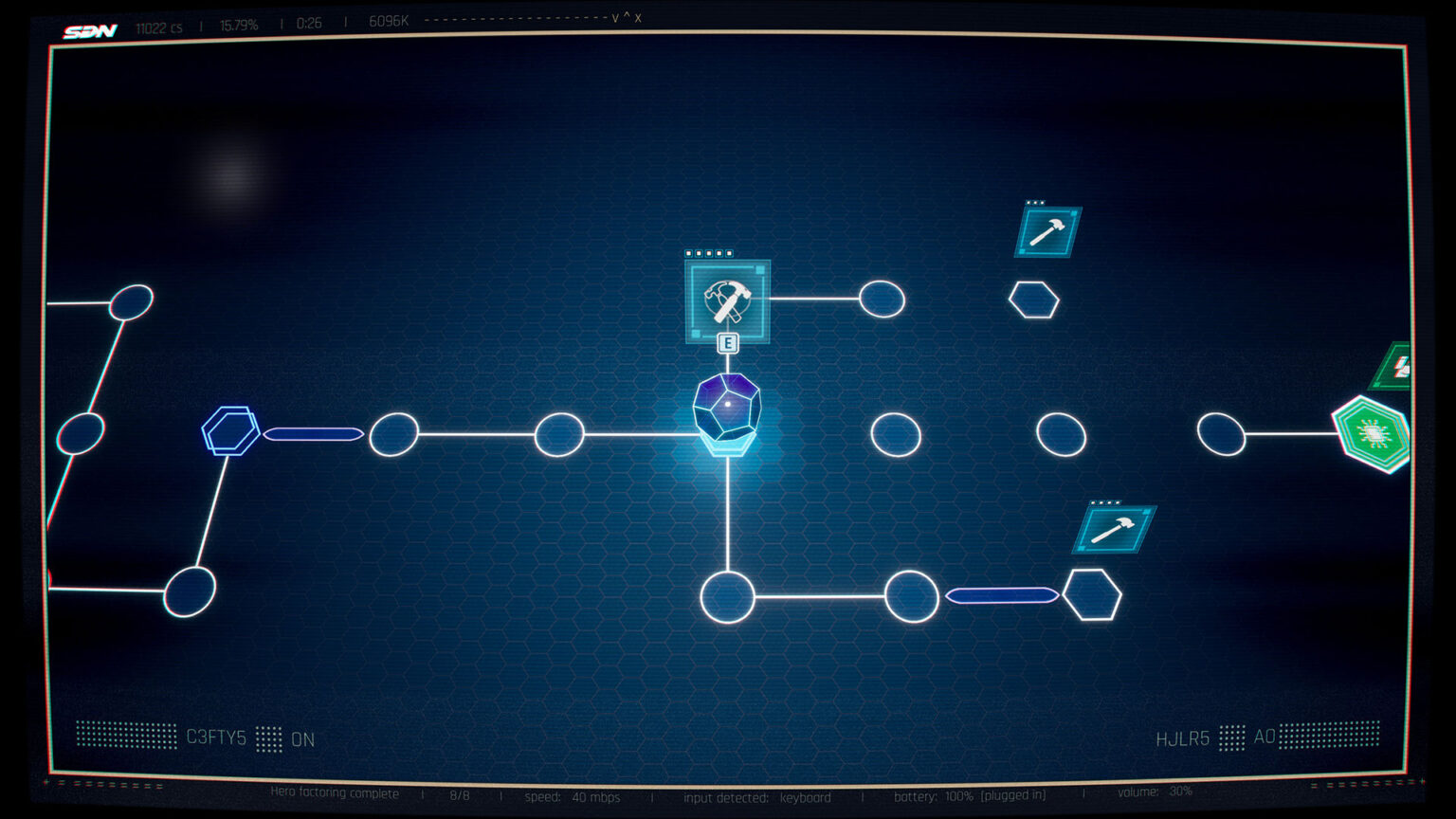
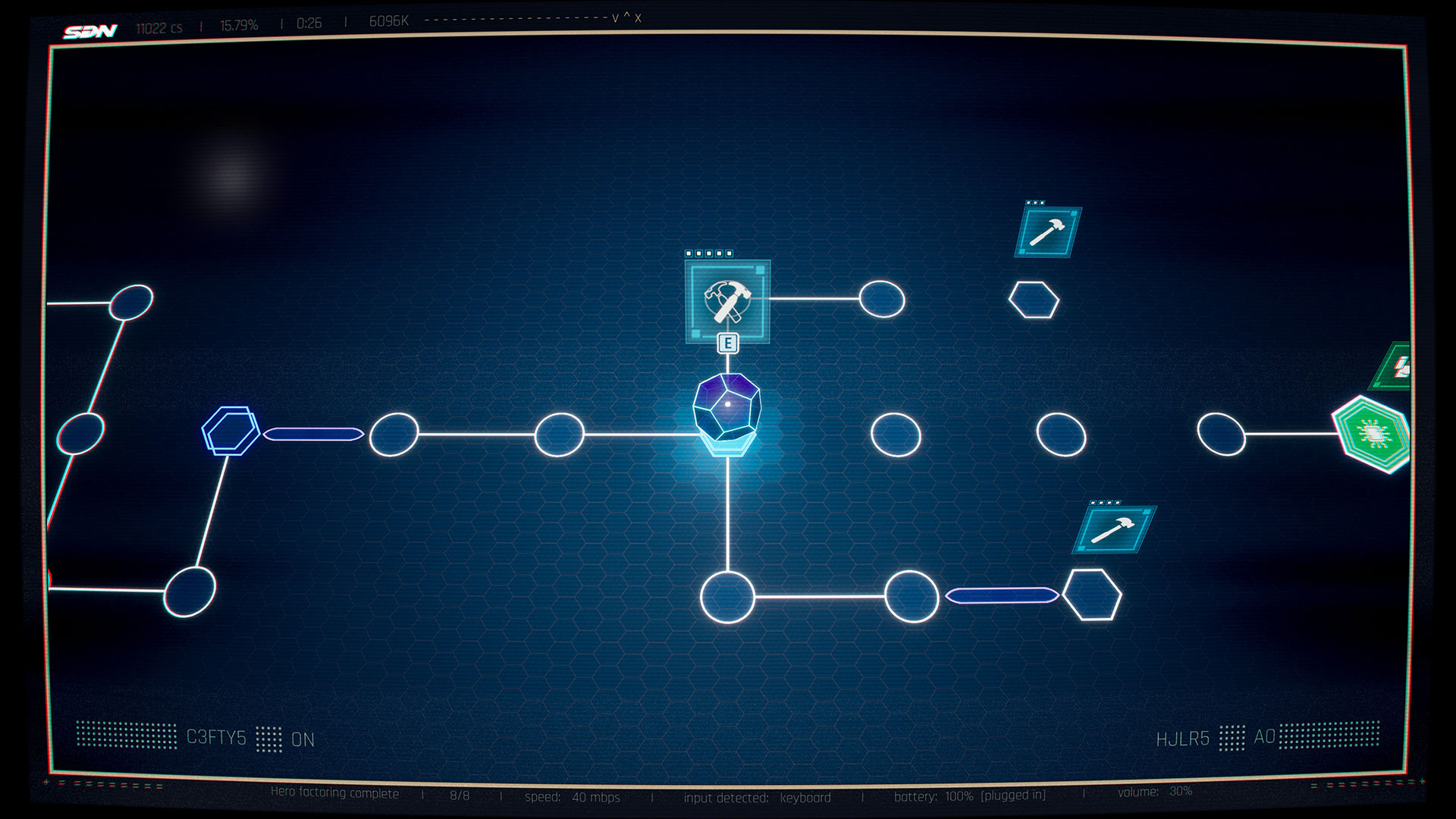
The other major gameplay mechanic is hacking, which surfaces from time to time. Again, it’s not terribly complicated. You’re essentially moving around on a grid, following directional prompts to open gates and eventually avoid viruses that can cause you to fail. Later on, it shakes things up by having you memorize certain sequences instead of displaying them on your screen. Another changeup has you find the right spot based on a waveform sequence. Again, in terms of gameplay, this is really basic and nothing to write home about. They’re there to provide interaction and immersion as Robert Robertson, the character you play. There’s a setting that lets you enable unlimited hacking attempts for a more casual experience.
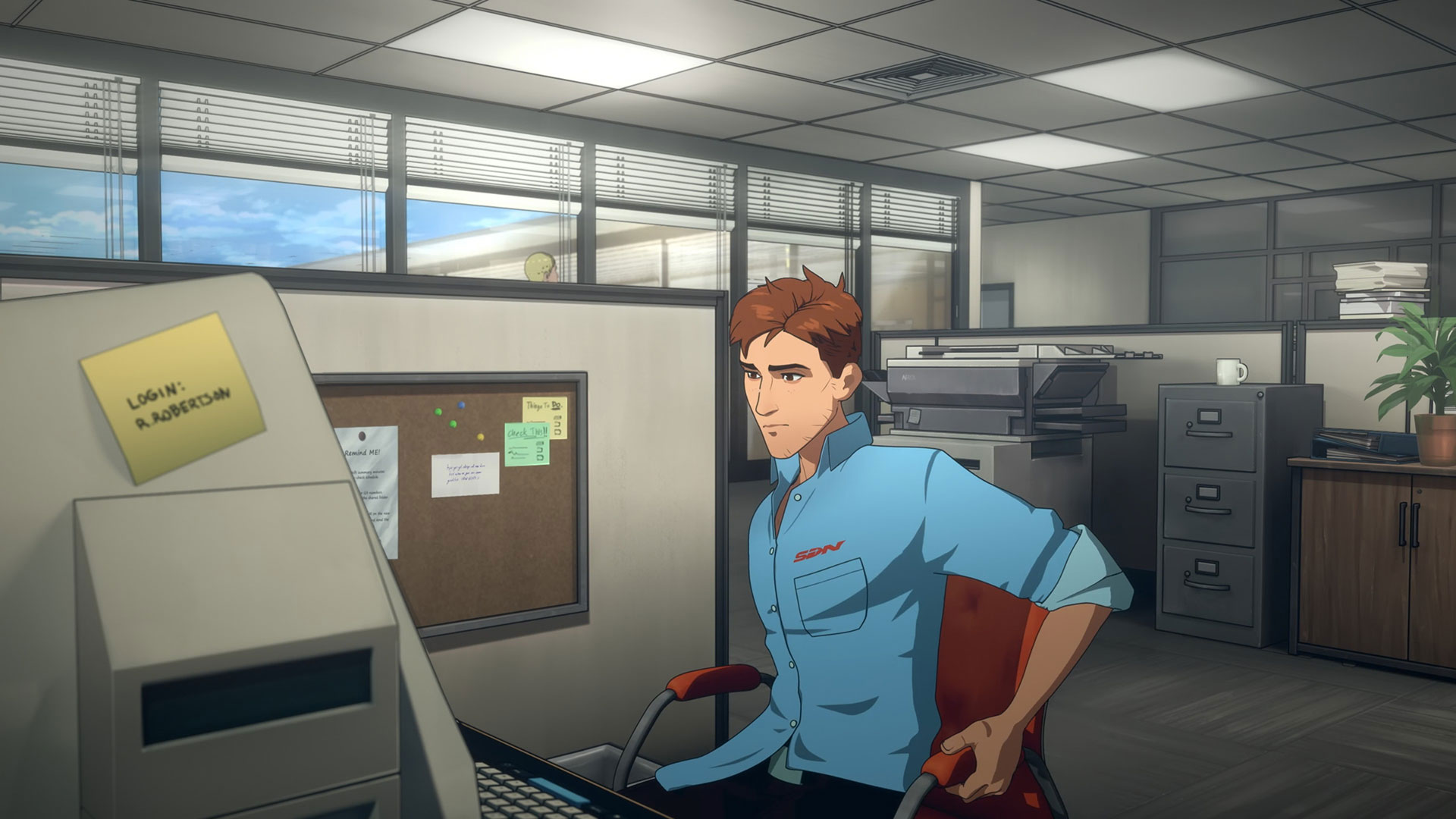
What makes Dispatch particularly interesting, especially when compared to earlier Telltale games and other titles like Life Is Strange and Lost Records: Bloom & Rage, is that there aren’t any sequences in which you’re actually controlling Robert Robertson and walking around the world. The obvious reason is how high-quality the animation is, and putting that into an engine where players can interact with the world adds a lot of complexity with little value. Surprisingly, not being able to do that didn’t take away from the experience. In some ways, it made it even better because there weren’t any segments that felt terribly boring. It’s also the main reason the playtime is on the shorter side, since you aren’t wasting that time walking around trying to find an item to continue the story.
The Hero Among Us
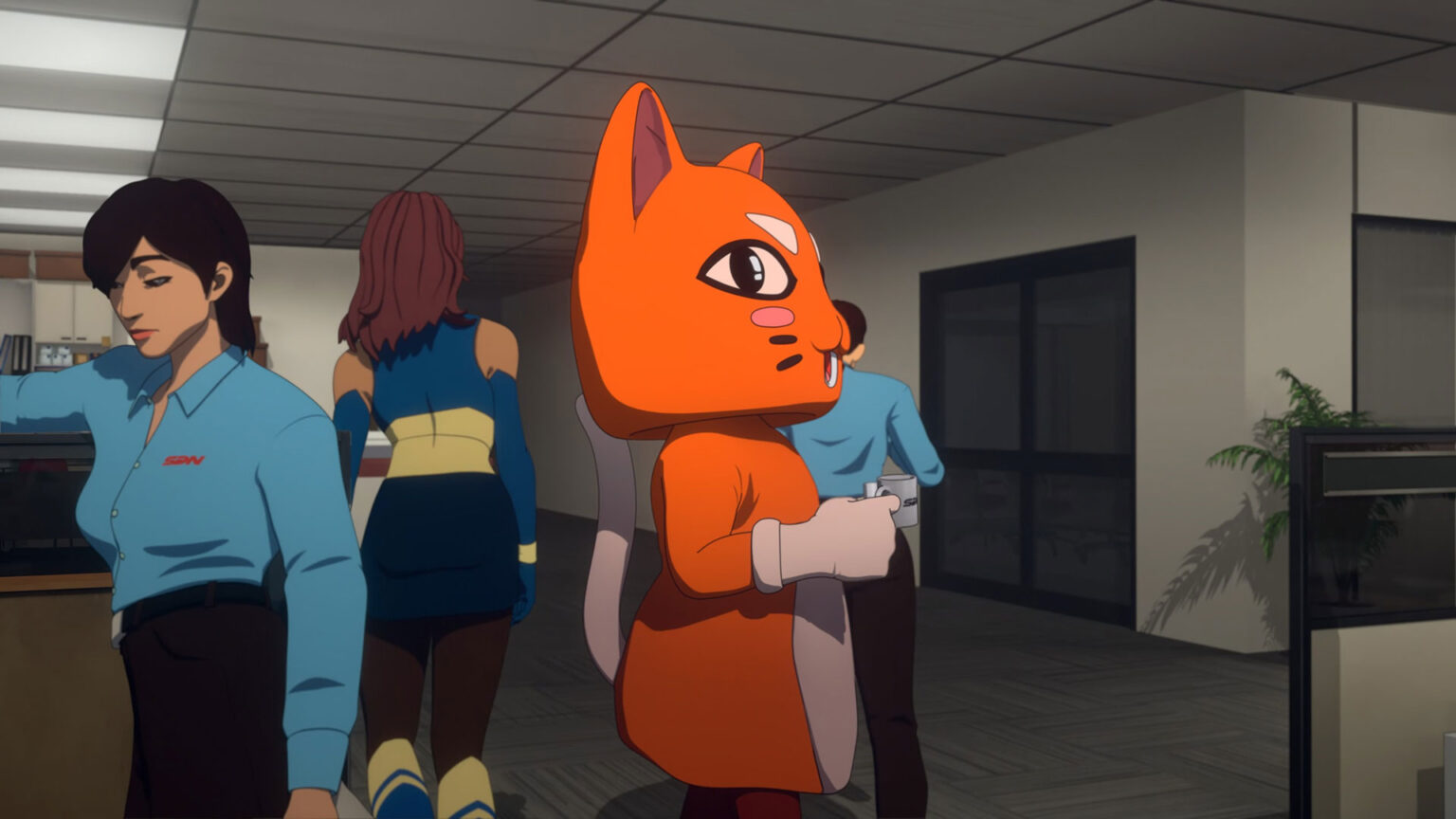
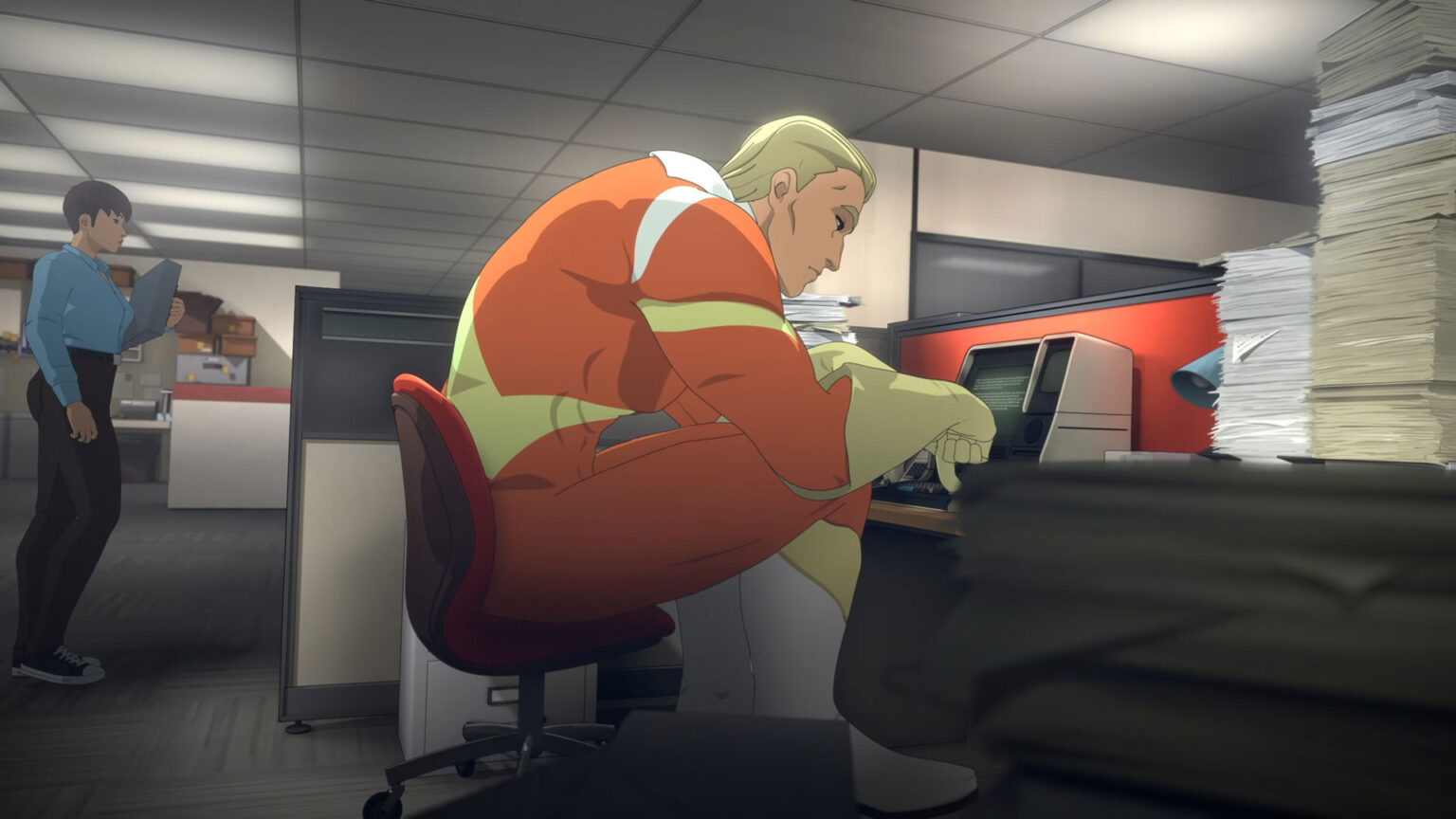
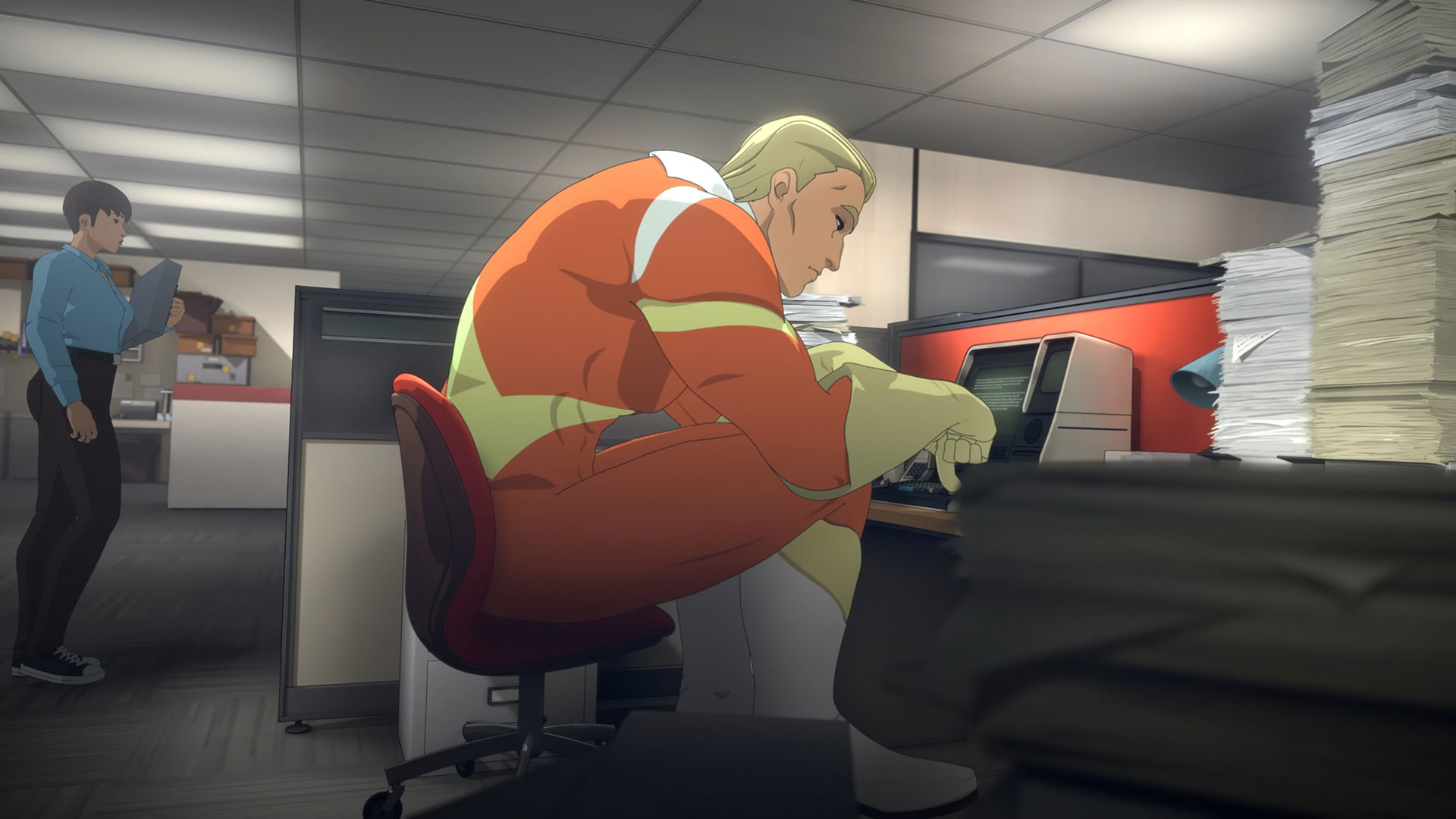
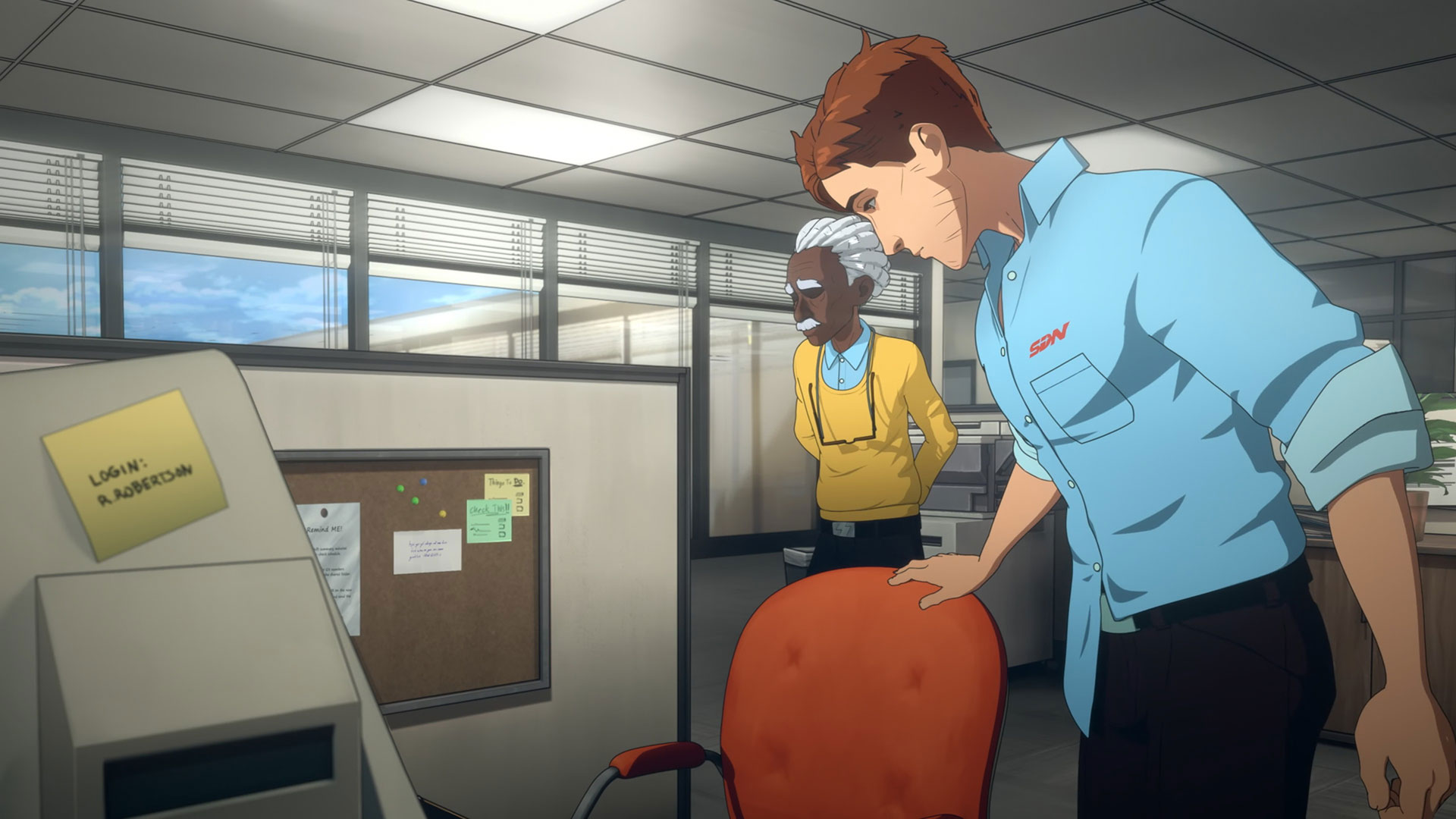
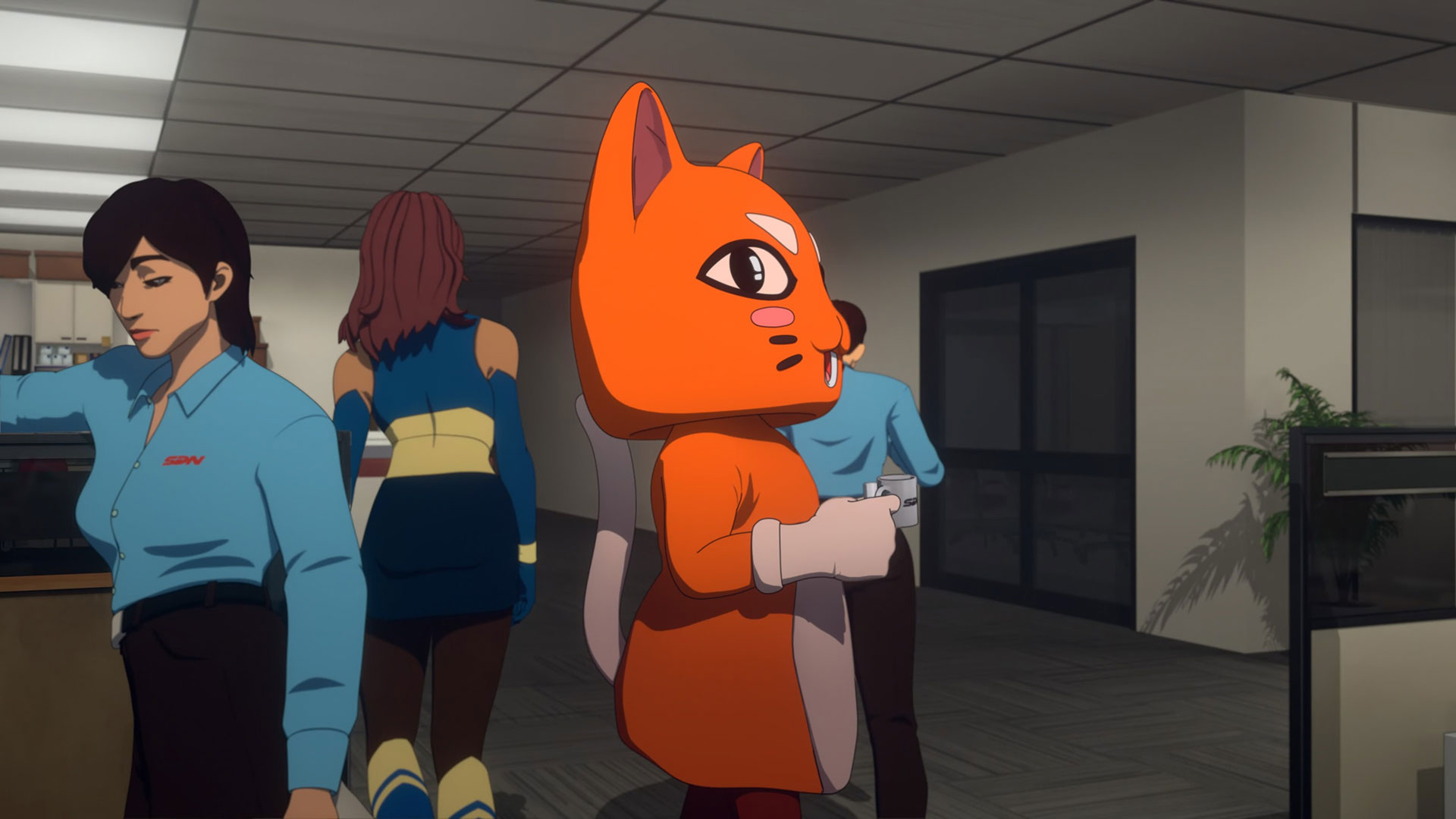
Where Dispatch really shines is in its production. The animation rivals the best you can watch on streaming services these days, while the writing and characters are exceptional. It’s mature, witty, sharp, and at times moving, with plenty of emotional and humorous beats throughout. These days, I don’t find myself laughing very much while playing games, but Dispatch got a few good ones out of me. If you enjoy The Legend of Vox Machina on Prime Video, you’ll feel right at home with Dispatch. It’s simply entertaining in all the best ways, and you’ll easily find yourself attached to many of these characters, if not all of them. The strength of the writing makes some decisions difficult, and I always looked forward to seeing how I compared with other players at the end of each episode. Unsurprisingly, I found myself in the minority many times, which was also the case with many of my playthroughs of Telltale games.
As for performance, the game isn’t terribly demanding and plays smoothly on my PC, Steam Deck, and ROG Xbox Ally X. It’s a perfect title for handheld devices if you own one, and I would even go so far as to say it is my preferred way to play. It’s worth mentioning, though, that on PC there aren’t many display settings. You can choose between Fullscreen and Windowed (with a resolution option), a VSync toggle, and whether you want the game to pause when you bounce out of the window. But since the action sequences basically play out as cutscenes, it’s understandable that there aren’t other graphical settings to mess with. In other words, you won’t experience weird frame rate issues as with previous Telltale games.
Phenom-a-Nom
It’s honestly hard to review Dispatch without coming close to spoiler territory, because many of its best parts could be considered spoilers. I even restrained myself from taking many screenshots during my playthrough for this review because I feel it’s best experienced on your own. This is not only one of the best games I’ve played in 2025, but might also be one of the best games I’ve ever played. To be clear, though, Dispatch isn’t heavy on actual gameplay mechanics, and your level of enjoyment comes down to your expectations. This is very much a narrative experience that focuses on characters and their relationships and how your choices affect the story. It’s not for everyone, but Dispatch definitely casts a wider net than previous Telltale titles because of how much more enjoyable it is from beginning to end.
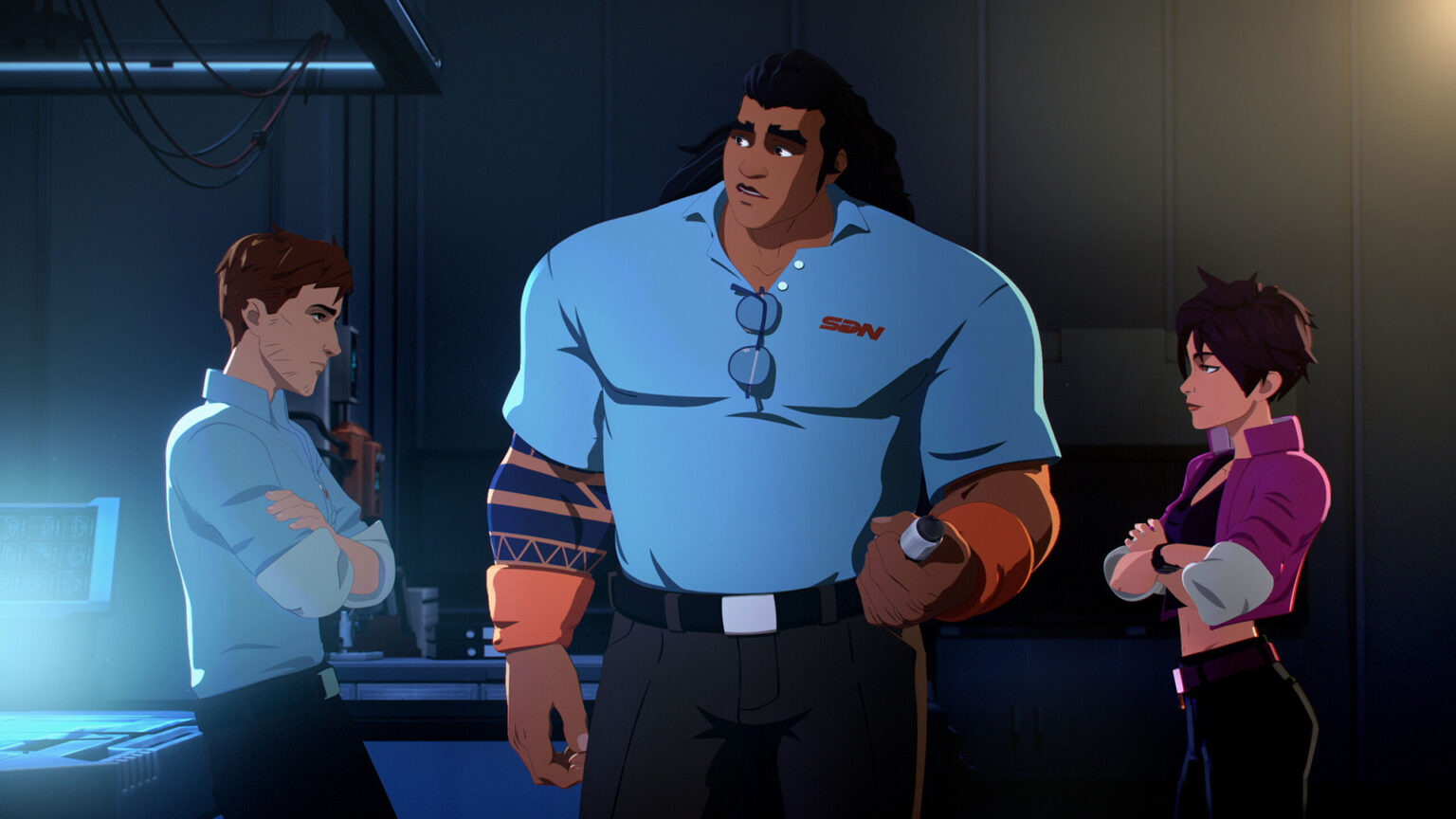
Oftentimes when you’re watching a Marvel movie, you know what the outcome is going to be. You’re not watching because you hope Spider-Man loses. You know he’s going to win at some point, and it will mostly be a happy ending. Dispatch retreads the plot of converting former villains into heroes, but focuses on giving each character a unique and mostly endearing personality. They all have flaws, and yet you’ll find yourself rooting for them. The voice cast, which includes Aaron Paul as Robert Robertson, Laura Bailey as Invisigal, Erin Yvette as Blonde Blazer, Matthew Mercer as Shroud, and Jeffrey Wright as Chase, to name a few, is simply superb.
Even if you think the dispatch and hacking minigames sound bland, this is still one experience I highly recommend to everyone. If you’re a fan of classic Telltale Games or Life Is Strange, there’s no question you should be picking up Dispatch. It’s one of the very best the genre has to offer, if not the best. It might have taken years for a team to finally reignite the torch Telltale Games carried, but I’m extremely excited that AdHoc Studio has managed to pull it off phenomenally with its debut title.
Dispatch has an official release date of October 22, 2025, with the final episodes releasing on November 12, 2025. It’s available on PlayStation 5 and PC. This review is based on a purchased retail copy of the game on PC. While FullCleared does have affiliate partnerships, they do not influence our editorial content. We may earn a commission for purchases made through links on this page.
Dispatch Review Gallery

Continue?
Like our content?
Subscribe to our newsletter and get video game news, reviews, features, and deals straight to your inbox.
You're subscribed!
Thanks for signing up. Look for an email from Substack at .
No email after a few minutes? Subscribe on Substack.
This newsletter may contain advertising, deals, or affiliate links. Subscribing to the newsletter indicates your consent to our Privacy Policy. You may unsubscribe from the newsletter at any time.