
The Xbox Partner Preview closed out with a brand-new IP that immediately caught my attention. Artificial Detective is the debut title from indie studio Vivix, a team made up of artists who have worked on games like Call of Duty: Modern Warfare 2, Control, and Dead Space, as well as Netflix’s sci-fi anthology series Love, Death & Robots. The game is a third-person action-adventure set in a “decopunk”-inspired dystopian future, and it’s heading to PlayStation 5, Xbox Series X|S, and PC in 2027.
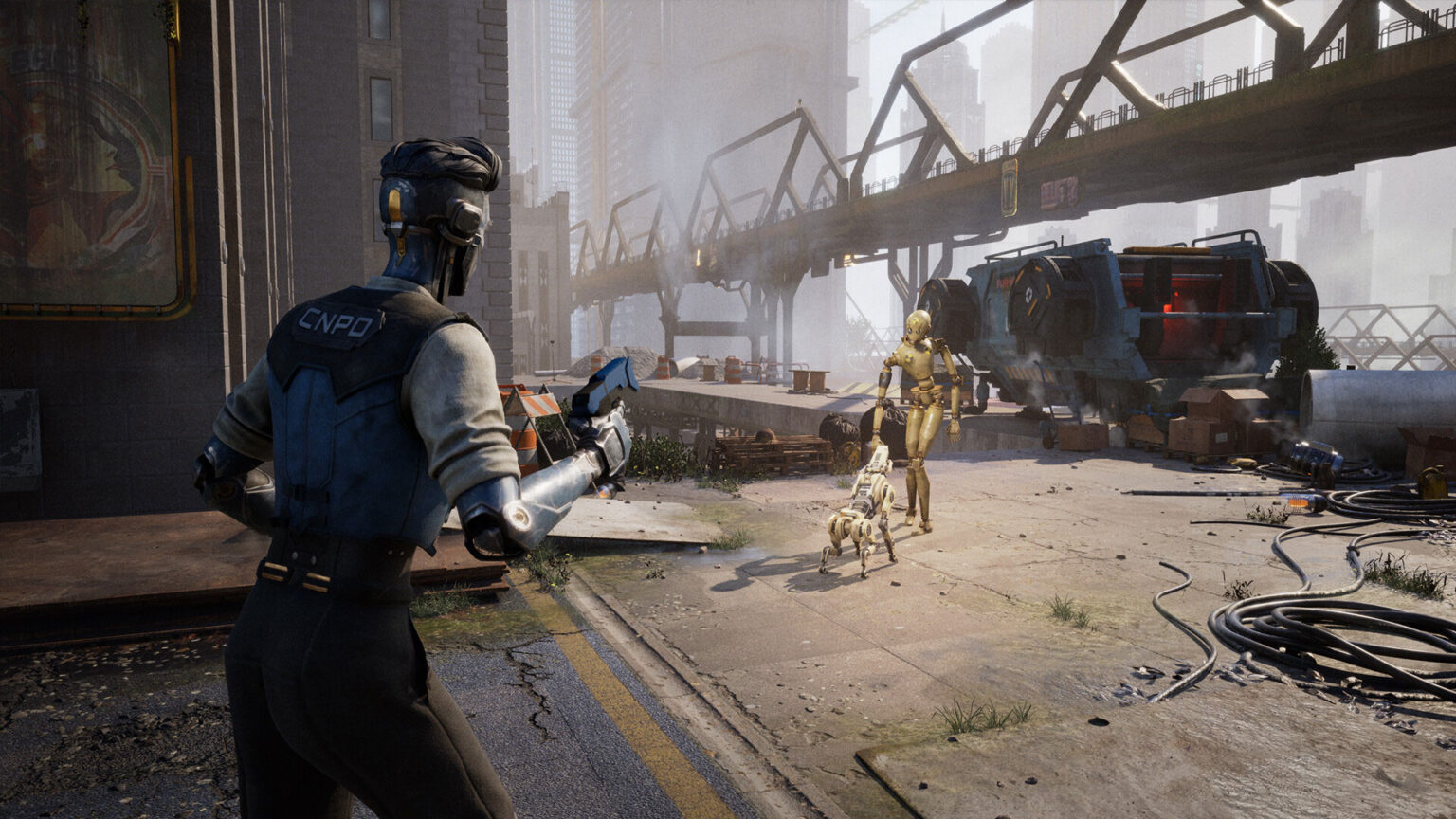
Players take on the role of AD 2846, a robot detective who wakes up in Conglomerate North, a multilayered futuristic metropolis inspired by 1930s Art Deco design. Humanity has seemingly vanished, and the city is now overrun by rogue machines that were originally meant to preserve it. AD 2846 only has fragmented memories to work with, recalling that he once served as a sidekick to a human detective, and things get more complicated when he discovers a single human child mysteriously left behind.
The premise alone is interesting, and the game is setting up to have a companion system of sorts. AD is joined by two characters: Mowgli, a human girl who was raised by machines and believes she’s a robot, and D.A.W.G. (Dedicated Artificial Weaponized Guard), a robodog with a damaged battery who accidentally awakens AD at the start of the game. Vivix co-founder Ilya Kuzyuk describes AD as “a mashup of RoboCop and C-3PO,” which is a pretty great pitch. The chemistry between a naive robot who dreams of becoming human and a girl who thinks she’s a machine gives the game a Pinocchio and Jungle Book dynamic that feels fresh for the genre.
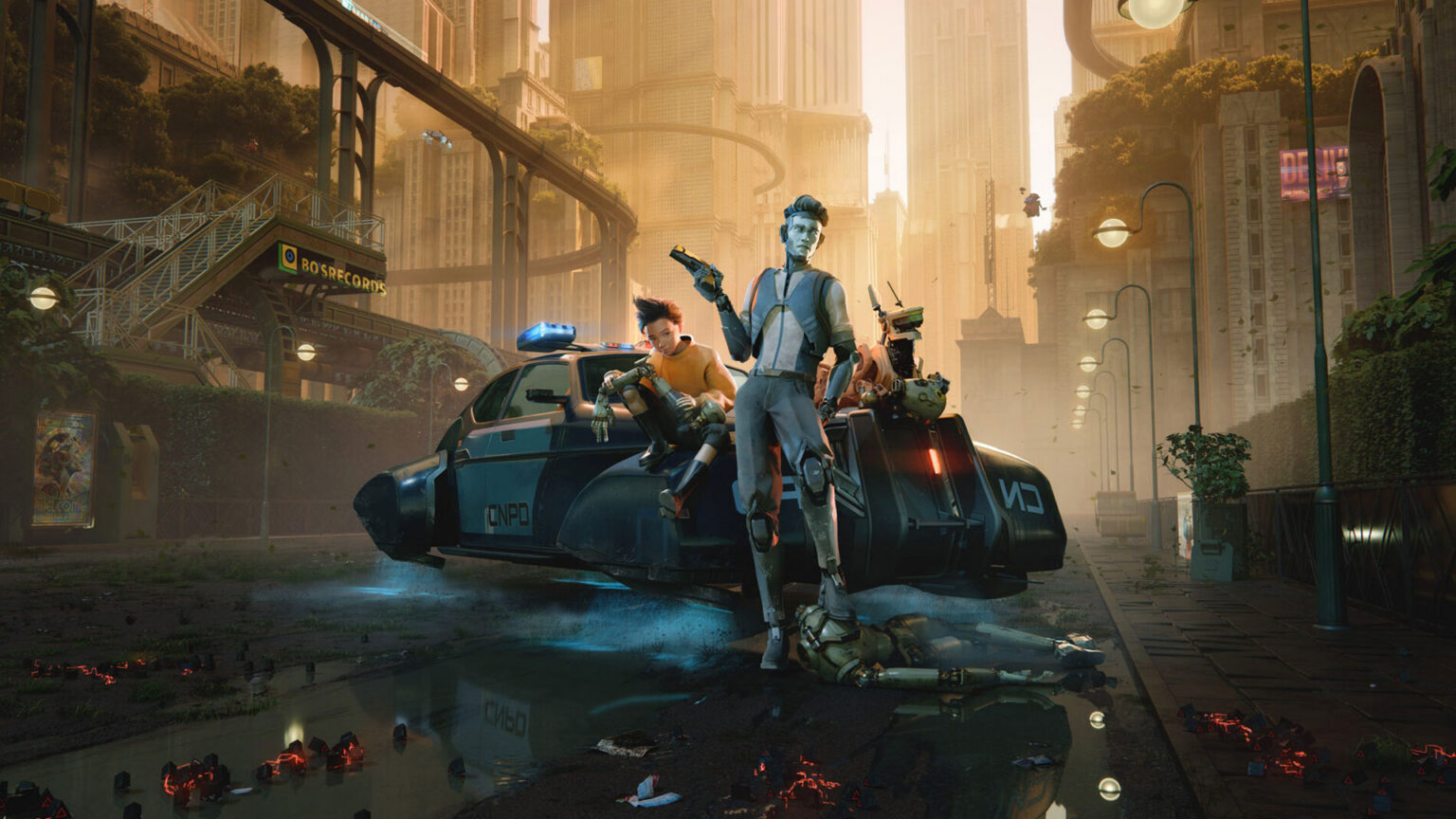
Companions aren’t just there for the story either. They’re deeply tied to gameplay progression. Mowgli opens up crafting, repairs, and upgrades, while D.A.W.G. can attack enemies, destroy environmental elements, scan items, and provide utility support. As your relationships with them develop, you unlock new abilities and new ways to interact with the world. The trio travels across Conglomerate North aboard a flying streetcar that serves as their hub, where you can upgrade companions, piece together clues, and receive mission briefings.
While still early, combat appears to be designed for flexibility. AD carries an electric taser gun with limited power and can scavenge weapons from defeated robots, though ammo is scarce. Players can approach encounters through direct combat, stealth, hacking, traps, or using the physics-driven environment to their advantage. There’s also an investigation component where players gather clues from the environment, chat with bots, read holographic newspapers, and gradually recover fragments of AD’s lost memories through flashbacks.
The visual quality is particularly impressive for an indie studio. Vivix co-founder Vadim Krayevoy credits the studio’s partnership with art team Team from Earth and a deliberate approach to scope: “We focused on less, but better.” The world draws heavy inspiration from neo-noir, retro-futuristic cinema, and anime, with films like Blade Runner and the atmosphere of Cowboy Bebop shaping the tone. Personally, I’m getting some BioShock vibes from this one.