
Quick Verdict
I’ve spent a lot of time with roguelites over the past year. Between Megabonk, Ball x Pit, Absolum, and Hades II, the genre has eaten up hundreds of hours of my time, and I even built one of my own with Better Luck Next Run. So when poncle revealed Vampire Crawlers, one of our most anticipated games of 2026, I was ready to lose weeks to it. Unfortunately, after 30 hours, I rolled credits and put it down. The pull just wasn’t there.
That’s not damning for a $9.99 game, and at that price, Vampire Crawlers is an easy recommendation. But poncle’s first spin-off is a much more basic experience than Vampire Survivors, as strange as that may sound. I found that the build crafting revolves almost entirely around the Crawlers themselves rather than the cards, the dungeon crawling doesn’t really earn its name, and the loop starts repeating itself once you understand how the combo system works. Vampire Survivors thrived on accessibility plus the steady trickle of discovery. Vampire Crawlers has the accessibility. The discovery runs out faster.
Stack Overflow
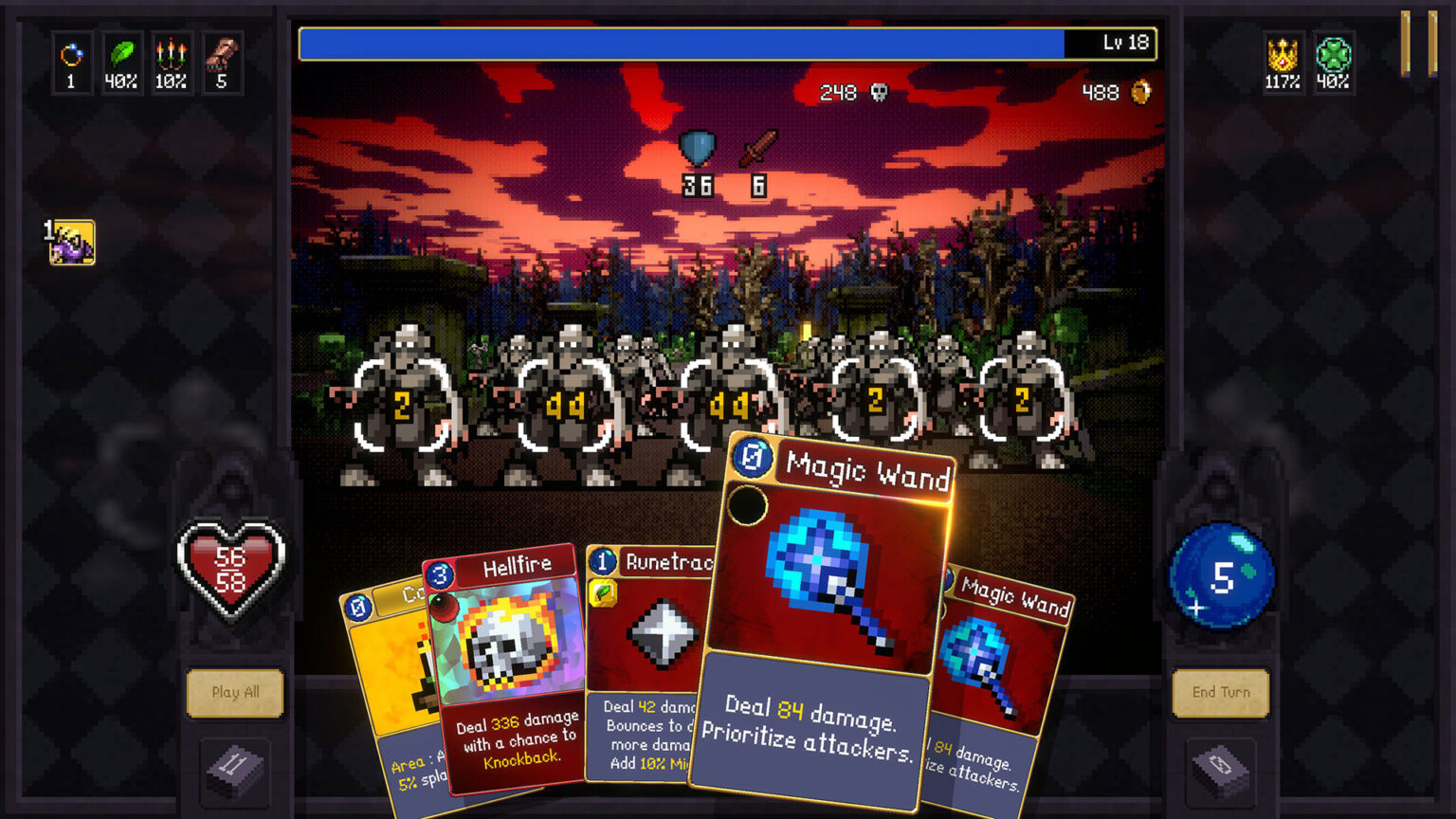
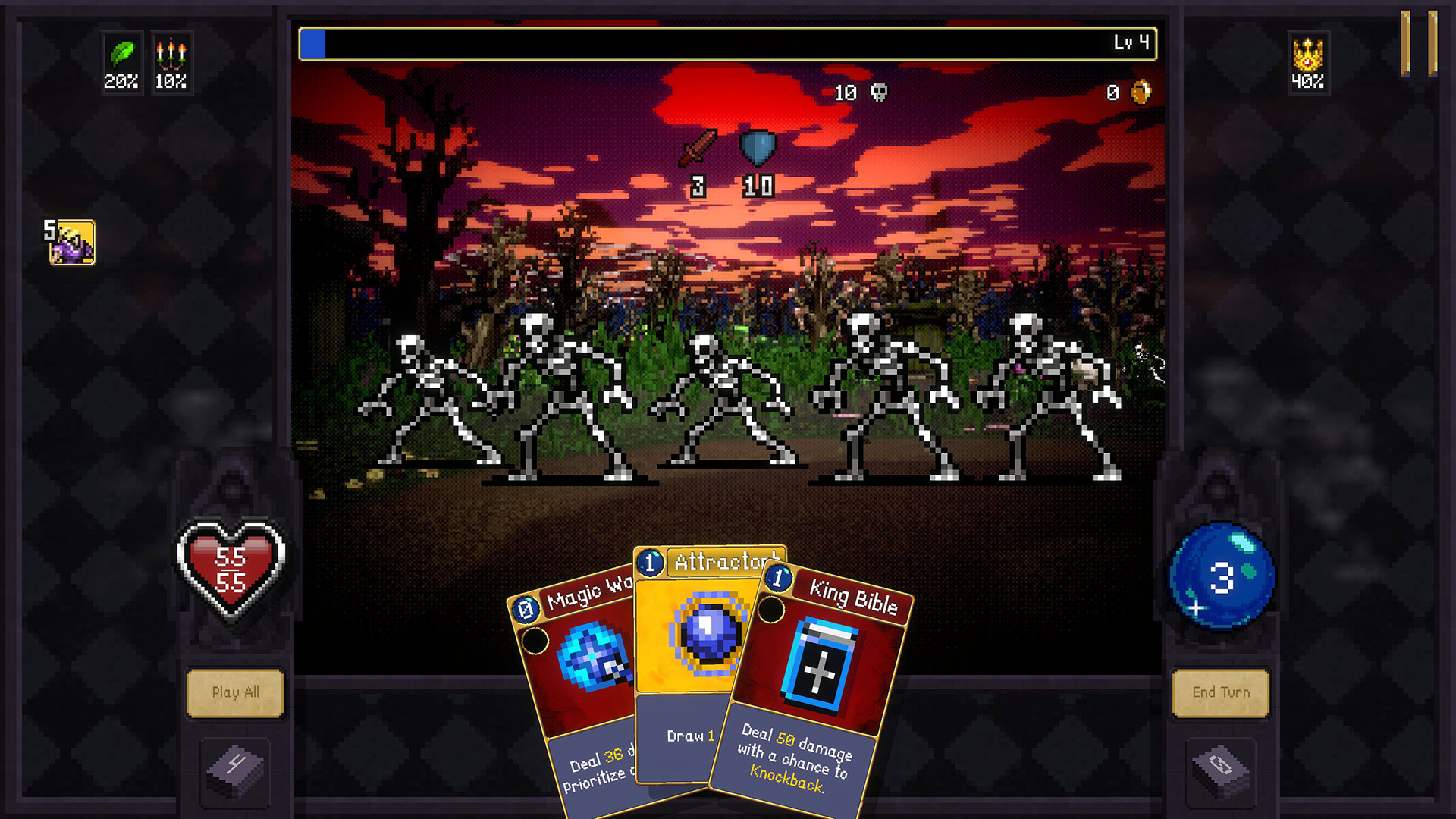
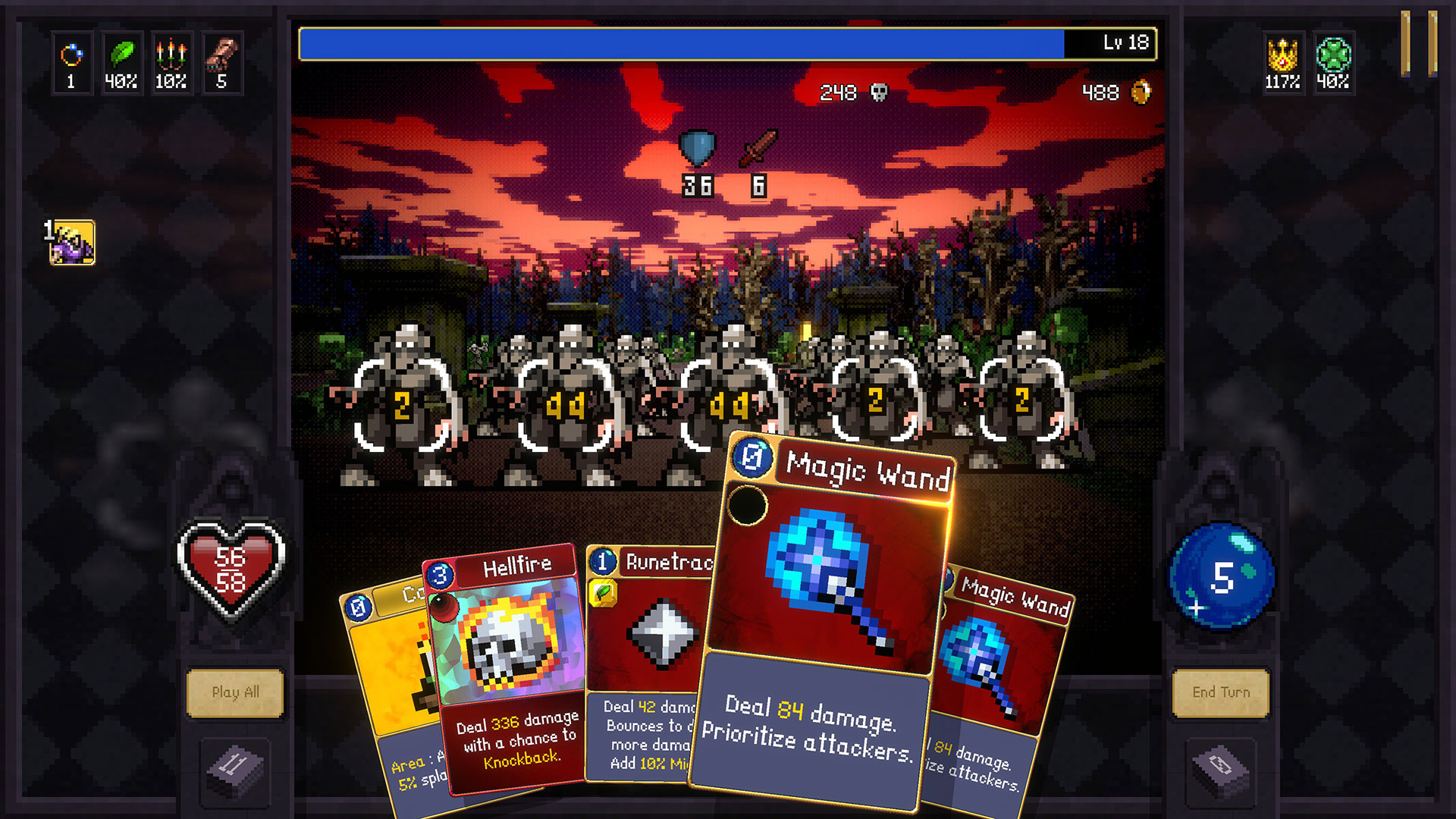
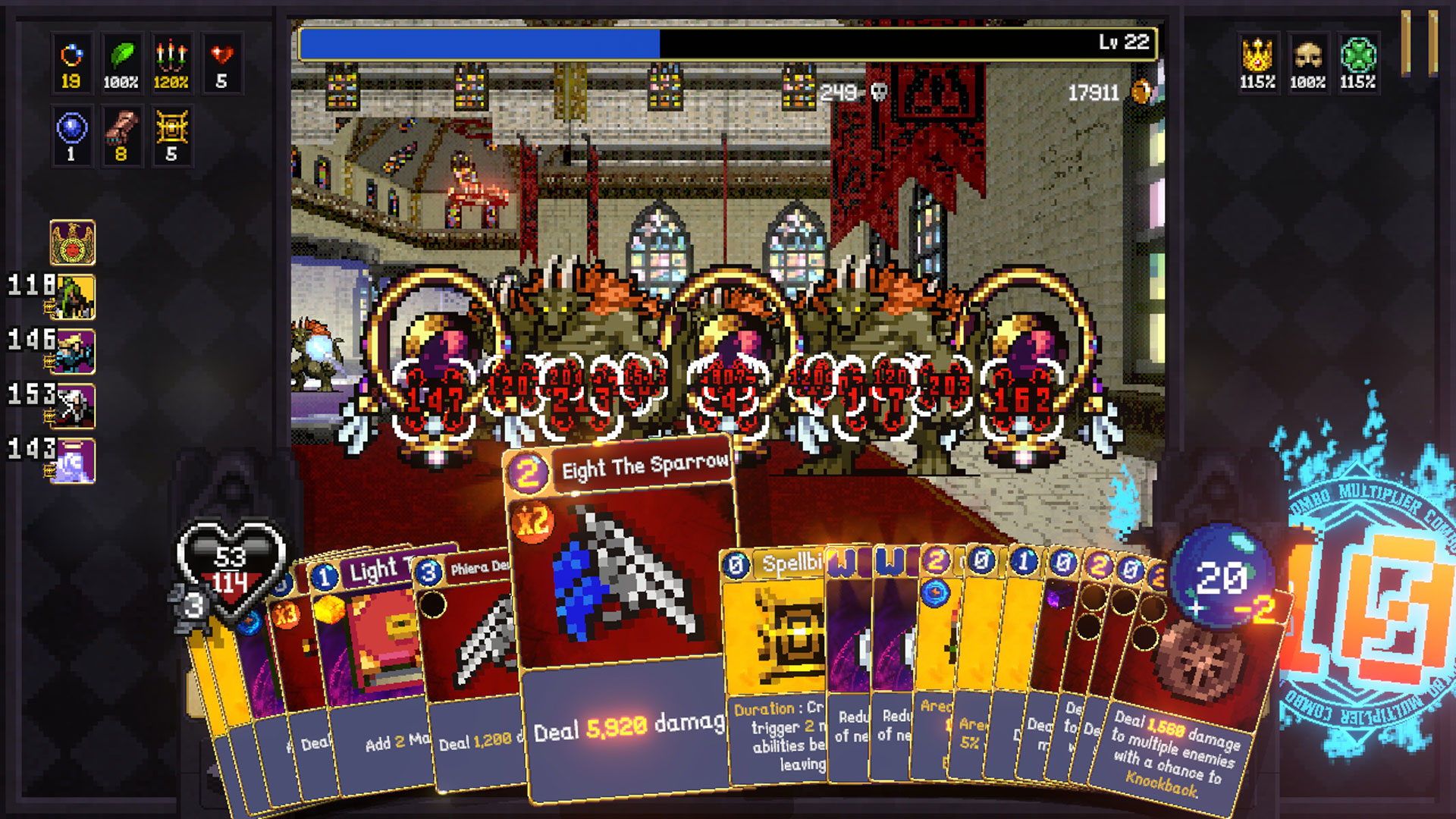
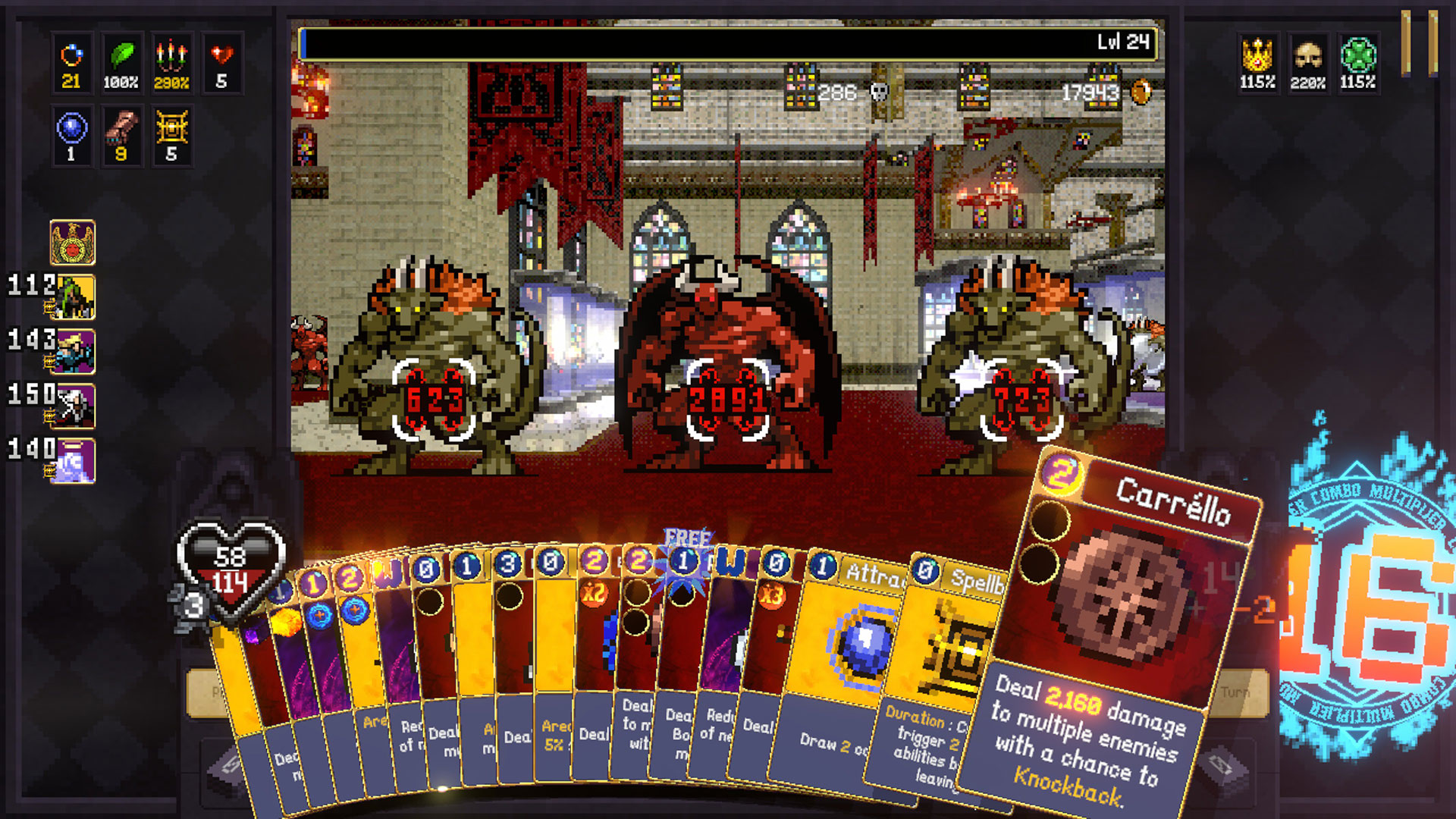
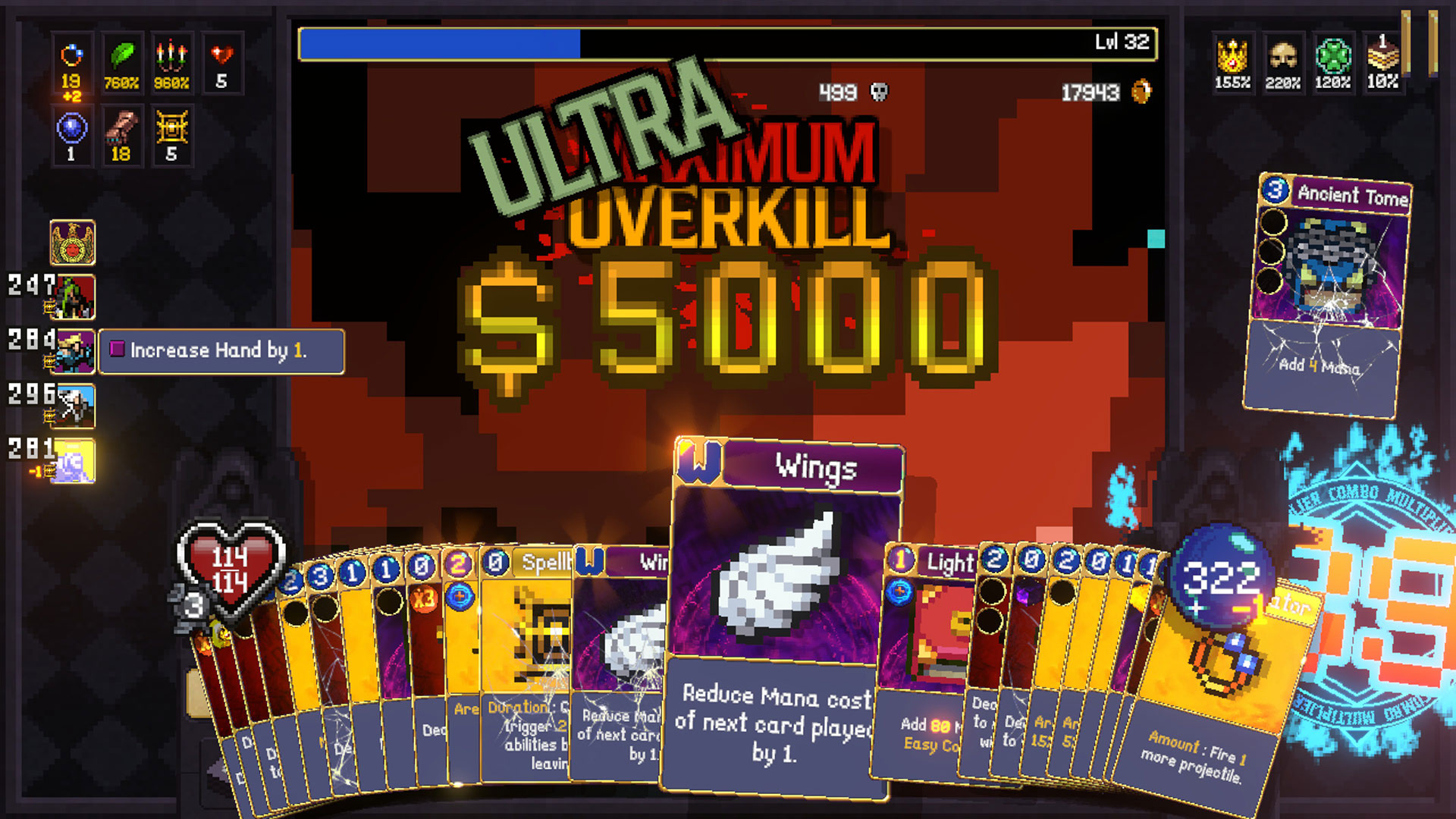
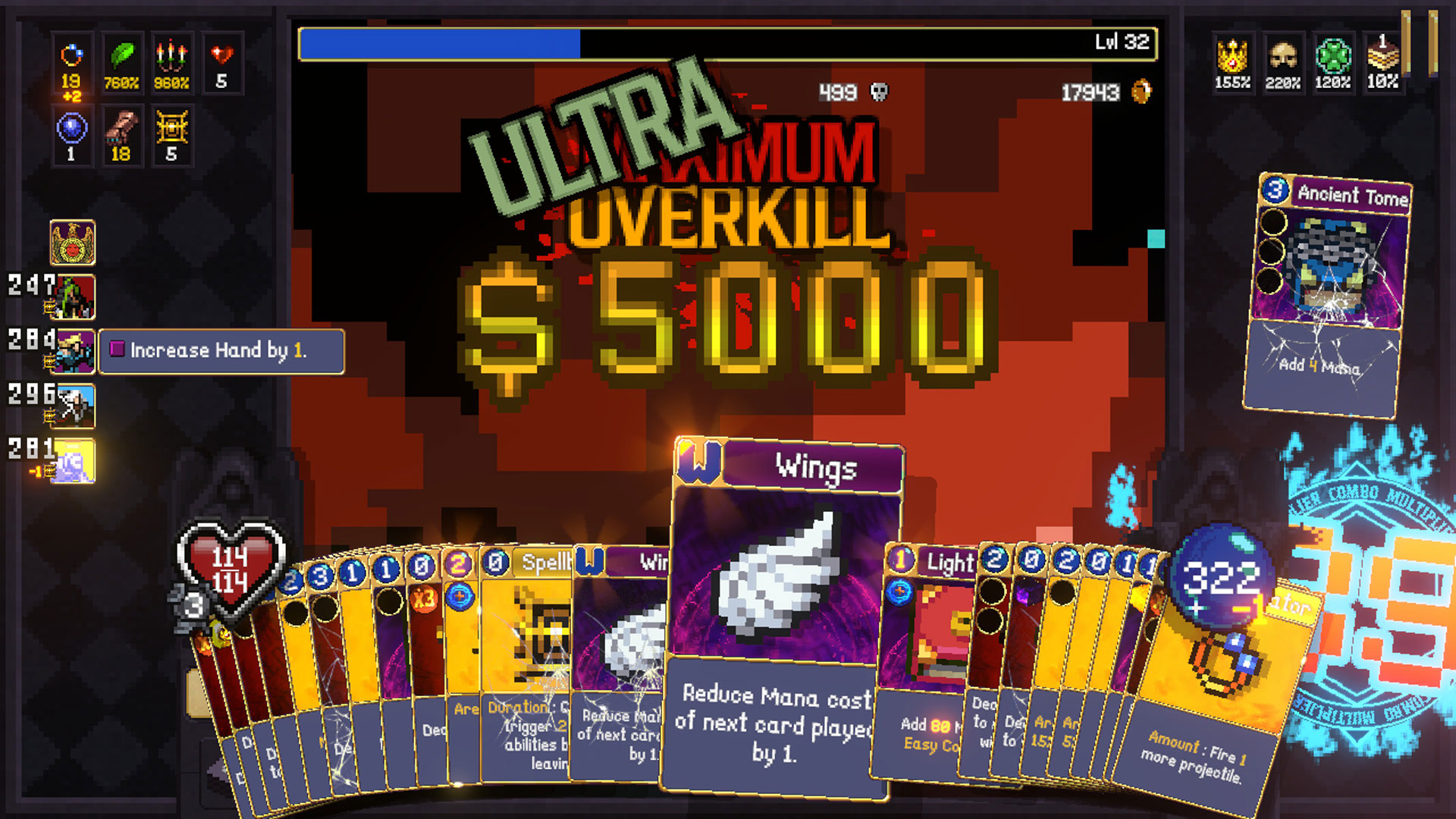
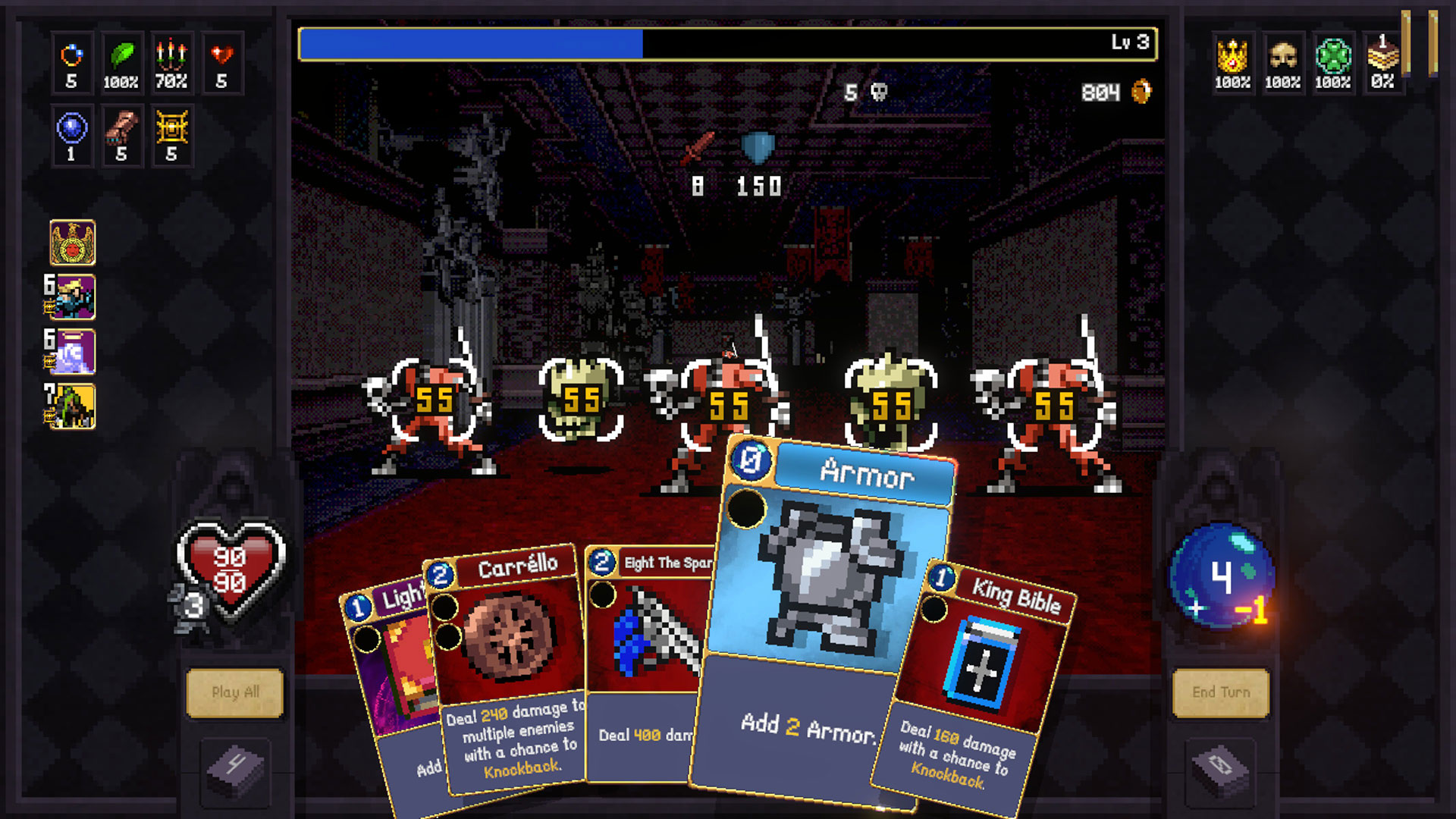
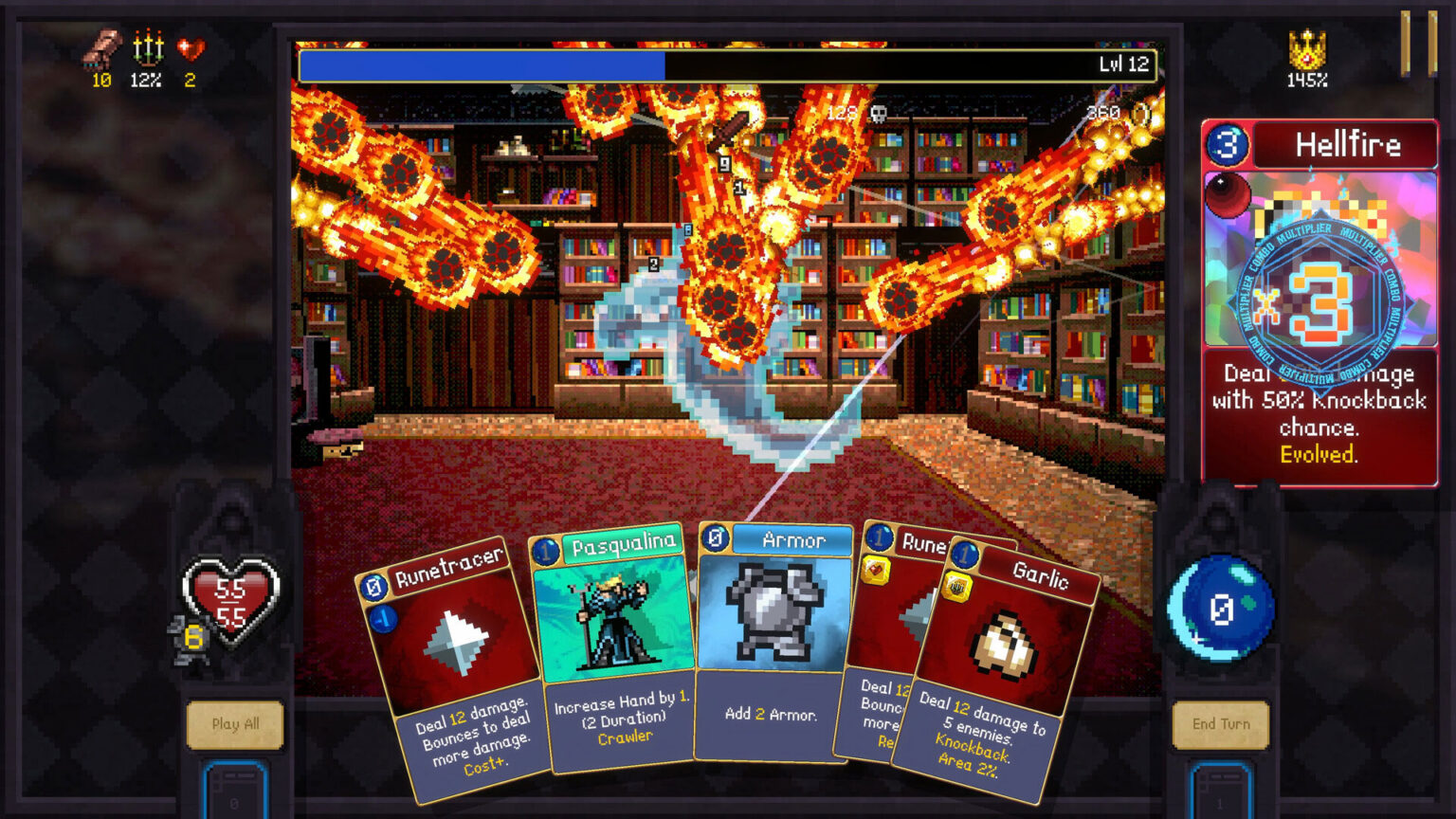
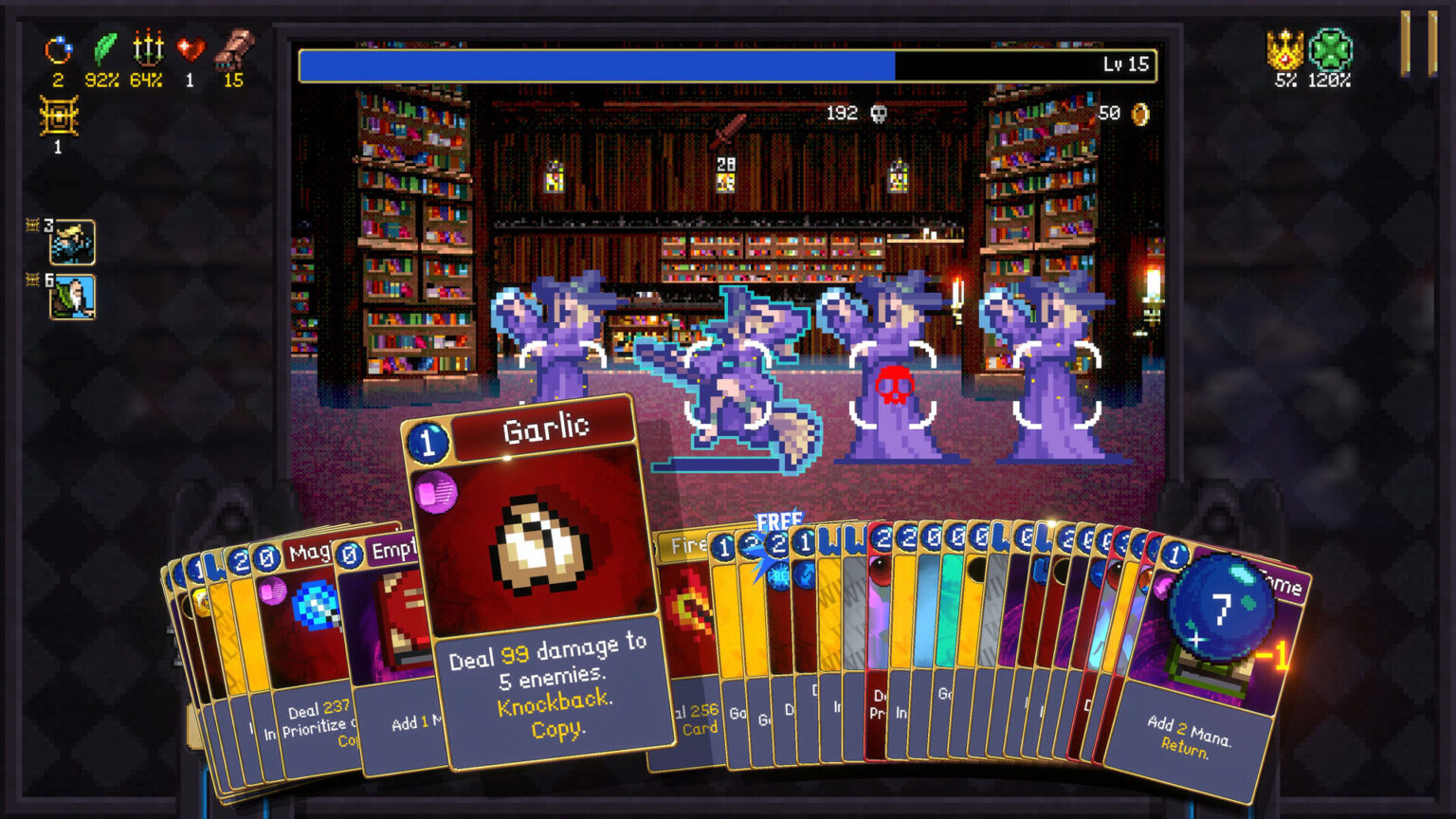
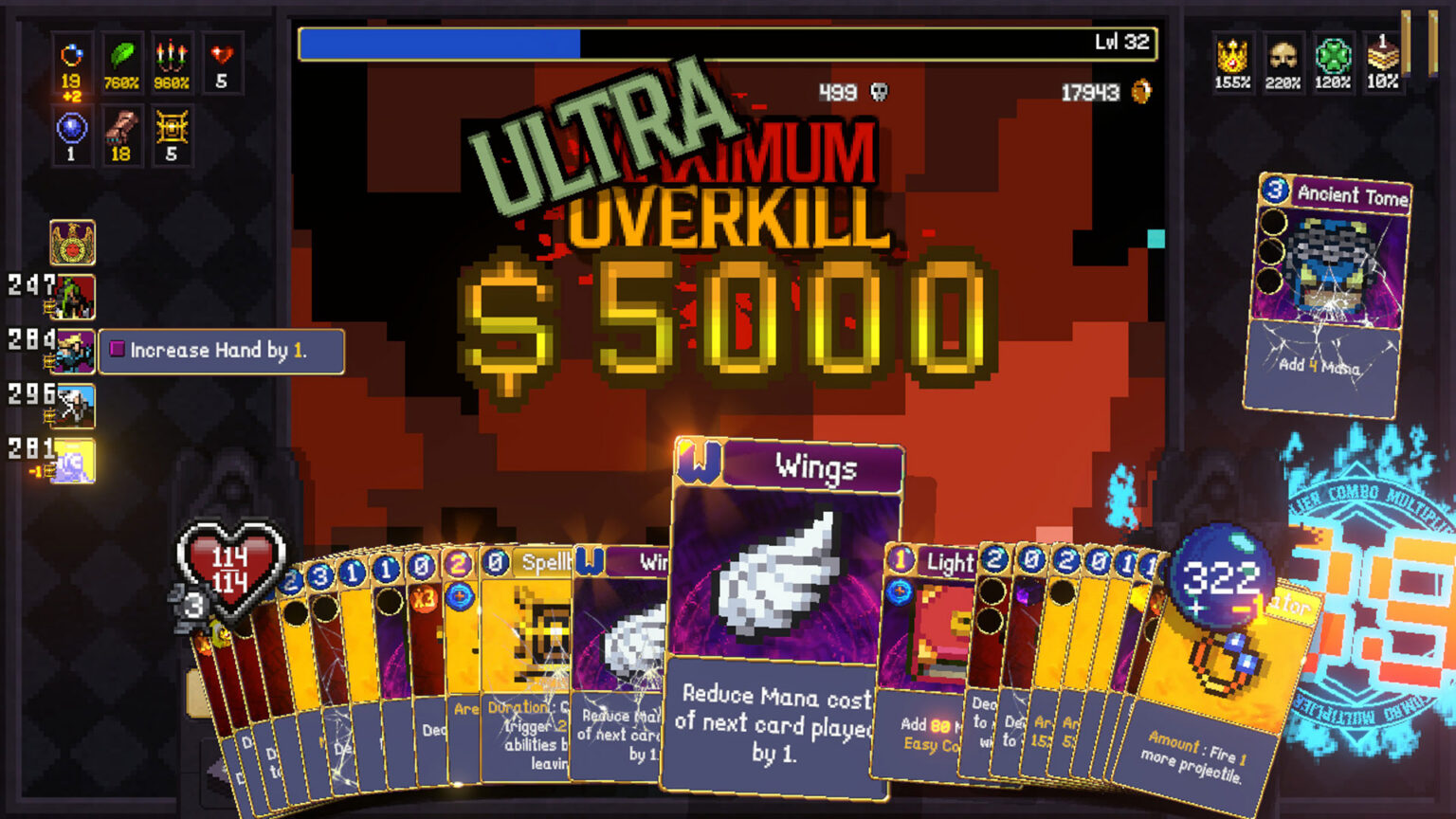
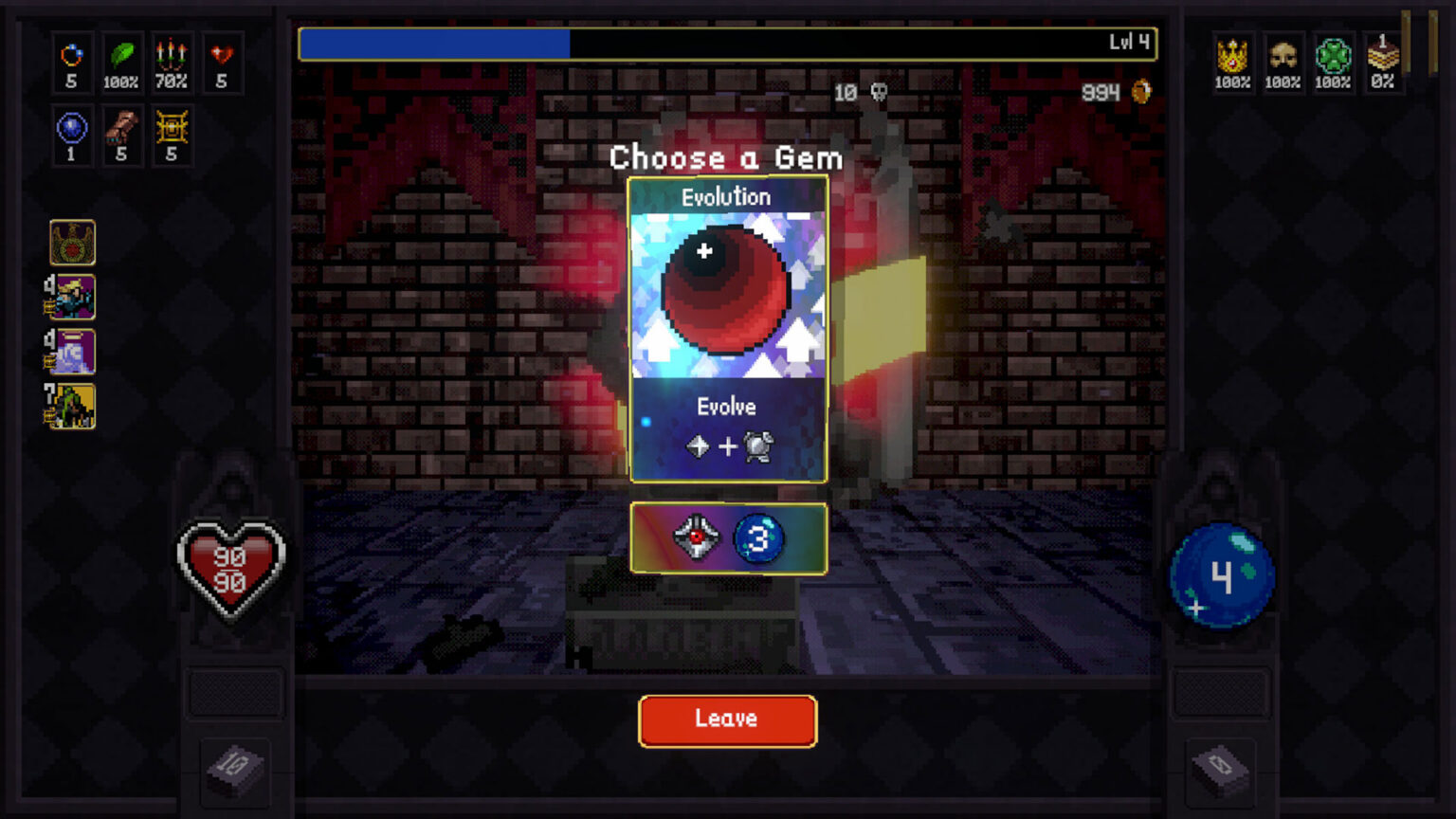
The core of Vampire Crawlers is the Turboturn combo system. You play cards in ascending mana cost order, a 1 followed by a 2 followed by a 3 and so on, and each card multiplies the effect of the next one. The longer the chain, the bigger the numbers on each card. Stack enough together and you can send a single turn into overkill territory with most of your deck still in your hand.
Wilds are how you keep that chain going past 4 mana, since cards costing more than 4 are pretty rare in the game. After playing a Wild, you can pick any card you want, so you’d typically drop back down to a 0 and start climbing the ladder again without breaking the combo. The trick is finding the right balance of mana costs and Wilds in your deck so that every turn flows into a long chain rather than a short one.
It really felt like the problem with Vampire Crawlers was that the strategy revealed itself early. Most of the actual decisions happen during the card draft, not during the turns themselves. Once you’ve internalized the rule, play in ascending order and refresh with Wilds, almost every turn becomes the same optimization puzzle solved slightly differently based on what you drew. While the puzzle is fun, it’s just not a puzzle with many answers.
House of Cards
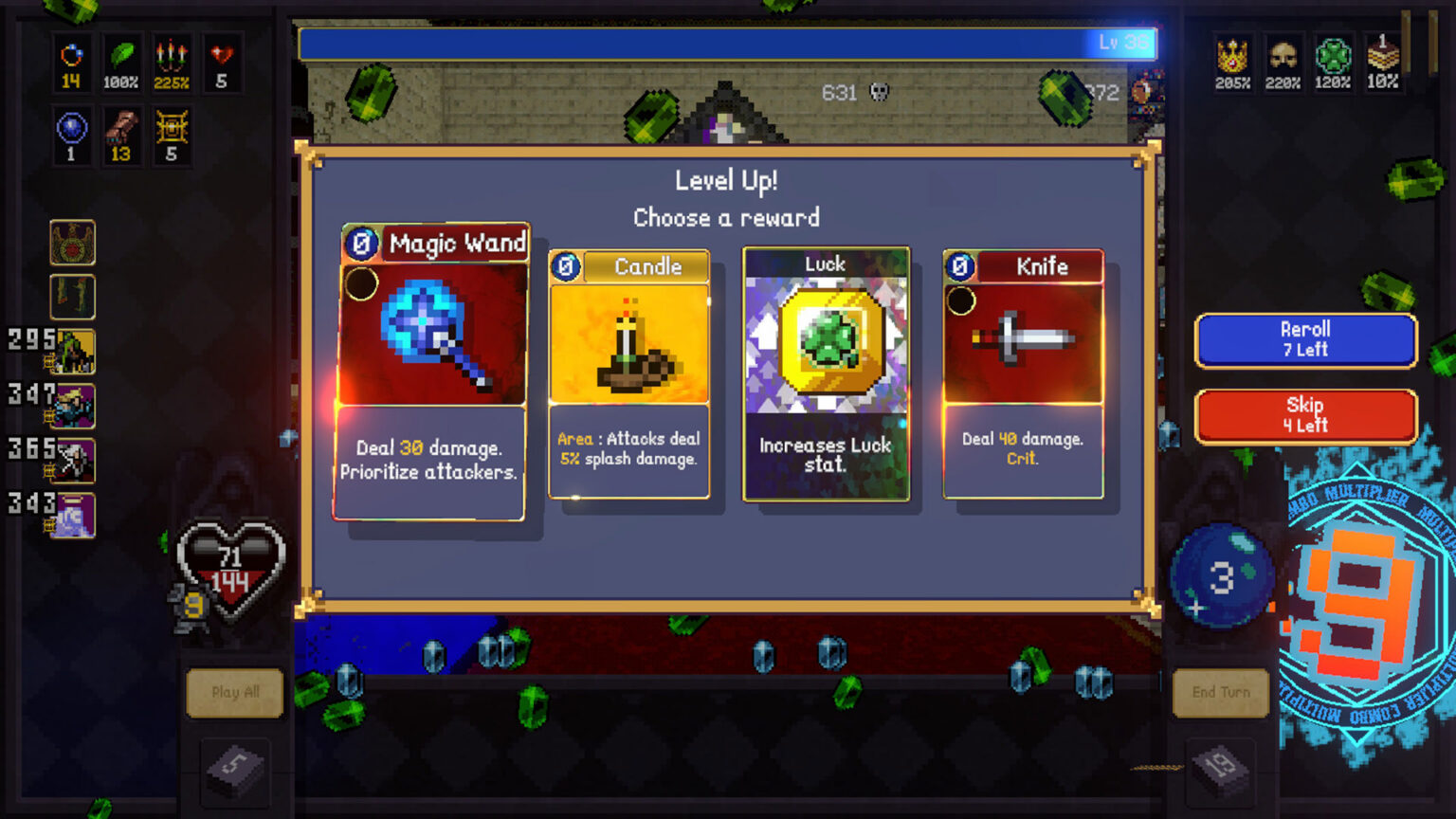
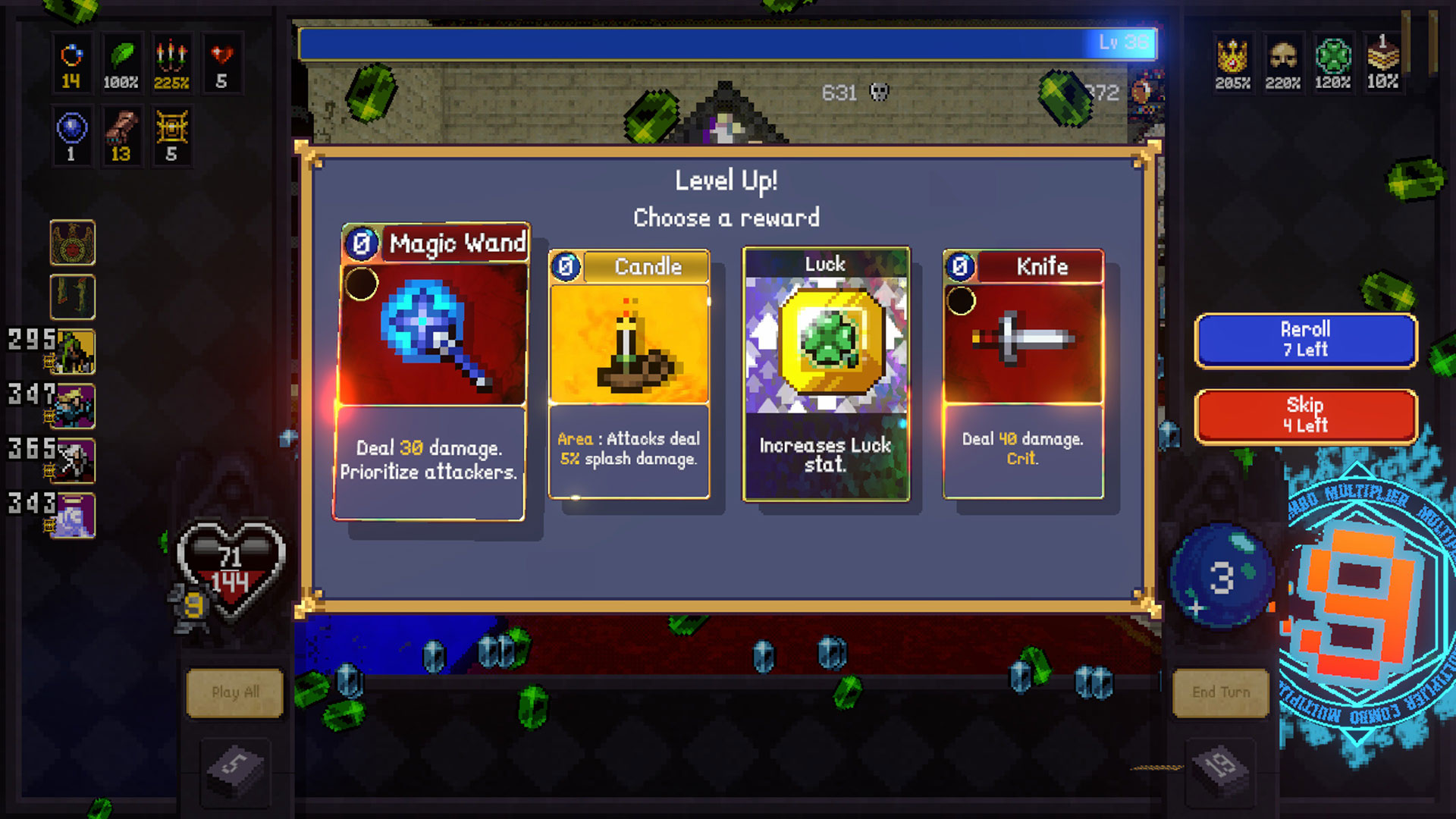
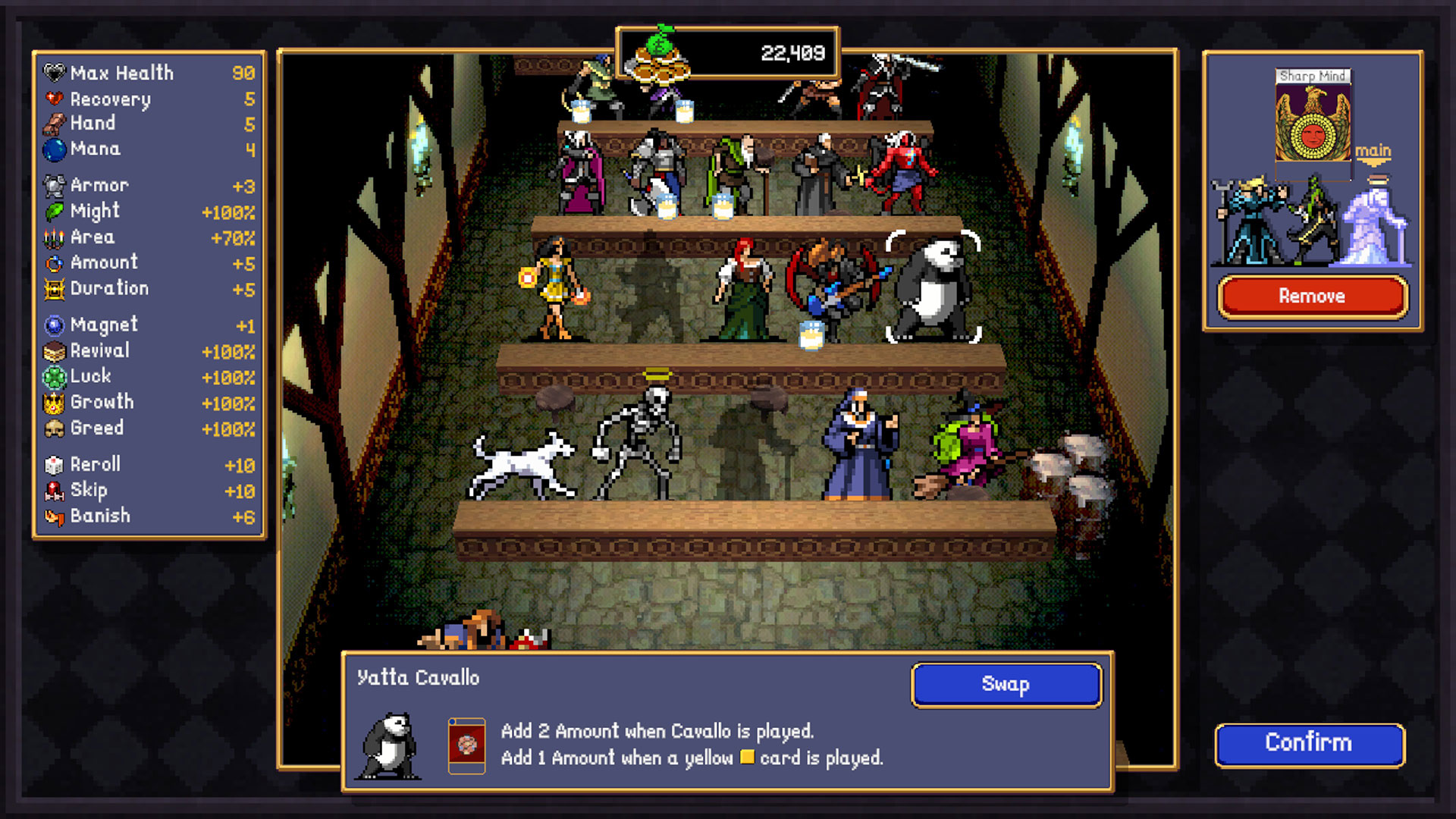
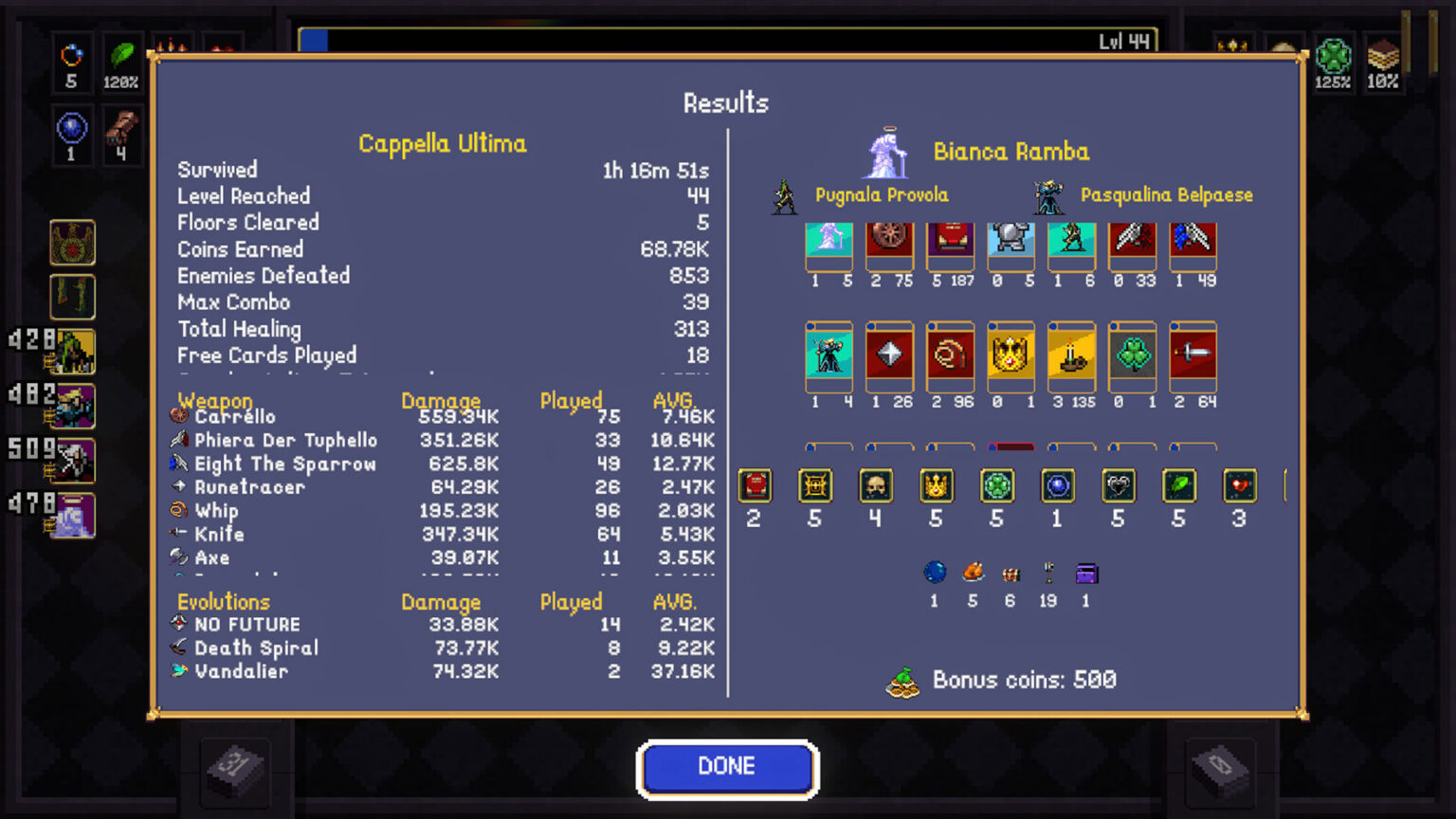
Builds in Vampire Crawlers really live and die on the three Crawlers you bring into a run. Each one generally has a passive that triggers when their card is played and a second passive that scales off a specific card color. Stack the right three, and you’ve shaped most of your run’s identity before you’ve even drawn your starting hand.
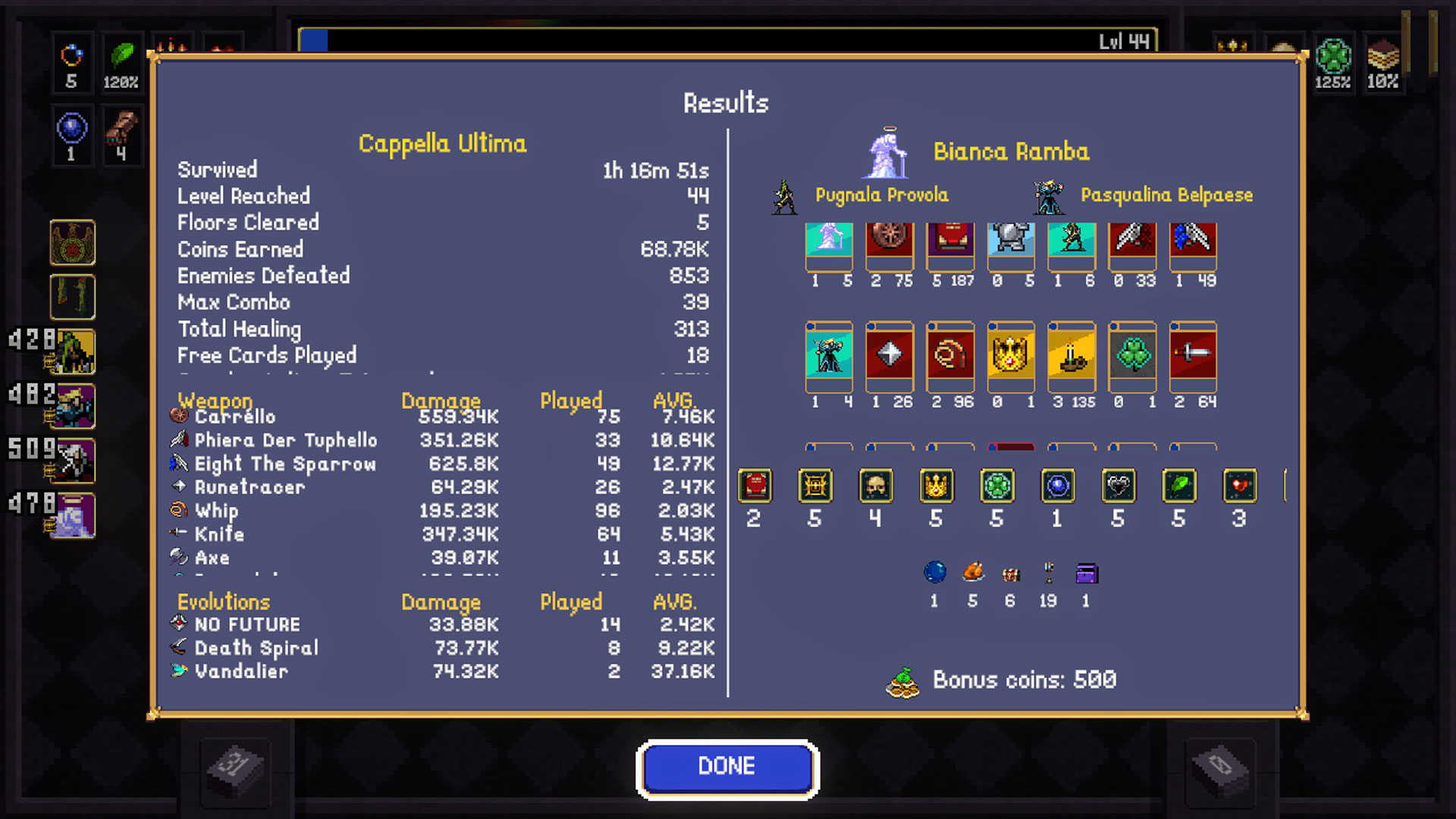
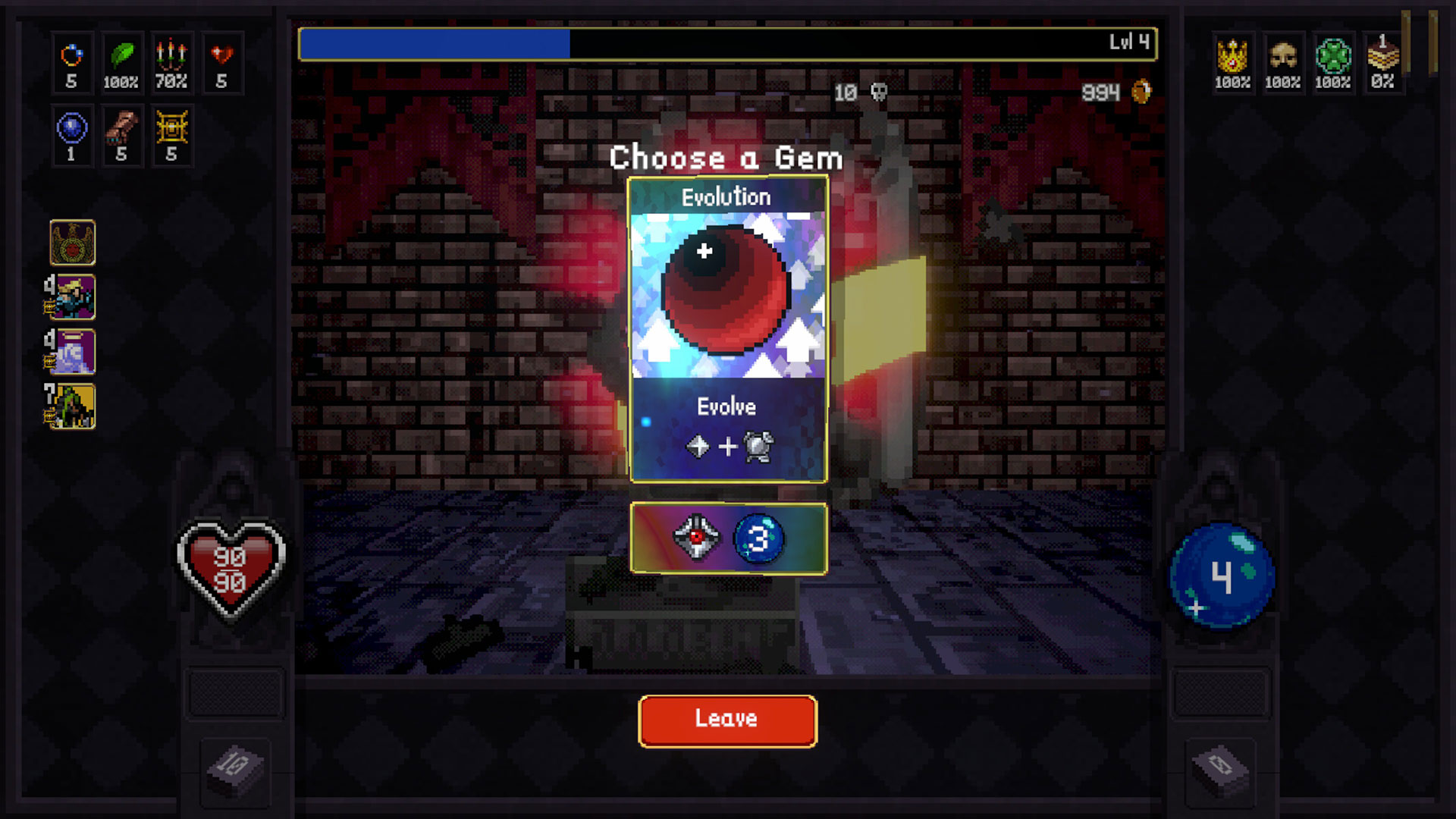
For example, you could pair Pasqualina, who adds 10 Area when she’s played and increases your hand size by 1 every time a purple card is played, with Pagnula, who boosts damage 20 percent when played and draws a card every time a yellow card hits the table. Throw in Bianca, who adds 3 Amount when she’s played and 1 more Amount with every purple card, and you’ve got a build that just keeps drawing cards, keeps swinging hard, and keeps stacking effects on every play. Card slots layer on top of that. Cards can be upgraded with jewel slots that let them trigger additional colors, so a purple card with a yellow trigger jewel will fire off both your purple and yellow passives.
The cards themselves matter, obviously, but not nearly as much as you’d expect from a game described as a deckbuilder. The cards do the work, but the Crawlers tell them what kind of work to do. I would have liked the cards to push back harder against the Crawler choices, or for there to be more cards that fundamentally changed how you played rather than just amplifying what your Crawlers were already going to do.
Map Quest
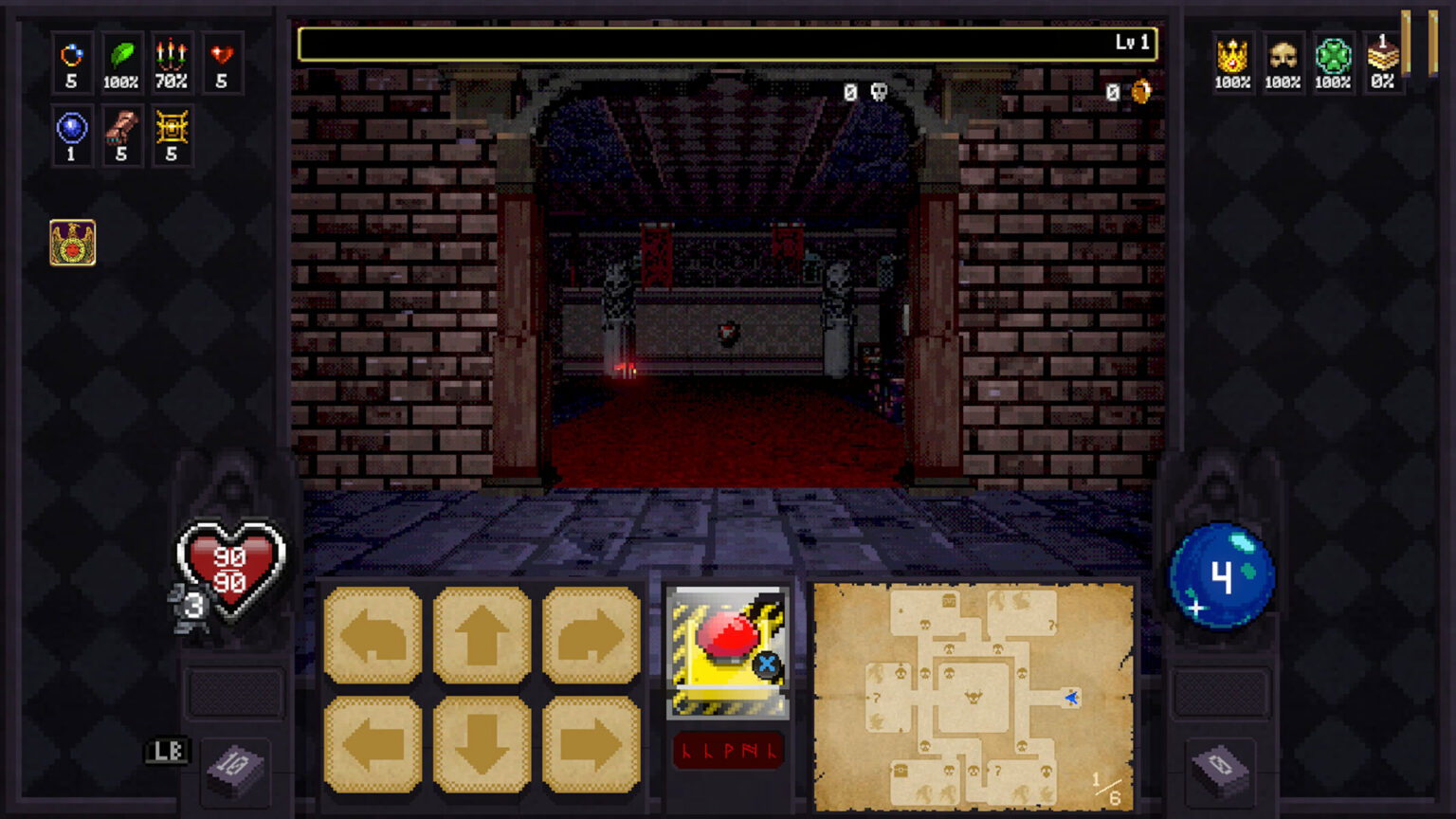
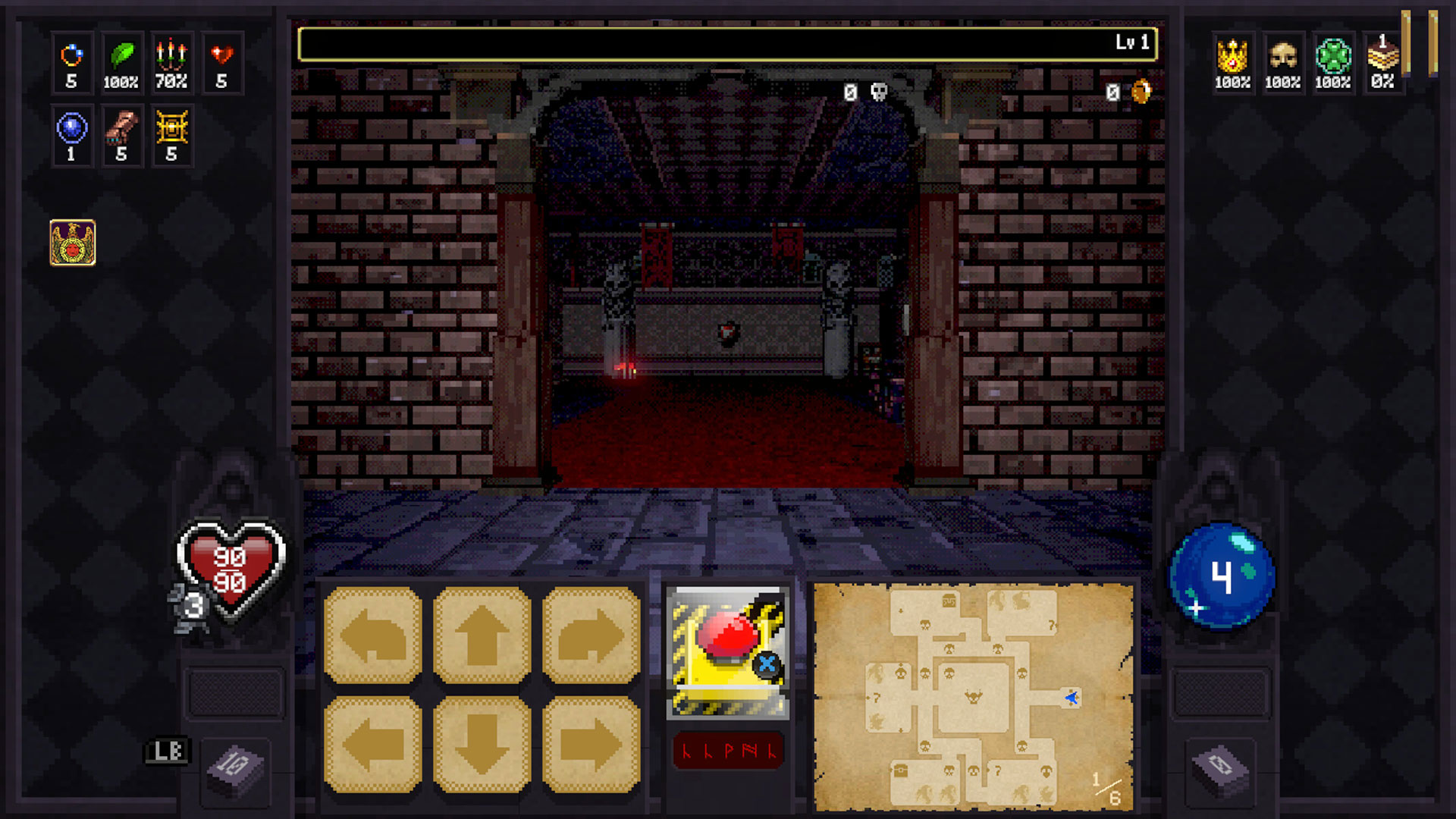
The dungeon-crawling layer is the weakest part of the package, and it’s a shame because it could have been the most interesting one. Each floor is a grid with chests, encounters, and a boss you have to defeat before a shovel appears to dig down to the next level. You walk first-person through the space and trigger encounters as you go. Functionally, it works.
The problem is that the entire map is visible from the moment you spawn in. There’s no fog of war. You can see every chest, every treasure, every encounter, and exactly where the boss is waiting. That visibility kills the mystery. The whole appeal of a dungeon crawler is the slow reveal of the space, and Vampire Crawlers hands you the map up front and asks you to walk through it. You’re not discovering a dungeon; you’re collecting groceries from a shopping list.
Etrian Odyssey is the obvious comparison here, and even a half-step toward concealment would have done wonders. Fog of war that lifts as you move, hidden tiles that only appear when you walk past them, or even just keeping the chests secret until you’ve found them would have given the dungeons real personality. As they are, they’re a chore between deck-building decisions.
Shop Therapy
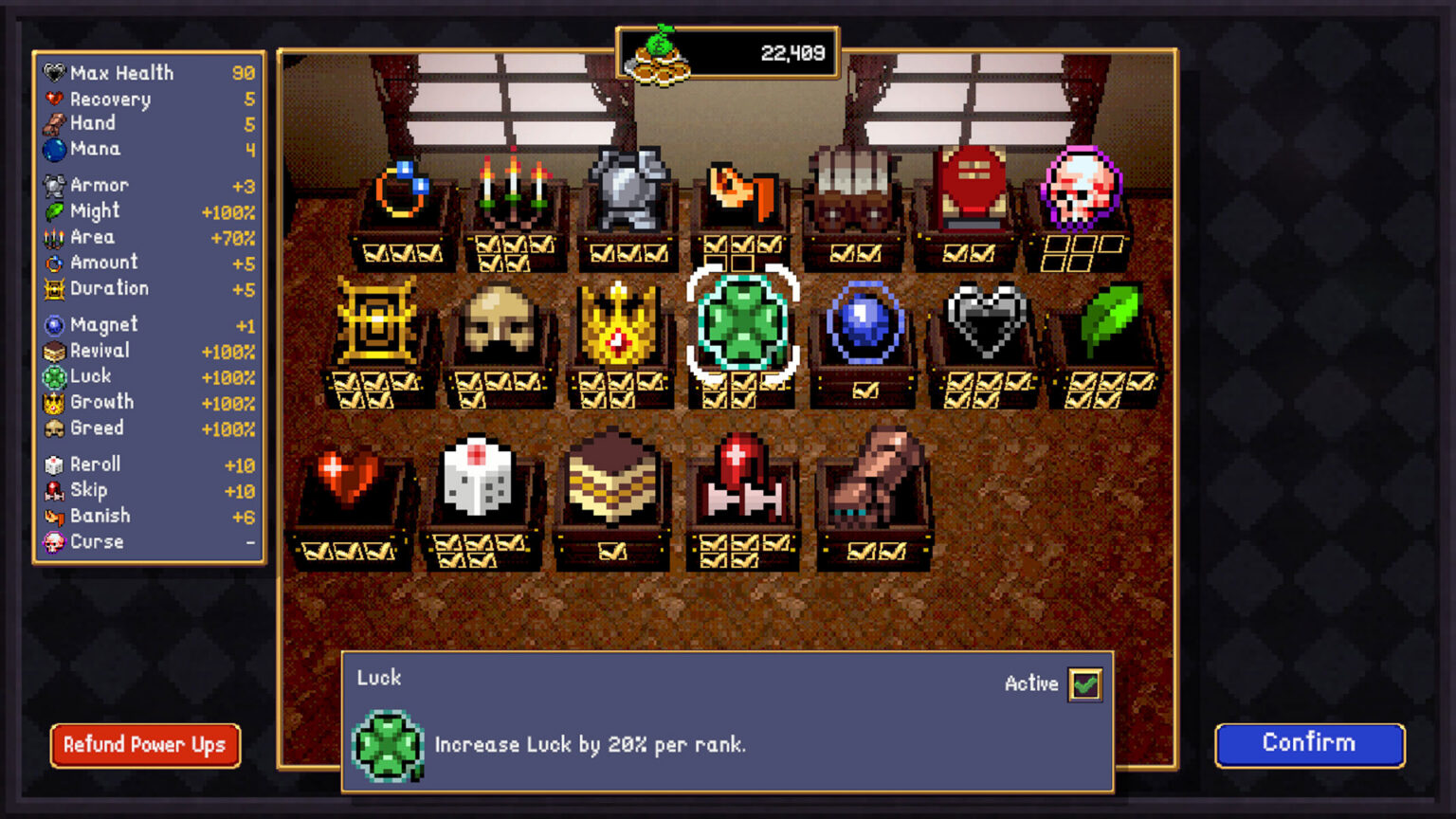
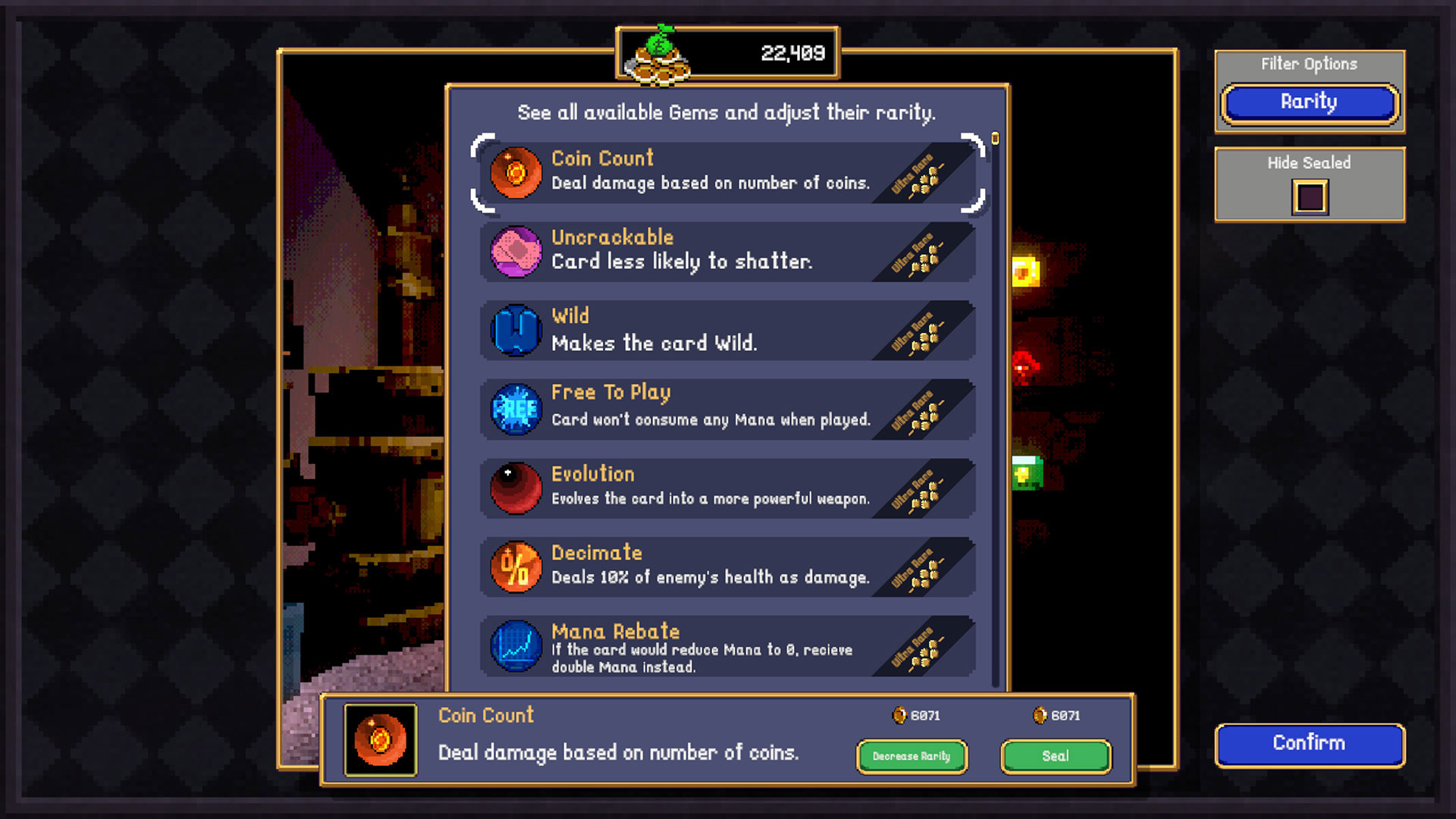
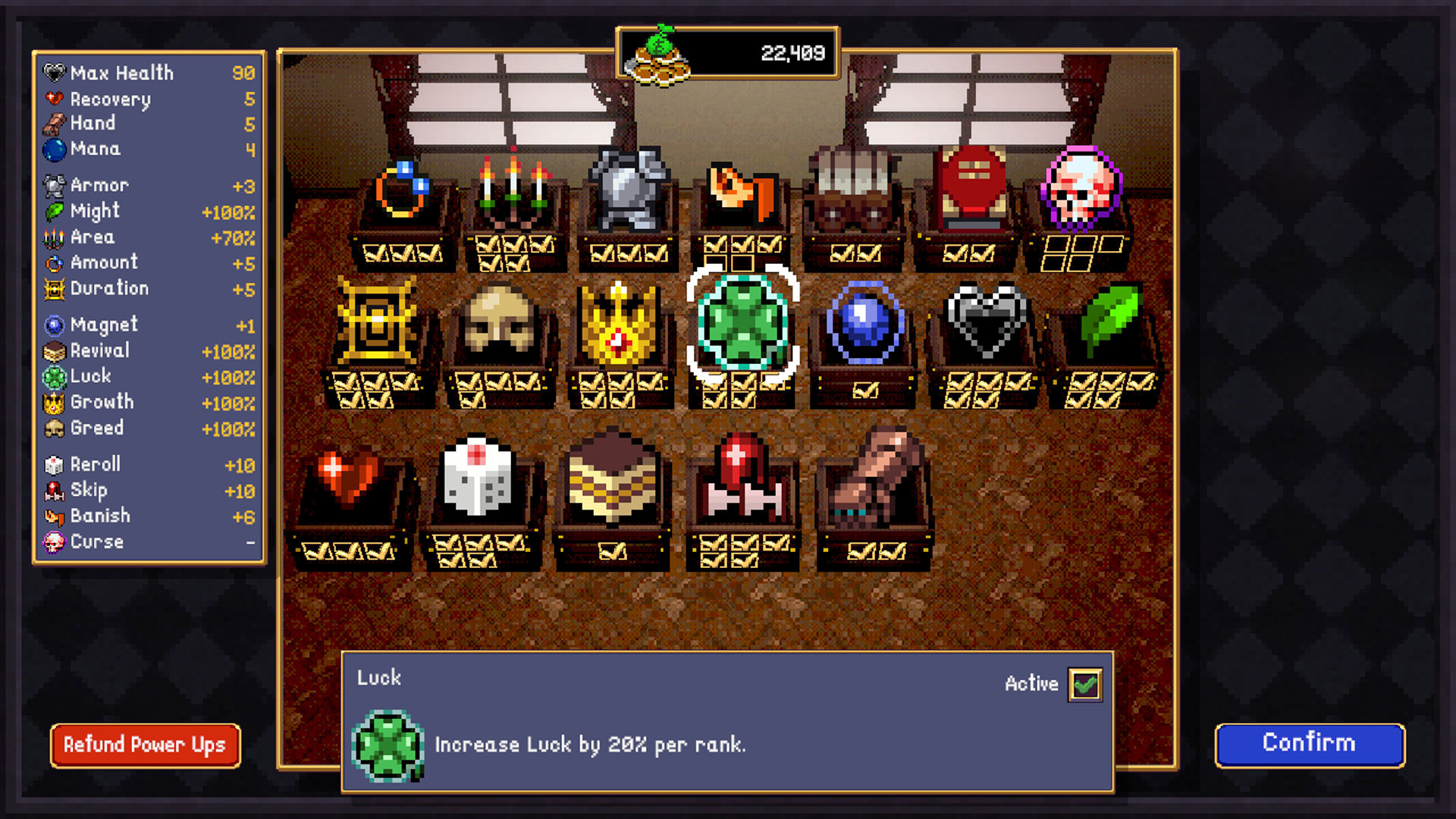
Meta-progression is surprisingly similar to Vampire Survivors, and that’s both a compliment and a problem. You spend coins from runs on permanent stat upgrades and Crawler unlocks, and the shop refunds your purchases if you want to experiment. It’s a familiar setup for anyone who spent time with the original.
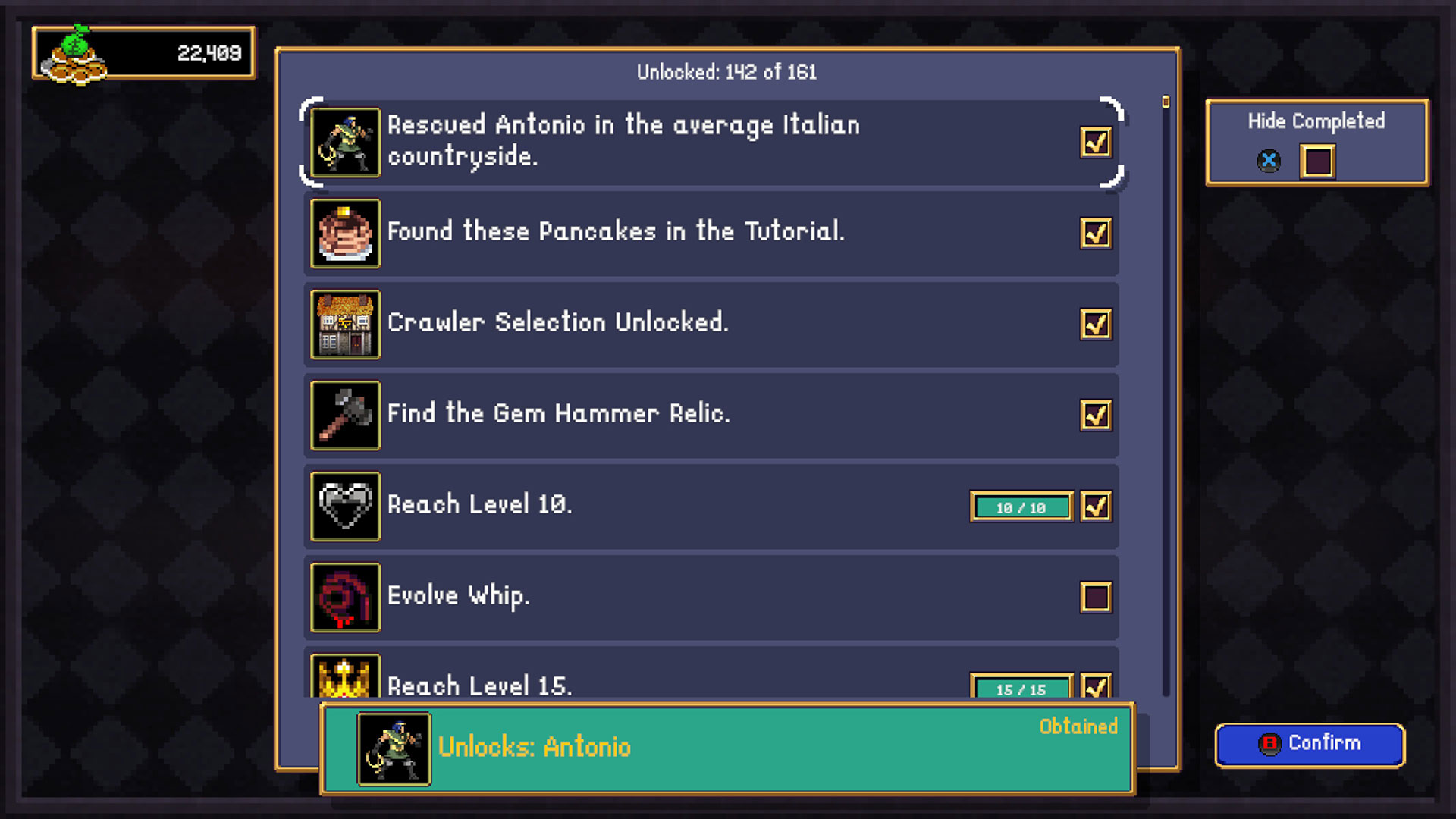
Each run actually does feel like real progress, which is the part poncle got right. You’re constantly hitting in-run achievements that unlock new Crawlers, new cards in the pool, new weapon evolutions, and new dungeons. The drip of unlocks keeps the early hours moving at a strong pace, and there’s almost always something new on the horizon during the first stretch of runs.
What’s missing is the decision-making layer between runs. Most of the permanent stat upgrades end up being bought in roughly the order you’d expect, and the Crawler unlocks are gated by in-run achievements rather than purchase choices. The shop ends up being more of another checklist than a strategic tool, and that’s one of the main reasons why I’m not queuing up more runs after rolling credits.
Couch Surfing
If there’s one place Vampire Crawlers absolutely lands, it’s as a handheld game. I played it across my gaming PC, my Steam Deck, and my ROG Xbox Ally X, and the Steam Deck is the clear winner of the three. The pace, run length, and low system requirements make it the kind of game I’d keep installed for moments when I want something to play while a podcast or stream runs in the background.
The ROG Xbox Ally X gets one small caveat. Its higher resolution paired with the smaller screen makes the icons on the dungeon map a little harder to make out than they are on the Steam Deck. It’s still a fine experience, just not my preferred one. If you’ve got both, default to the Deck for this one.
The genre really does feel right at home on a handheld at this point. Vampire Survivors became a Steam Deck staple for a reason, and Vampire Crawlers slots right into the same lane. Short runs, low input demand, easy to pause between turns. When the mobile version arrives later in 2026, this is probably going to be the home it was always meant for.
Last Call
I went in expecting Vampire Crawlers to ambush me the way Vampire Survivors did, and that didn’t happen. The build potential is here, the combo system is genuinely satisfying, and there’s a clear vision driving the whole thing. It just never hooked deeply enough to pull me back for more after credits rolled.
Looking back, that probably wasn’t the right expectation to bring. Vampire Survivors was lightning in a bottle, and Vampire Crawlers feels like a much more traditional production aimed at a much broader audience. Approached that way, as a $9.99 spin-off you can put down without guilt and come back to when the mood strikes, it earns its place easily.
It’s a fun pickup at the price, especially for anyone who got dozens of hours out of Vampire Survivors and wants something familiar in a new wrapper. The Crawlers carry the runs, the combos carry the moment-to-moment, and the unlock cadence carries the first stretch of hours. For a card game, though, it shows you all its cards a little too fast.
Vampire Crawlers has an official release date of April 21, 2026, for PlayStation 5, Xbox Series X|S, Switch, Switch 2, and PC, with mobile versions coming later in 2026. This review is based on a purchased retail copy of the game on PC (Intel i9-14900K, 96GB DDR5-6800 RAM, MSI RTX 5090 Gaming Trio OC), Steam Deck, and ROG Xbox Ally X. While FullCleared does have affiliate partnerships, they do not influence our editorial content. We may earn a commission for purchases made through links on this page.
Vampire Crawlers Review Gallery