
Quick Verdict
I typically try my best to avoid lazy elevator-pitch comparisons when describing a game because saying “X is just Y” almost always sells a game short. In the case of Sworn, though, the most obvious take is the most accurate one: it’s multiplayer Hades. I don’t mean that in a bad way either, because Hades is a fantastic game. But creating something that draws that comparison is risky territory. It’s easy to come off as a cheap clone, and it’s even harder to differentiate yourself from the original.
Sworn manages to fall somewhere in the middle. It doesn’t feel exactly like a cheap Hades clone since it does have some unique design ideas. However, at the same time, the game doesn’t do enough to keep you from thinking “this is just multiplayer Hades.” Then again, if that’s exactly what you’re looking for, Sworn delivers that experience, and it can be quite enjoyable.
Corrupted Crown
I think the only way someone can play Sworn and not immediately think of Hades or Hades II is if they never played Hades or Hades II. If you have played either Hades games, it’s pretty much impossible not to draw comparisons within the first five minutes of Sworn, because it’s obvious what Sworn was designed to do. If you’ve ever played Hades and thought to yourself how fun it would be if you could play with your friends, you aren’t the only one. Several of us spent the end of September and October playing through Hades II. While I had my issues with the game, I definitely wish that gameplay was available in a multiplayer setting. So when we had time during the holiday break to check out a bunch of games we missed during the year, Sworn ended up on our list since we were craving a multiplayer Hades experience.
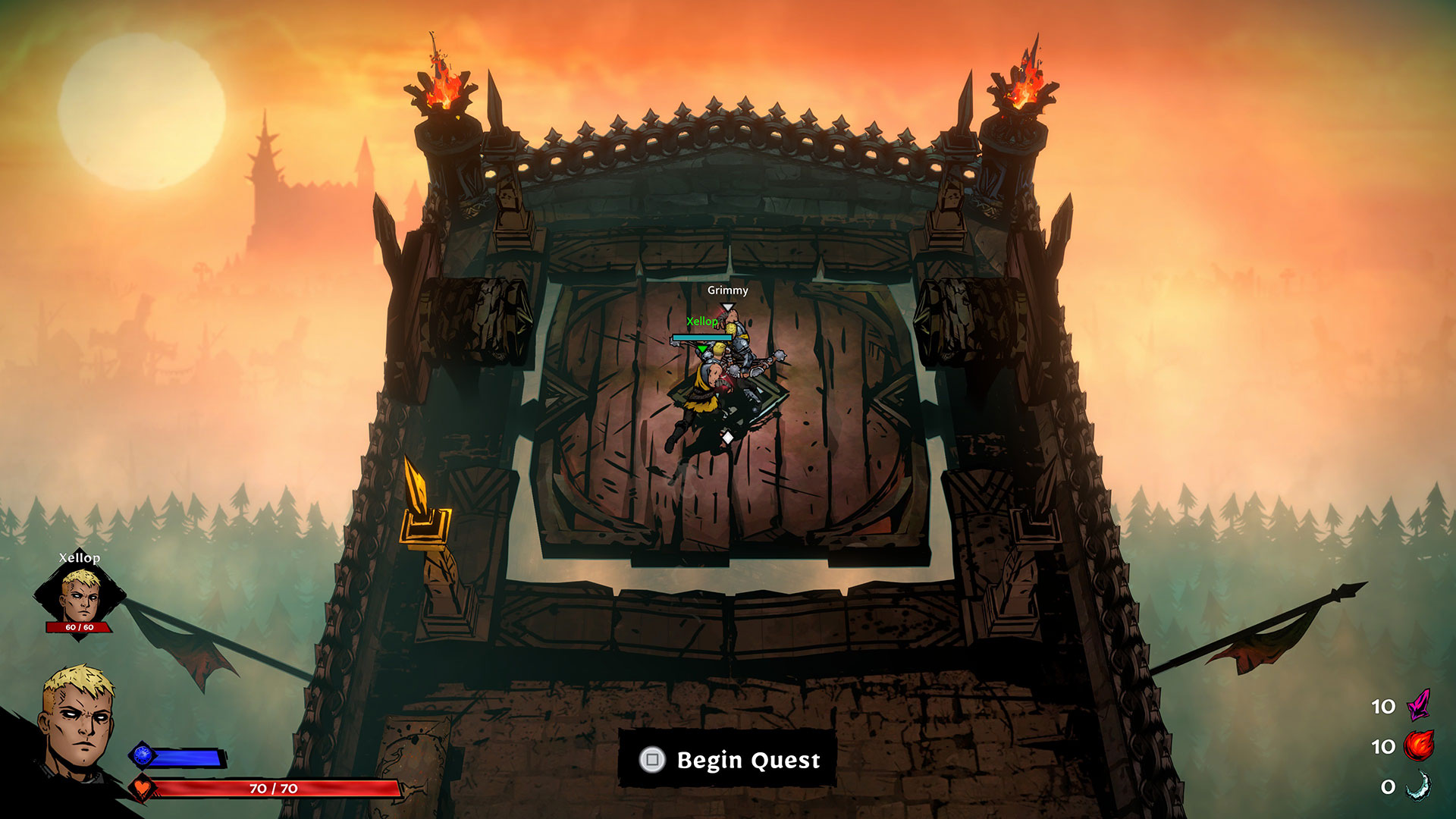
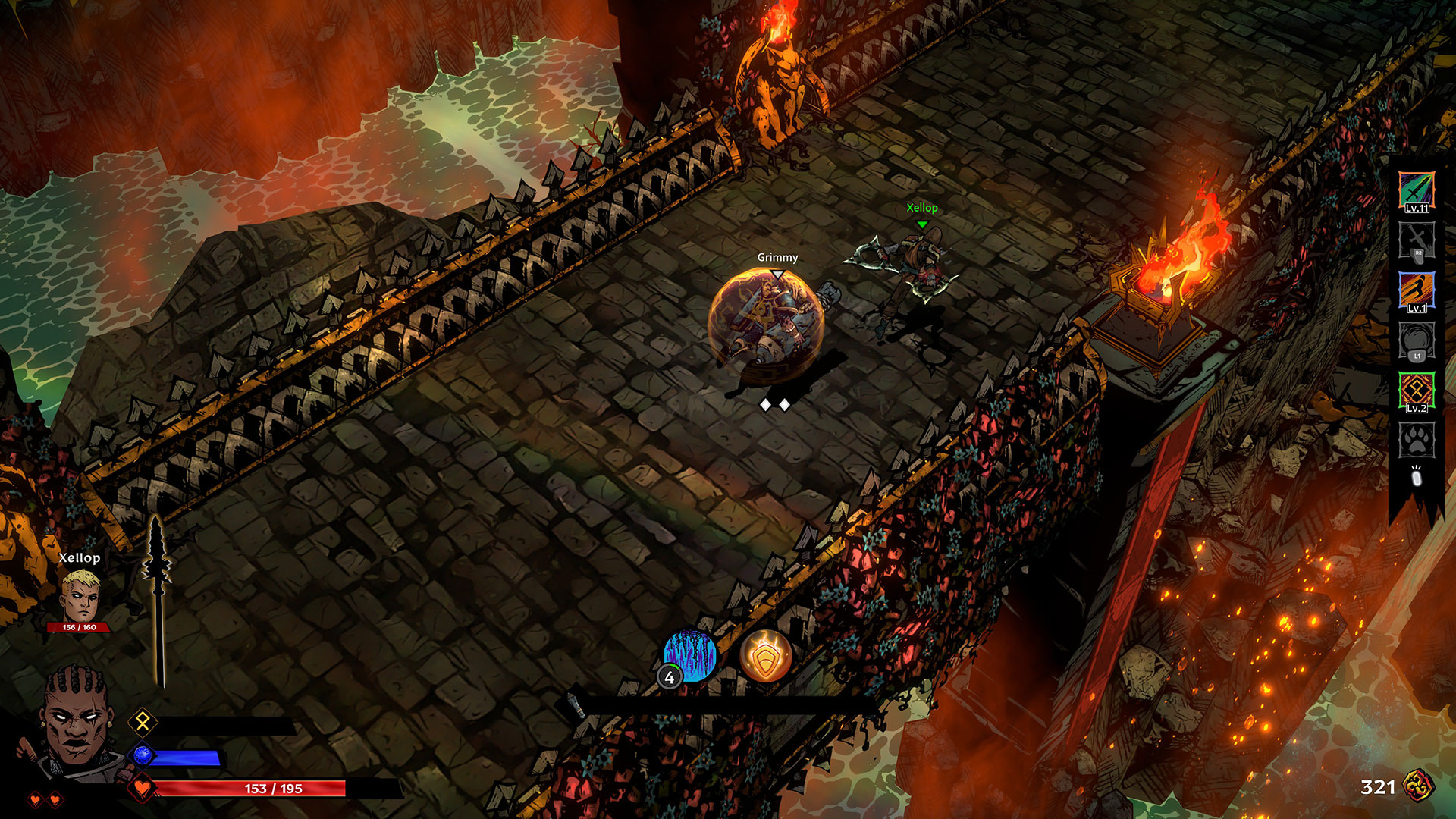
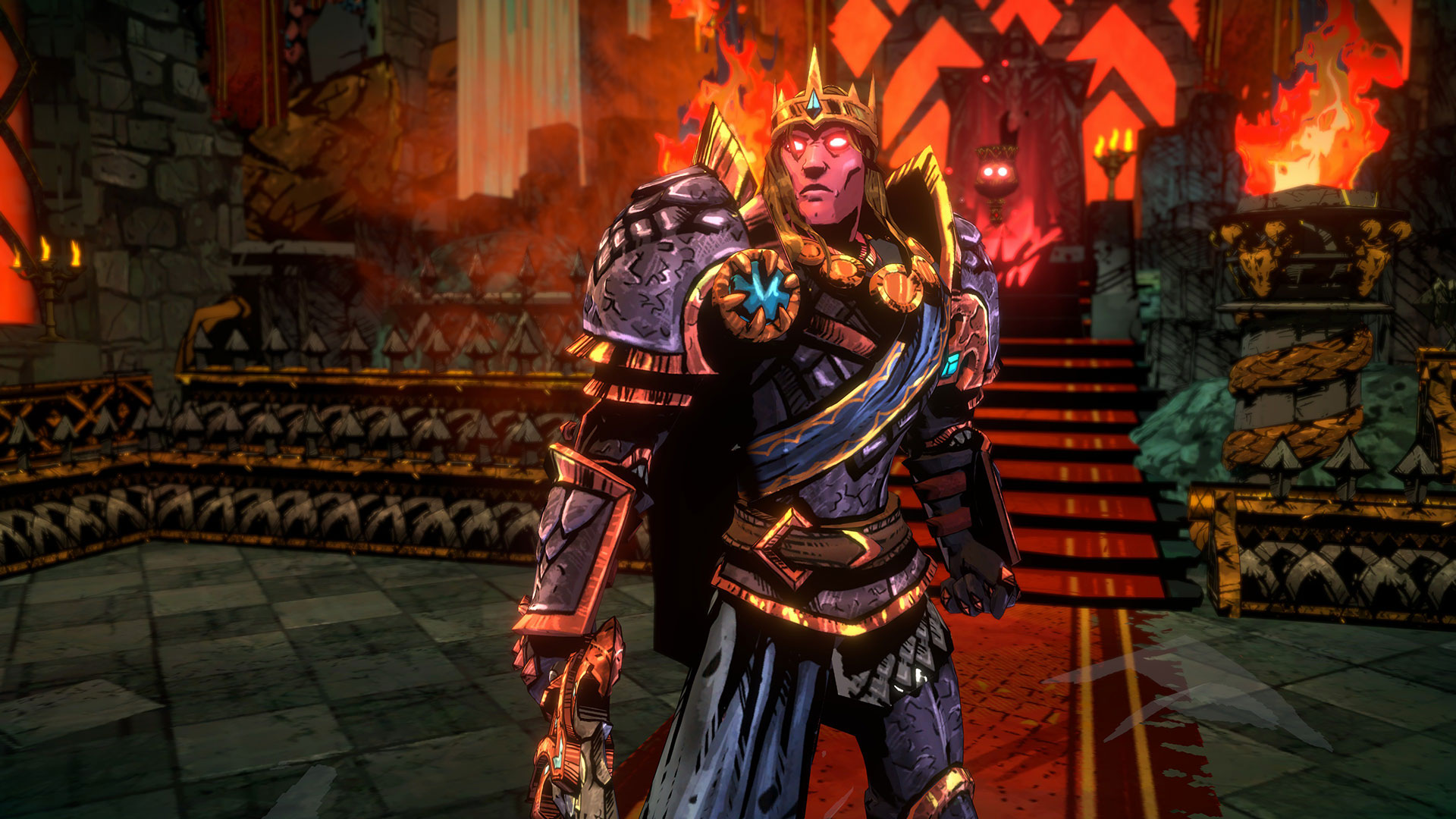
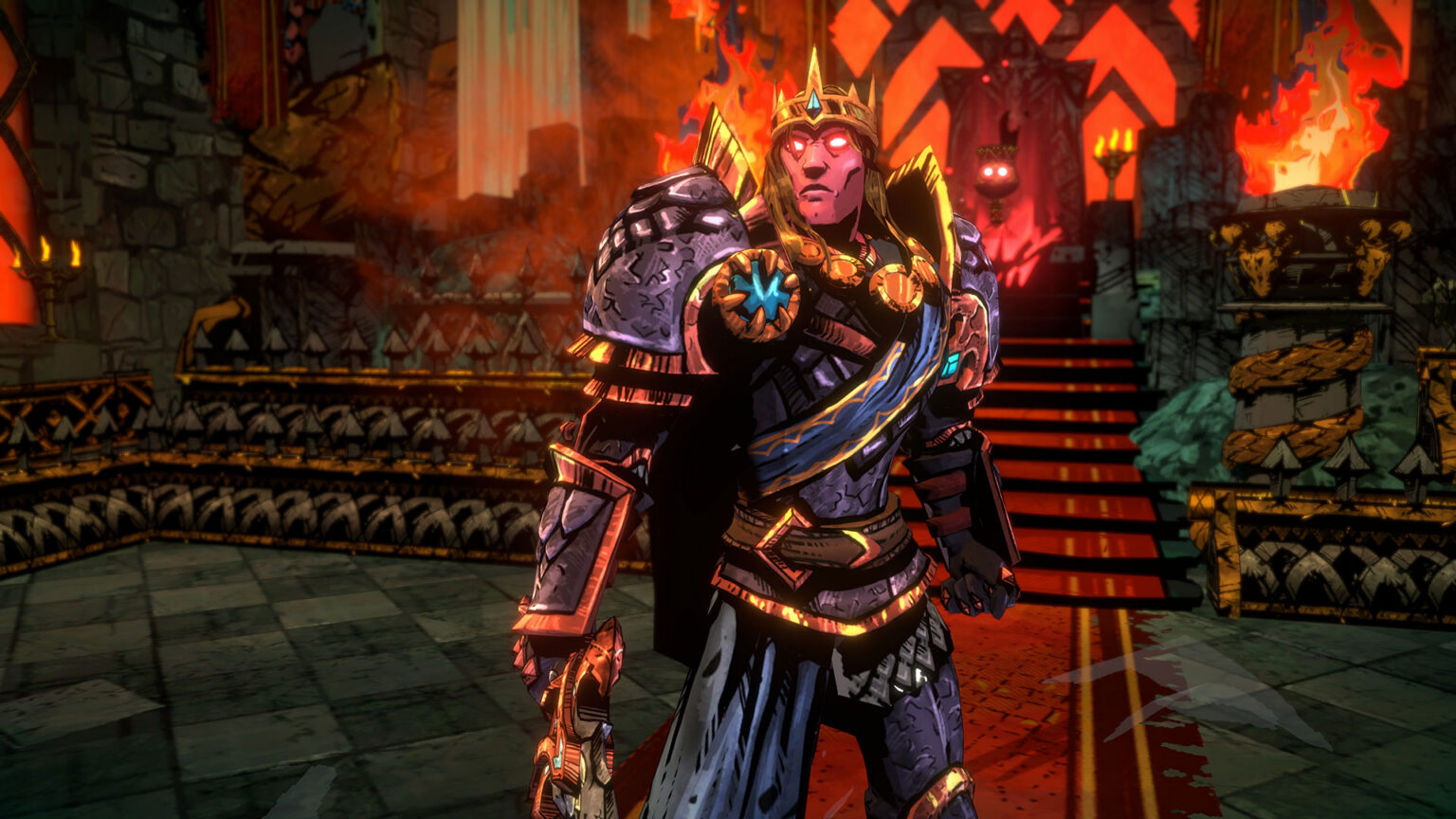
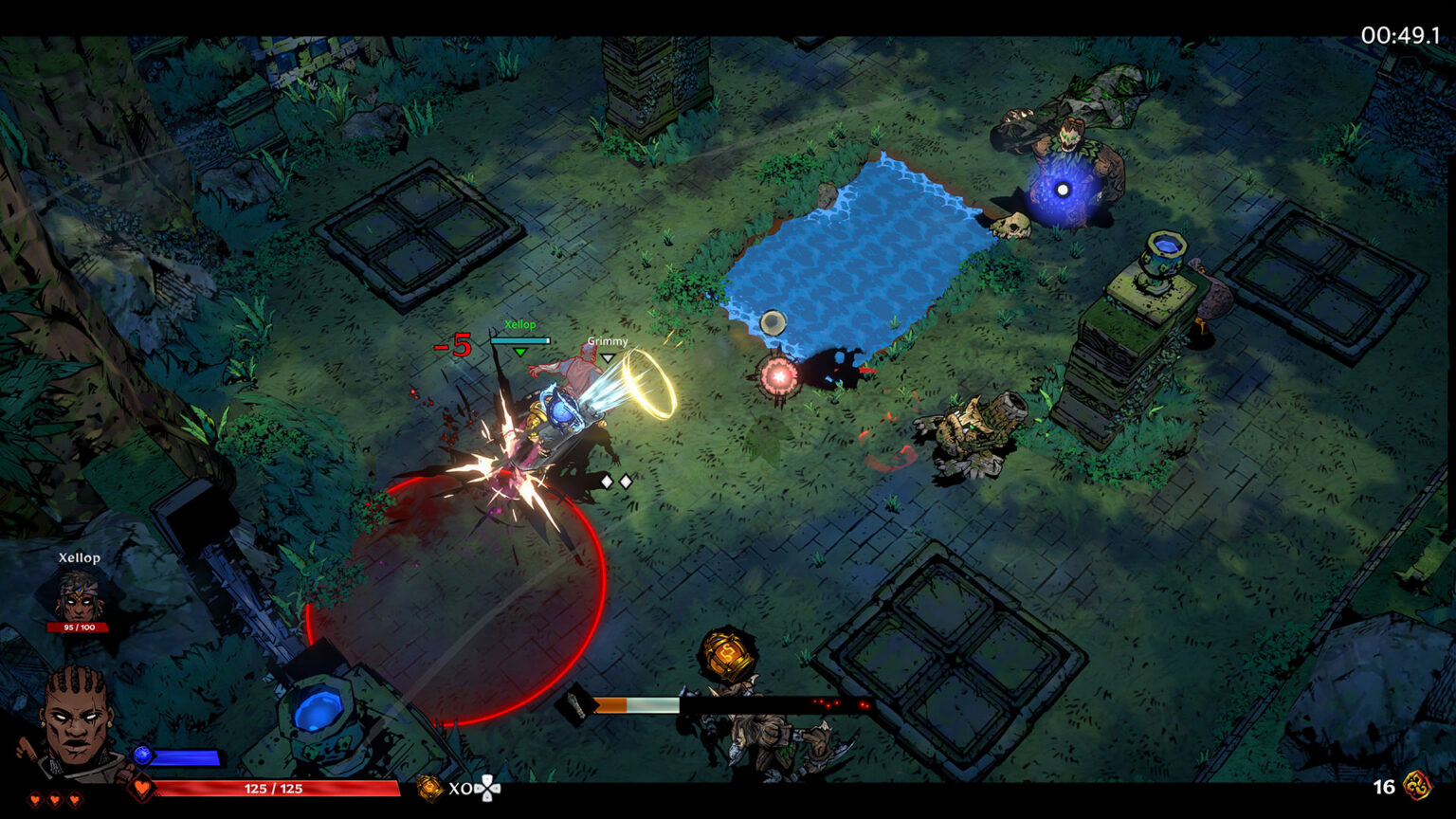
Sworn is a one- to four-player co-op action roguelite, but instead of tapping into the Greek pantheon of gods, it turns to Arthurian legend. The game is set in a fallen Camelot, where a corrupted Arthur and his Knights of the Round Table are your foes. At its core, the game sees players taking on fast, isometric combat, going from arena to arena, clearing out enemies and getting upgrades after each room. The build system turns to Fae Lords such as Titania and Oberon for upgrades. While some of these upgrades are familiar and a bit uninspired, others do transform gameplay in a way that lets players synergize builds with one another.
Run Rewritten
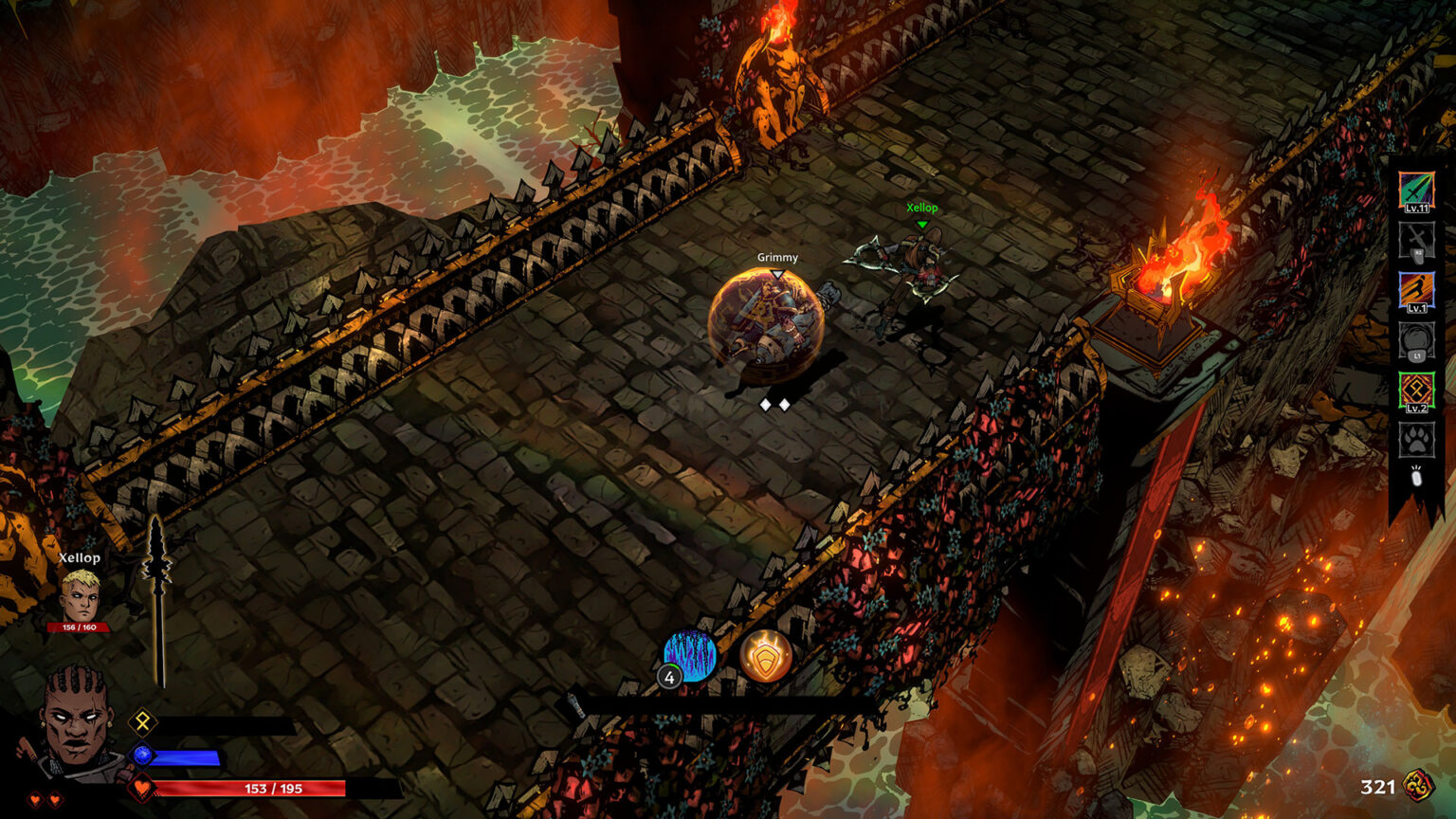
The big question is whether Sworn is stuck living inside someone else’s shadow, and in this case, that shadow is a Hades-sized one. Well, it’s partly good news because Sworn does understand why the formula works, with fast-paced combat that keeps players on their toes. We found ourselves having to decide when to use skills, when to dodge, and when to coordinate attacks. For the most part, the core loop works, but we found that combat didn’t feel as polished as Hades, and the choices after each room weren’t as compelling. In exchange, Sworn’s fun comes from team compositions and thinking about what everyone else is doing, not just what you’re doing.
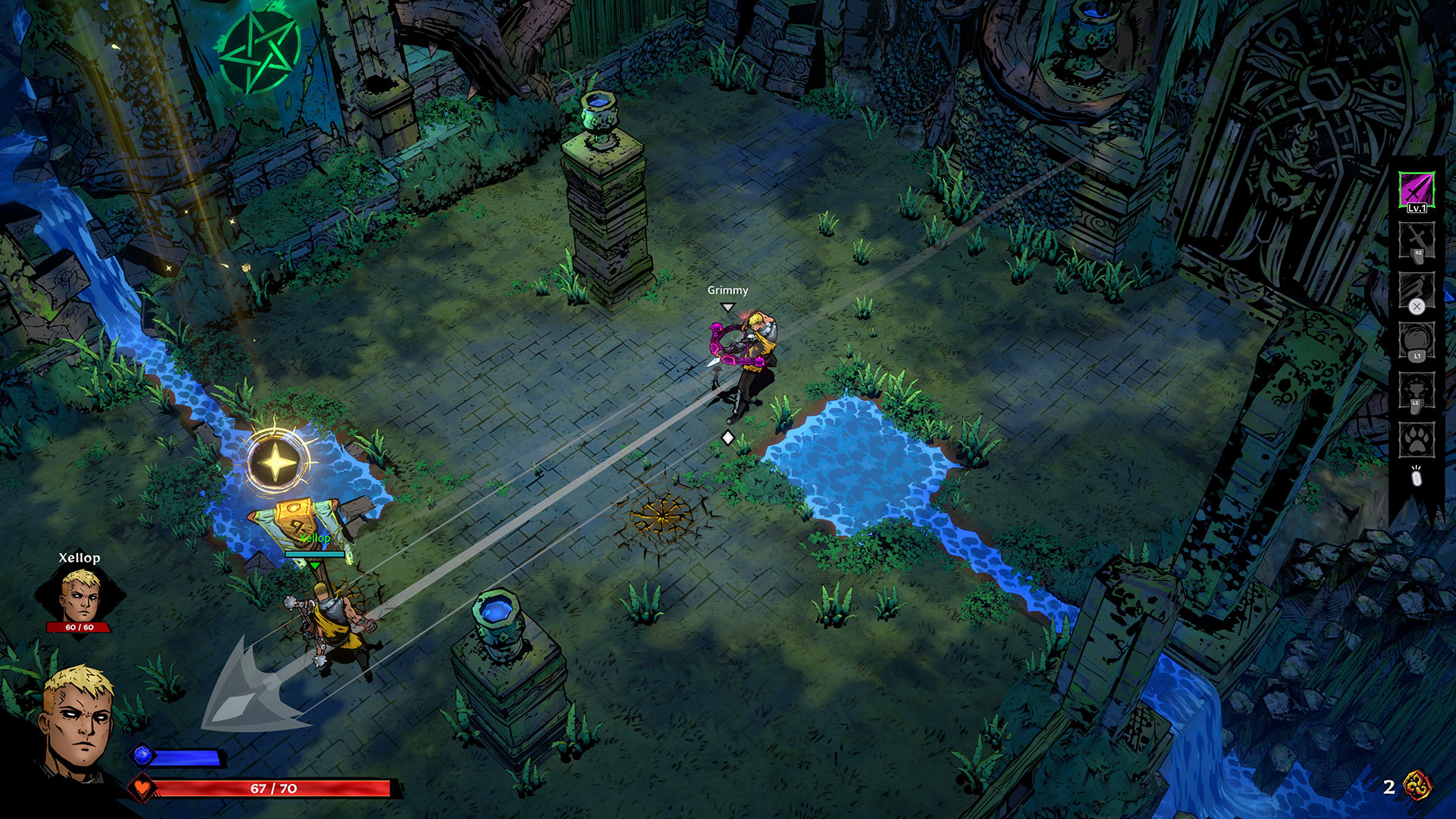
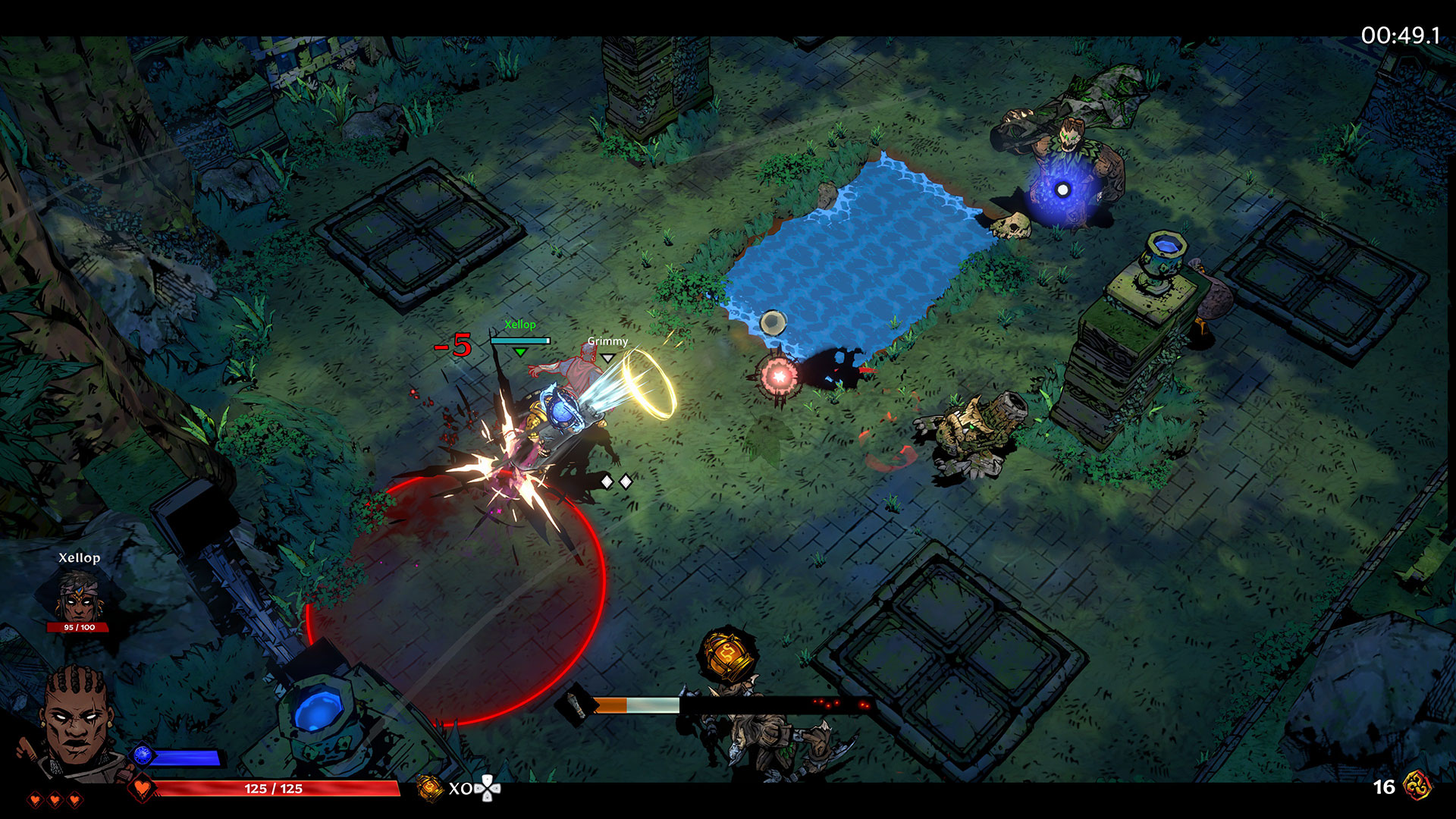
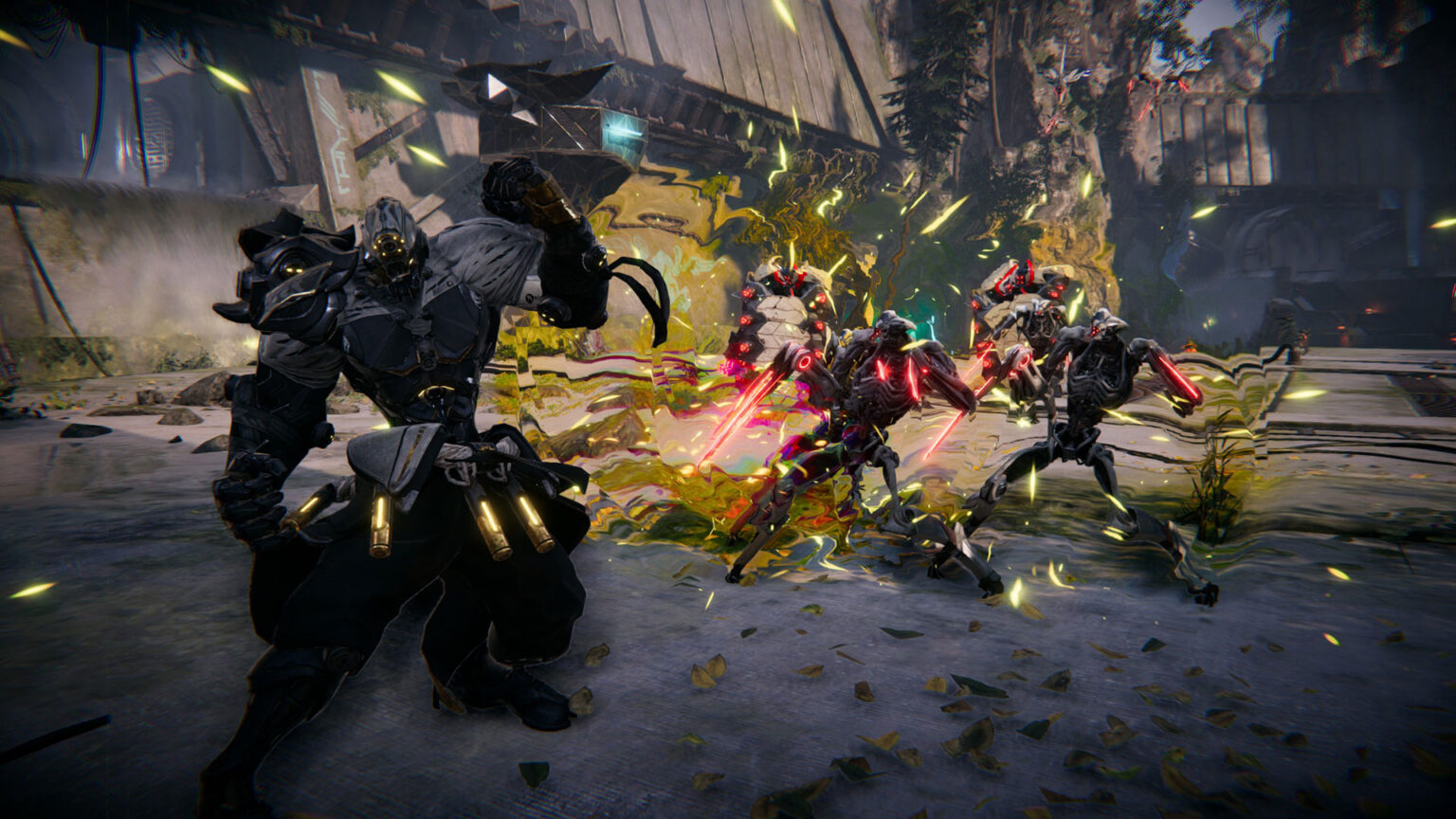
With the good comes the bad. One of our biggest issues with Sworn is the visual noise, and instead of delivering chaotic fun with friends, it can sometimes lead to frustration when you can’t figure out what hit you. Sometimes, the real boss to fear is trying to figure out exactly what’s going on on the screen. We’re not sure it’s something you can get used to either because, to Sworn’s credit, there is a good variety of builds, which means each run you’re likely getting accustomed to new graphical effects.
Round Table Flip
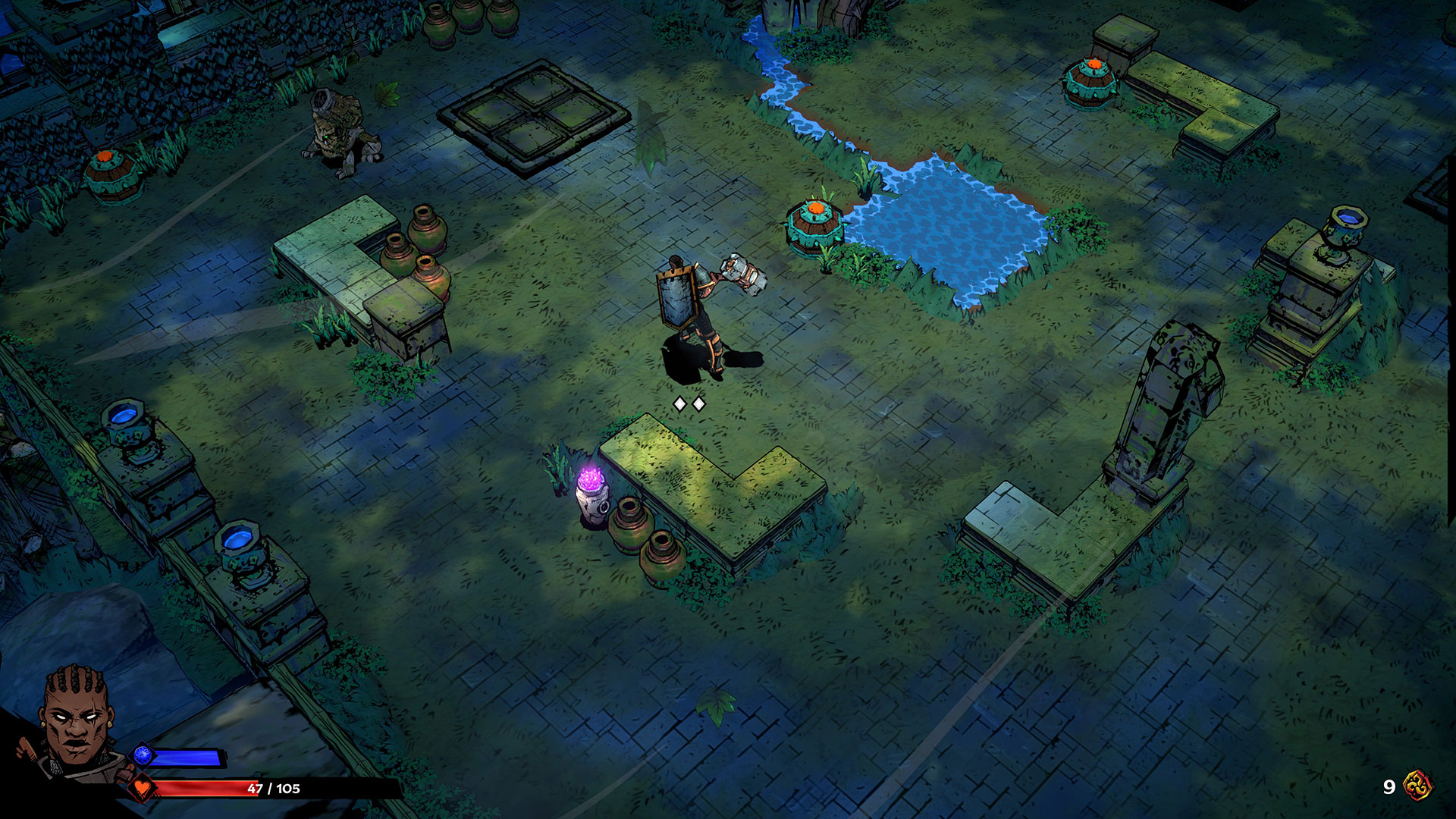
When it comes to builds, Sworn does shine to a certain degree. The game offers a total of four different characters, each with their own archetypes and choice of four weapons. That means a total of 16 different weapons with a mix of both melee and ranged combat. Along with choosing a weapon, players can also choose one of four spells per character. Both of these decisions are made prior to starting a run and largely come down to your preferred playstyle. Some characters favor quick attacks, while others play a bit slower but can dish out more damage per attack. It’s pretty much what you’d expect to find in many action RPGs, with each combination of character, weapon, and spell feeling unique.
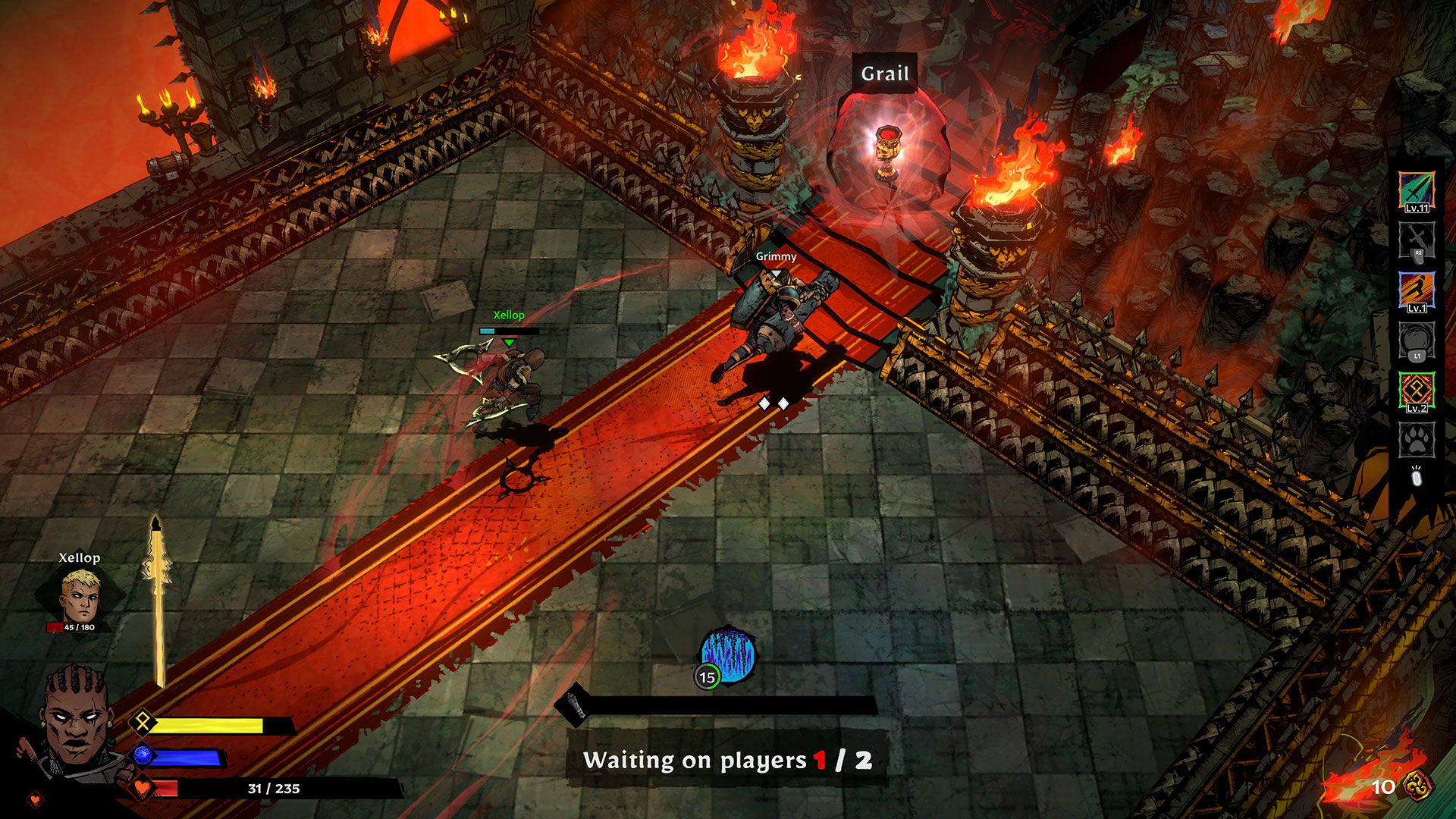
Once you’ve decided on the character, weapon, and spell, builds come in the form of upgrading each action slot. Basically, each of the button presses in the game can get its own Fae blessing, with the core slots being light attack, heavy attack, spell, dash, ultimate, and companion. Much like any other roguelite, the success of your run is highly dependent on the choices you make with your Fae blessings. Many of the blessings aren’t just passive bumps, but rather on-hit effects or chances to apply a status effect. Again, some of these aren’t terribly exciting, like an increase to base damage and a chance to Chill, while others, like ultimates, can save your run when used at just the right time. Overall, Sworn’s build system is very much like other roguelites. You’ll find some combinations that feel game-breaking, while some runs will feel unlucky with the options you’re given. Eventually, though, you’ll find a build that works best for the character, weapon, and spell combination you’re playing, and you’ll try to force it each run to varying degrees of success.
Camelot to Like
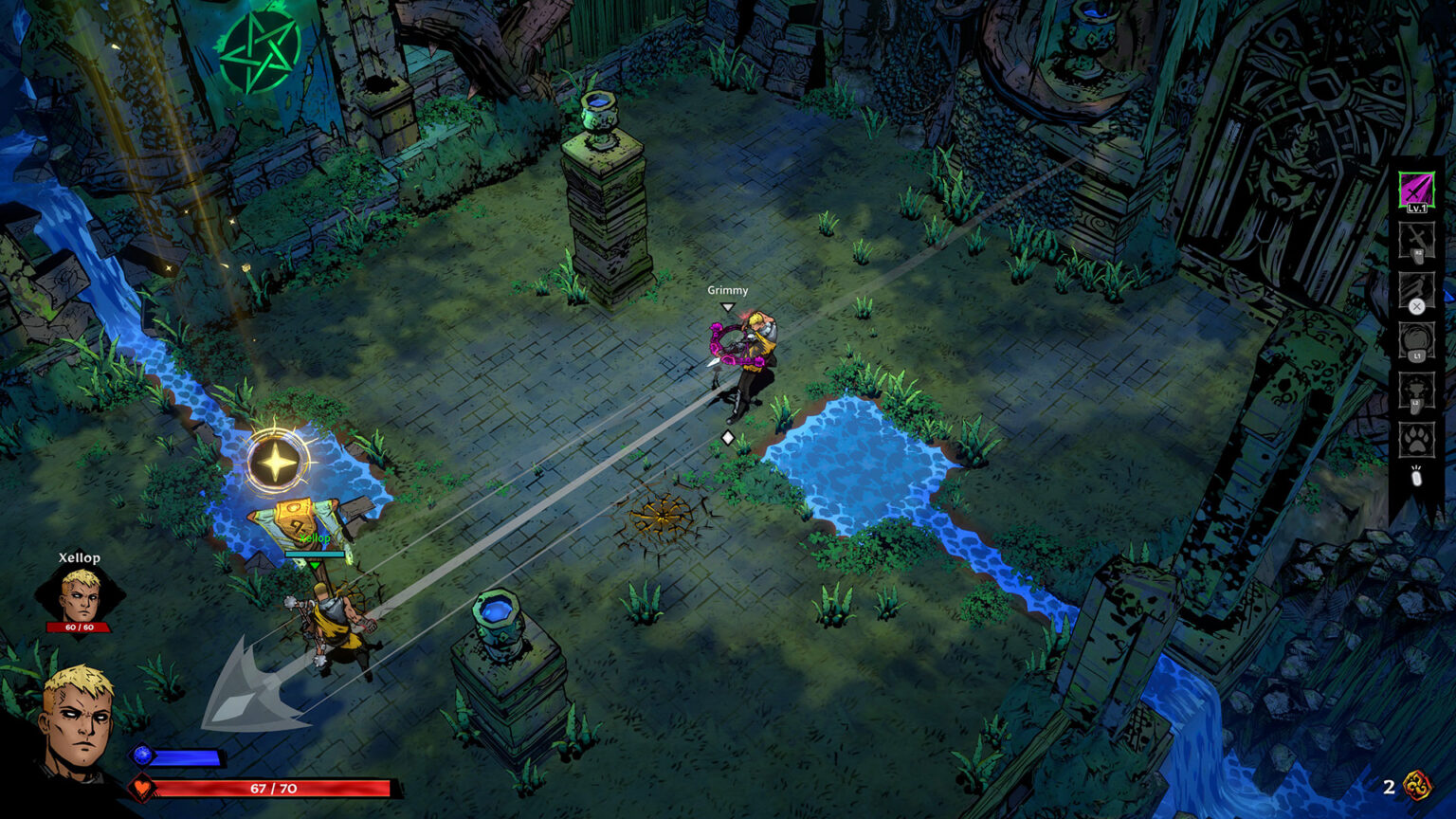
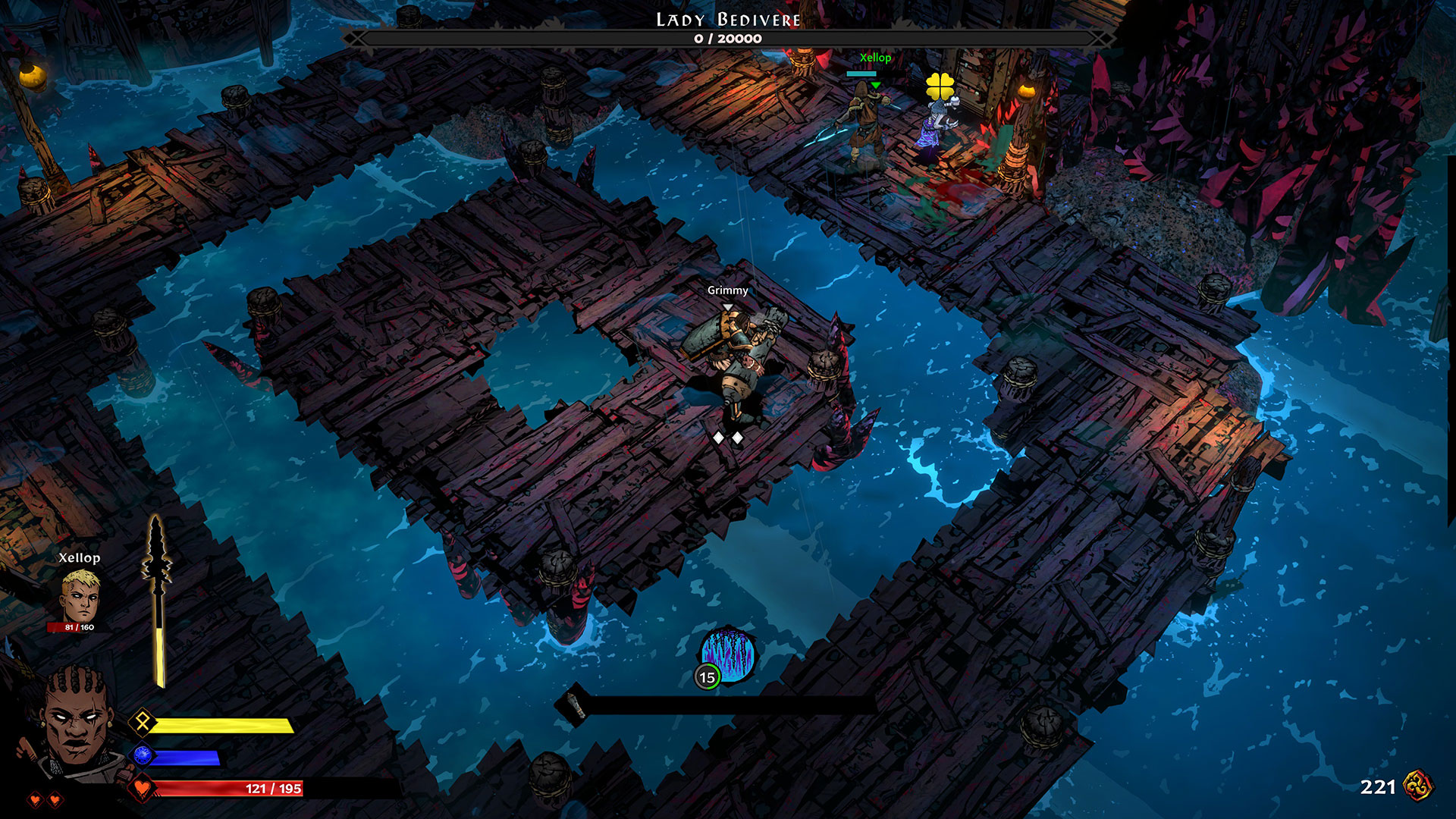
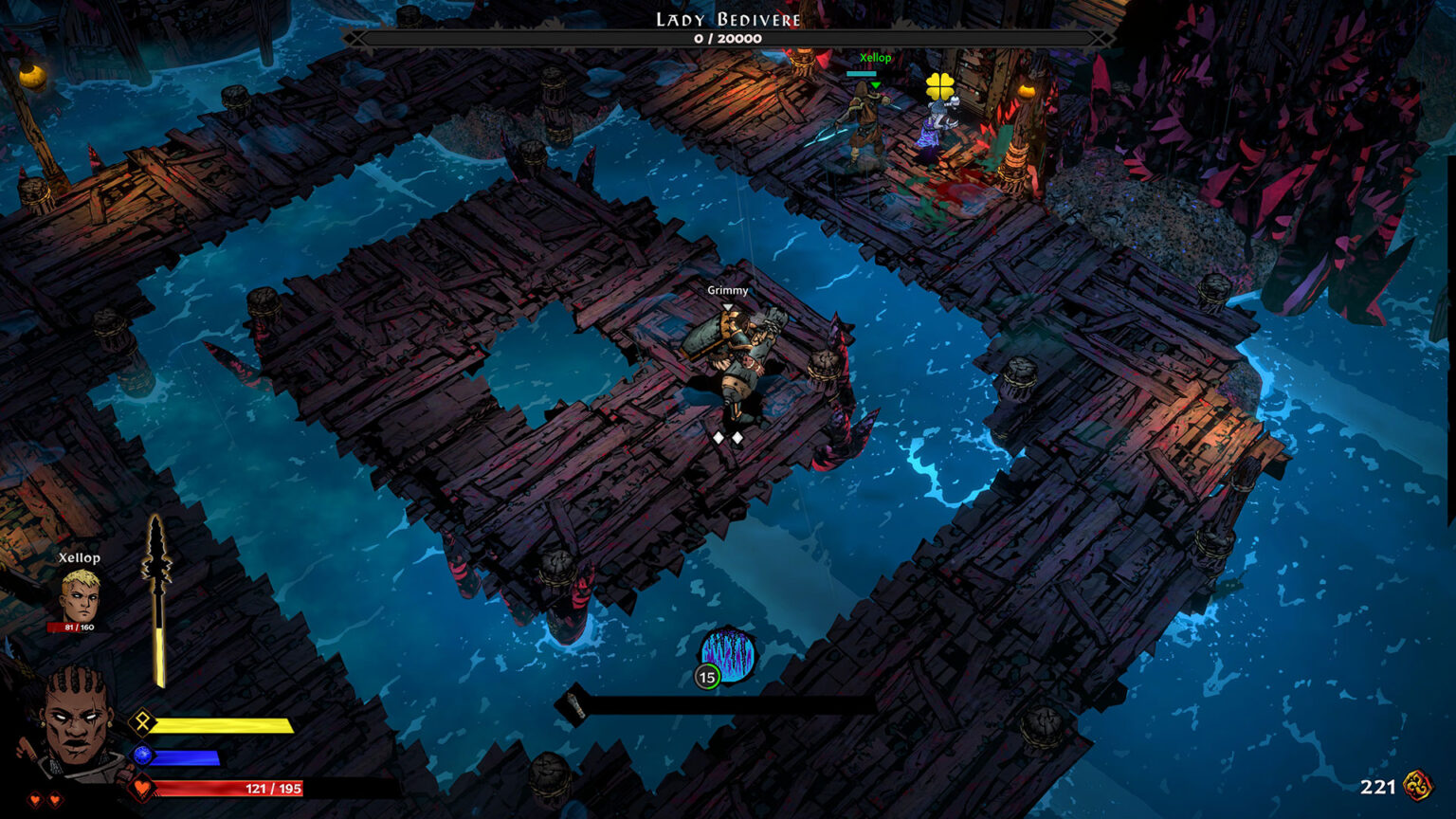
Like the Hades games, bosses play an integral role as checkpoints through your run and a way to measure how your build is progressing. Each boss is framed around Arthurian legend and the Knights of the Round Table, and they all have a mix of mechanics that keep you and your companions on your toes. This is when things get the craziest, especially in a group of four, as you’re all trying to avoid the same attacks in a tiny arena while dishing out as much damage as possible. Unfortunately, these boss fights also have the same issue as the Hades games in that they become really repetitive once you figure out how to handle them. This goes all the way to the final boss of the game. We all agreed that the design of the boss fights is pretty lacking and doesn’t have as much variety as it needs to feel exciting. They mostly feel like a chore after a few runs, which is really disappointing.
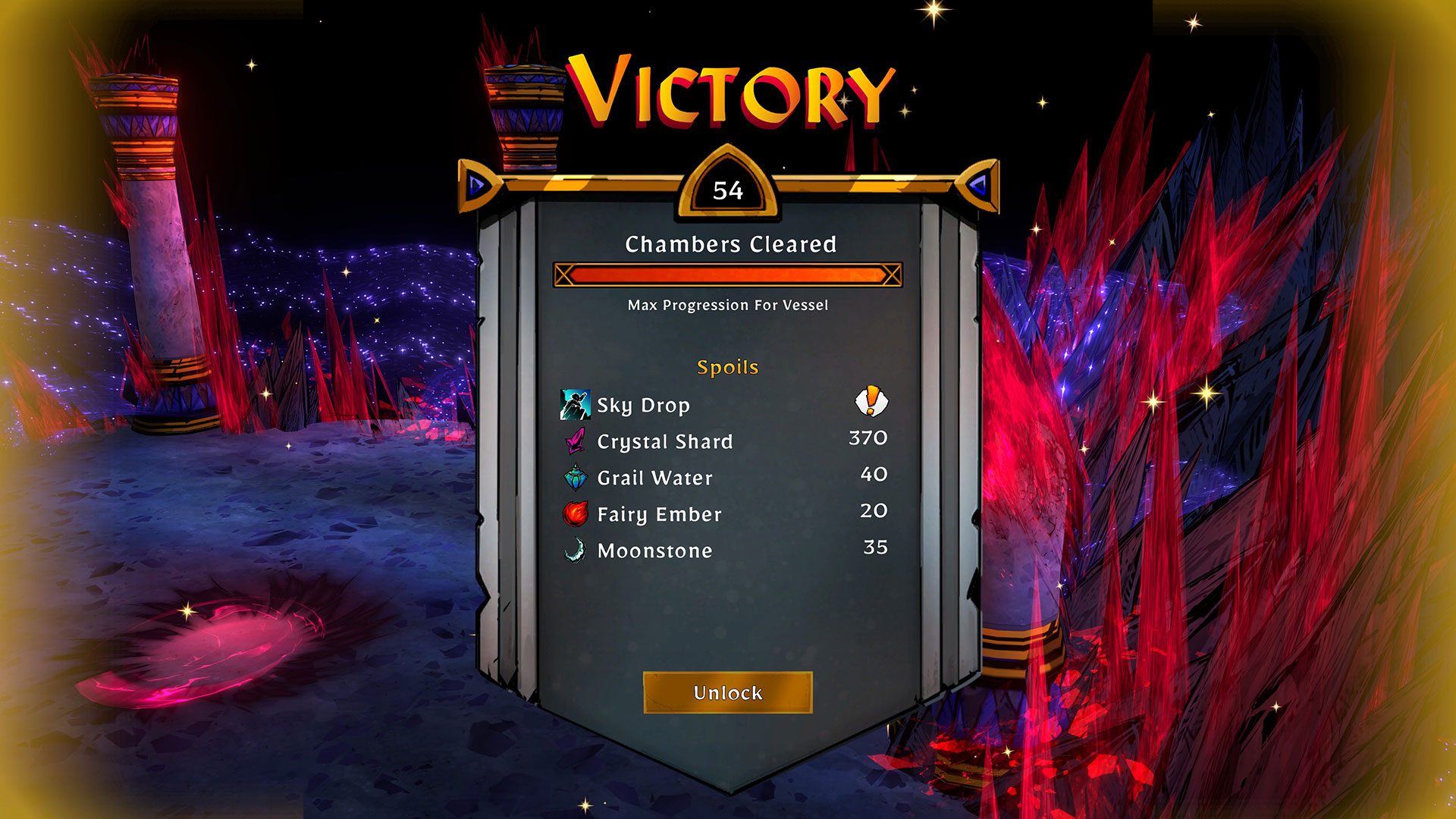
As you can imagine, meta progression plays a big role in getting stronger in between runs. Each weapon has its own basic upgrade tree, while character upgrades fall under five different trees. These upgrades aren’t unique to each character, meaning they’re shared, and it will take a lot of runs before you’re able to unlock all the nodes. Again, if you’ve played any action RPG roguelite in the last decade, you know what to expect here. These upgrade trees will have things like resurrection tokens, increased health, additional starting gold, a greater chance to receive higher rarity blessings, and more. All five trees use the same resource to unlock nodes, which means you’ll prioritize upgrades based on your personal playstyle. For example, I opted for additional movement speed and higher max health to start before investing points into more gold and a better chance at higher rarity blessings.
Echo Chamber
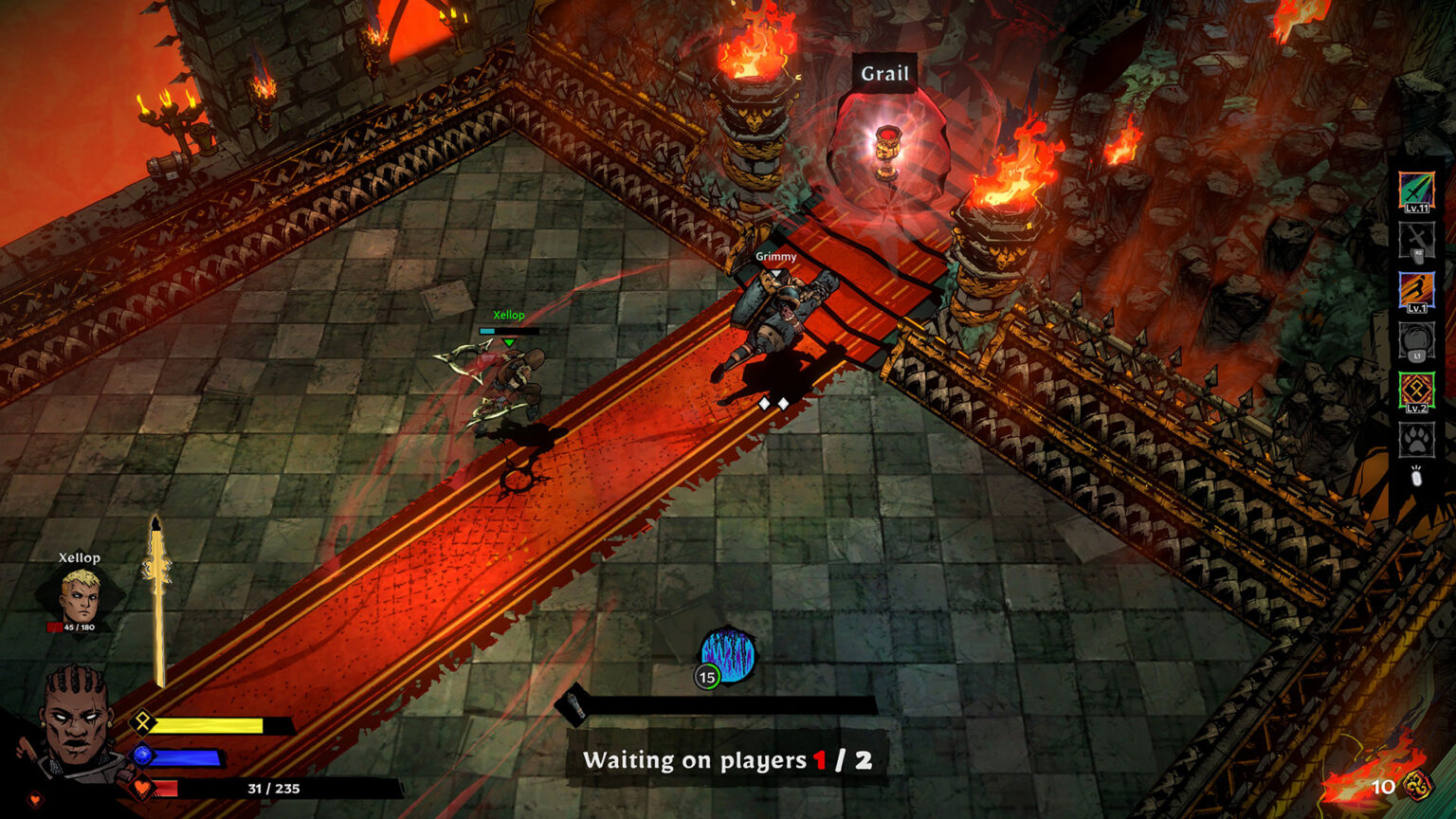
The biggest issue with Sworn is also its greatest strength. It takes a proven formula that many players love and adds multiplayer to it. Unfortunately, borrowing that inspiration also invites a direct comparison on polish, which is where the Hades games really are in a class of their own. It’s awfully difficult to play Sworn after Hades II and not be bothered by how sluggish the combat can feel at times. Ultimately, the question shouldn’t be, “is Sworn as good as Hades,” because truthfully very few games are. Sworn justifies its existence because of co-op, which doesn’t exist in Hades. If you ever wished you could bring your friends into a run-based action RPG, this is probably your best option.
How much you enjoy Sworn really comes down to what you’re looking for out of the genre. If you’re craving innovation and novelty, Sworn’s familiarity won’t satisfy those desires, especially with its lack of a real story or narrative. If you want to experience that combat loop with friends, though, Sworn’s co-op is its best feature and one that can provide hours of fun with the right people. The game doesn’t pretend to hide its Hades influence, but rather embraces it fully. Sworn might not be carving a new myth, but with the right party, it’s a pretty fun night at the Round Table.
Sworn has an official release date of September 23, 2025, for PlayStation 5, Xbox Series X|S, Switch, and PC. This review is based on a purchased retail copy of the game on PC (Intel i9-14900K, 96GB DDR5-6800 RAM, MSI RTX 5090 Gaming Trio OC). While FullCleared does have affiliate partnerships, they do not influence our editorial content. We may earn a commission for purchases made through links on this page.
Sworn Review Gallery