Quick Verdict
When The Riftbreaker originally launched in October 2021, I played a few hours and spent the entire time wondering why it didn’t support co-op. The game seemed like it would be a blast to play with others, so I shelved it on the off chance EXOR Studios would add co-op. It turns out the wait was worth it, as The Riftbreaker’s 2.0 update finally added co-op on August 25, 2025. We didn’t hesitate to jump straight in, having waited nearly four years to experience the game in its entirety.
The Riftbreaker is a melting pot of game design ideas from multiple genres. Ultimately, it doesn’t fit into a specific mold, but at its core, players control a mech armed with two weapons at a time. Combat plays similarly to a twin-stick shooter or a very light action RPG. There’s also a focus on base-building, tower defense, resource management, and researching new tech, all elements borrowed from the real-time strategy (RTS) genre. This mix of mechanics works surprisingly well, delivering a fun experience across a roughly 25-hour campaign.
A Base Odyssey
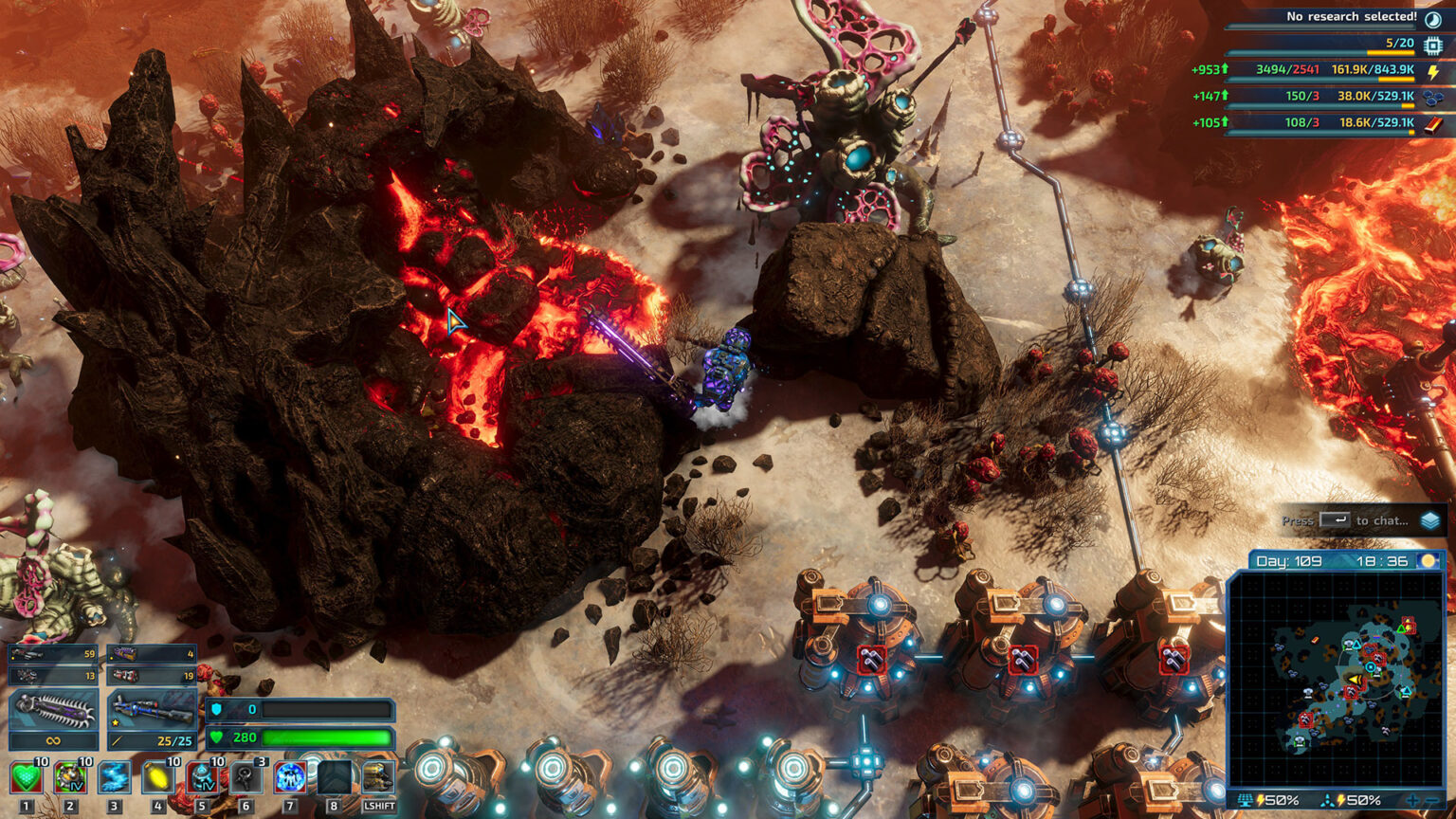
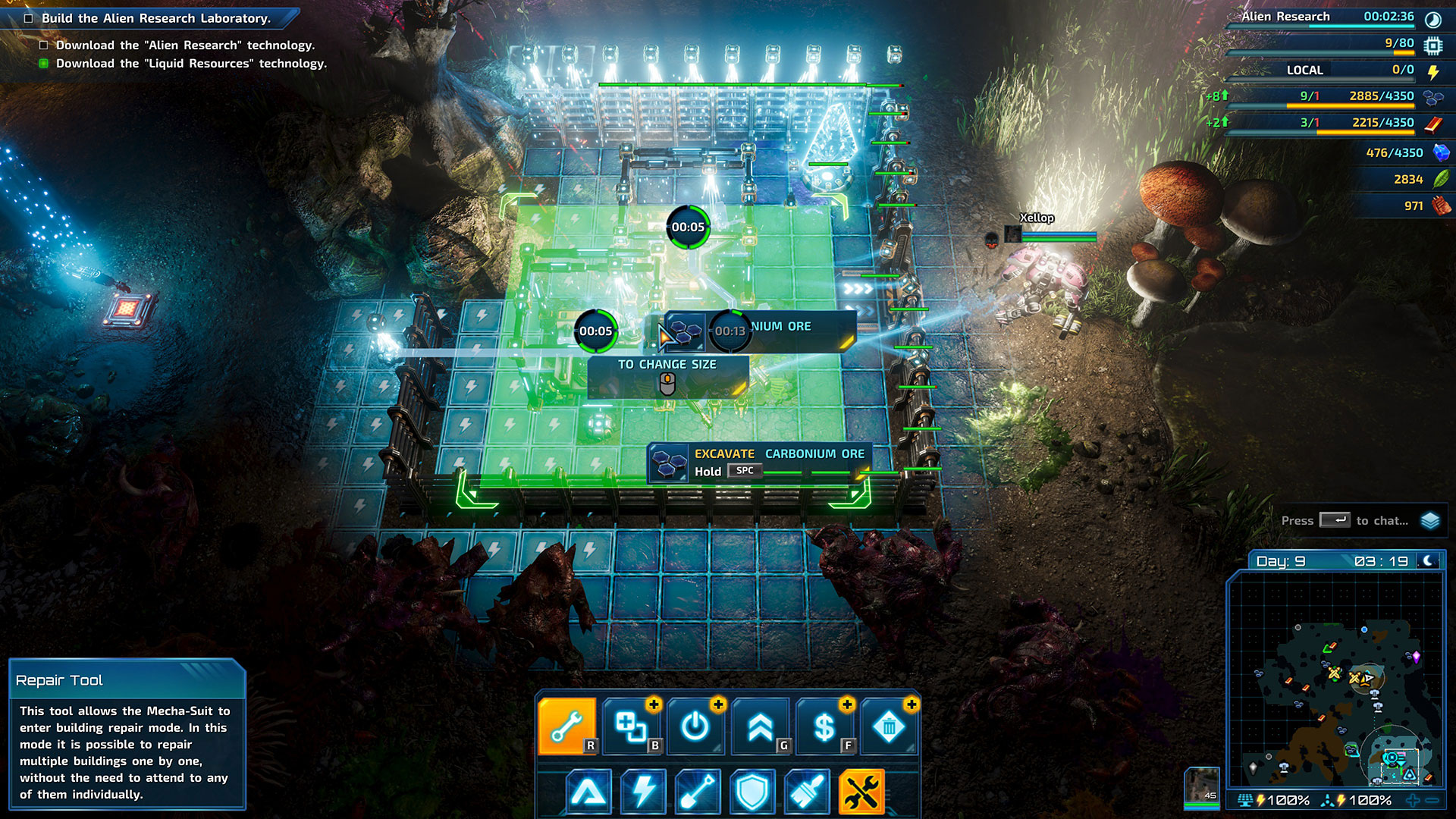
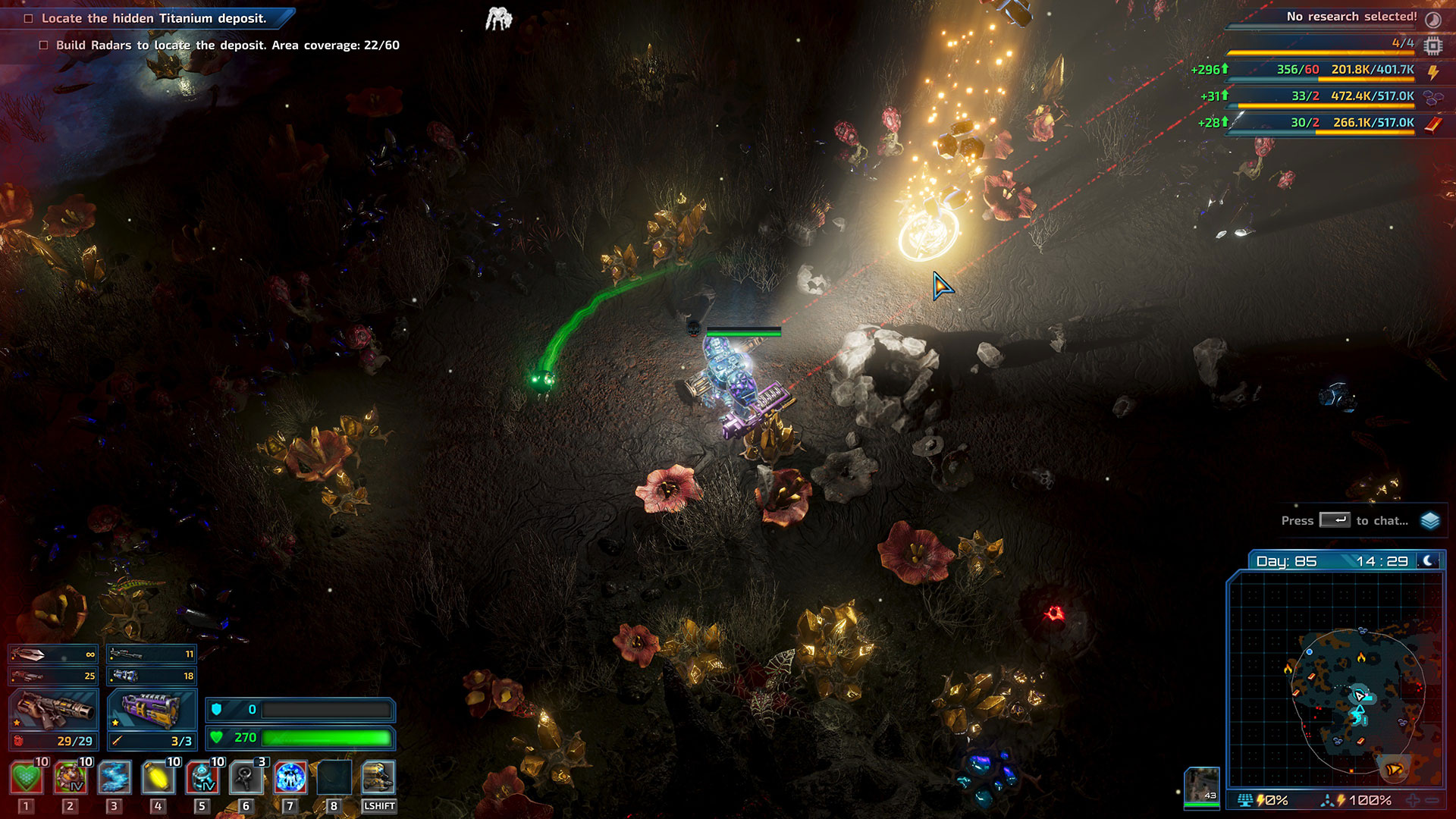
It goes without saying that you can’t enjoy a game unless you really connect with its mechanics. That’s especially true here, because The Riftbreaker can feel a bit overwhelming at times. True to its RTS nature, The Riftbreaker frequently forces players to pay attention to multiple things, including resource management, base defense, and upgrading tech. The core gameplay loop has players setting up miners to gather basic resources, which are then used to build structures and research new technology. There’s also a focus on exploring the map, fighting off wildlife, and collecting equipment to strengthen the mech.
The campaign has players visiting multiple maps and biomes, each with unique obstacles that must be overcome to gather that area’s resources. For example, there’s a desert zone with quicksand that slowly damages buildings unless they’re built on a proper foundation, while another area features intense heat and requires cryo-cooling technology before any structures can be built. Some of these mechanics introduce interesting puzzles to solve, while others can largely be ignored once you set up what you need on that map.
By design, players are meant to hop back and forth across these areas, but we found defenses unnecessary in some of them, as no attacks occur when you aren’t actively on that map. We found ourselves setting up infrastructure as quickly as possible to mine resources, then leaving without building rows of defensive walls and towers. To research certain tech, we revisited some maps to set up more miners, but, for the most part, we only needed sizable defenses on the main map with our Headquarters.
Wall and Order
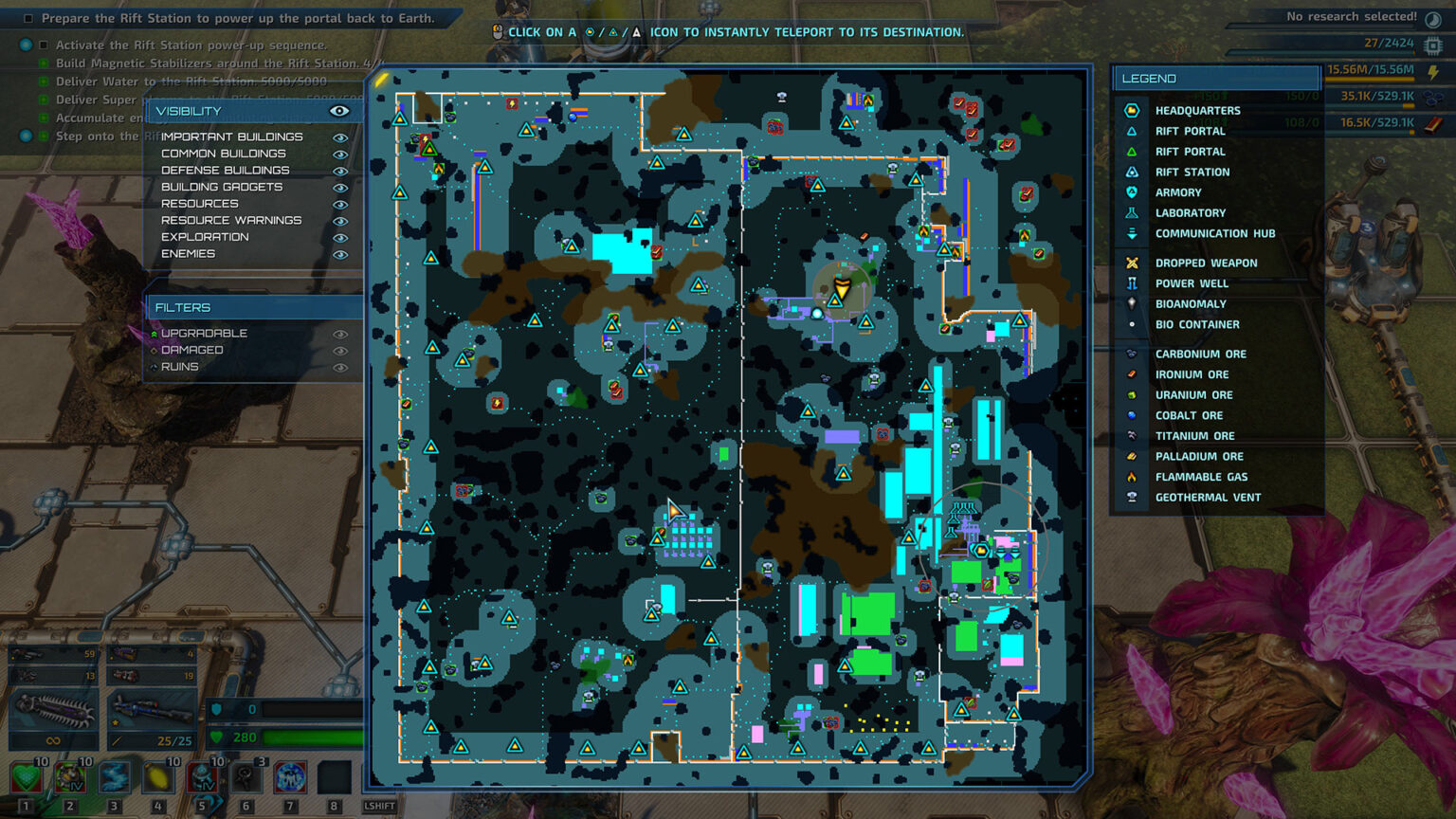
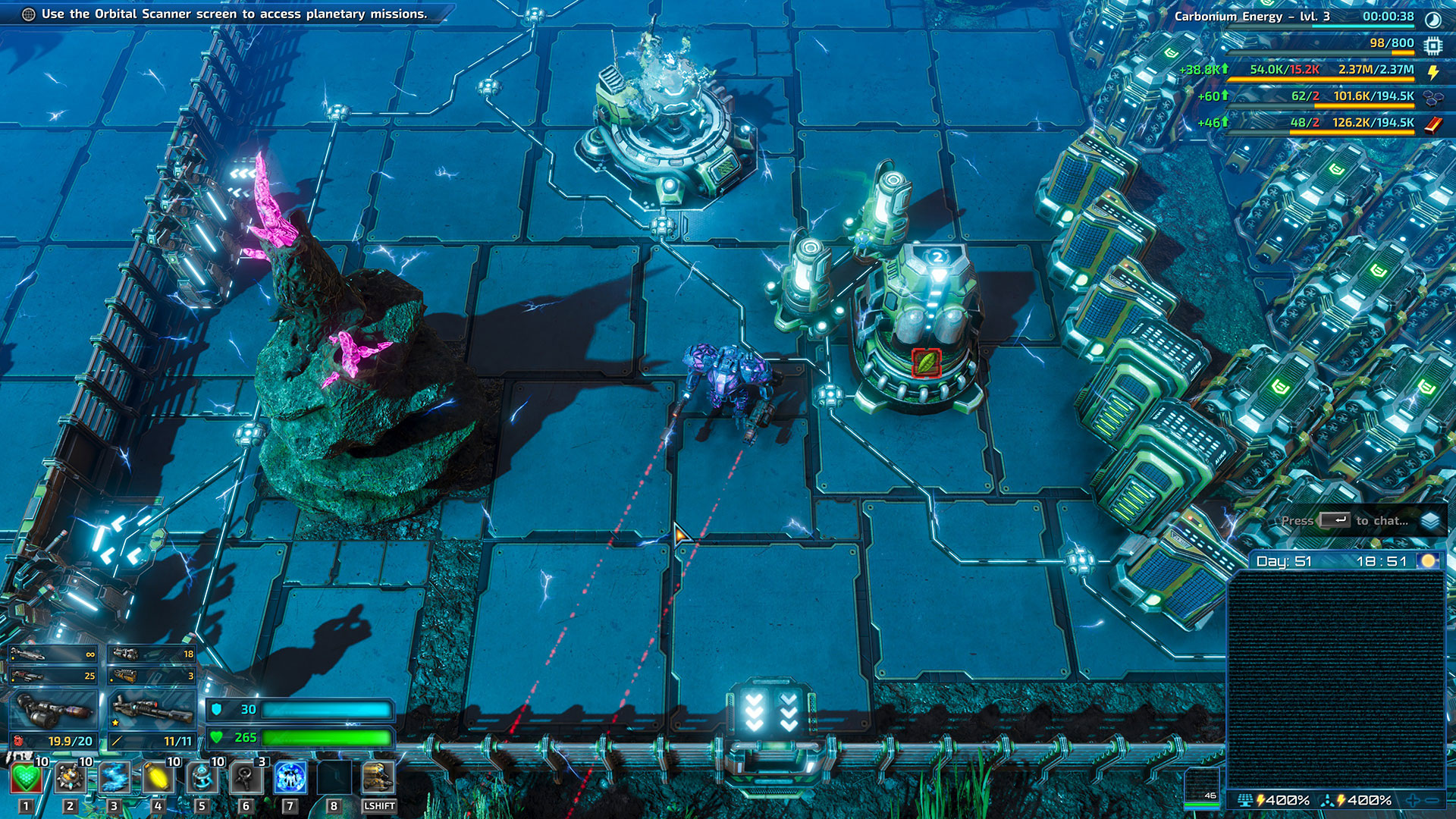
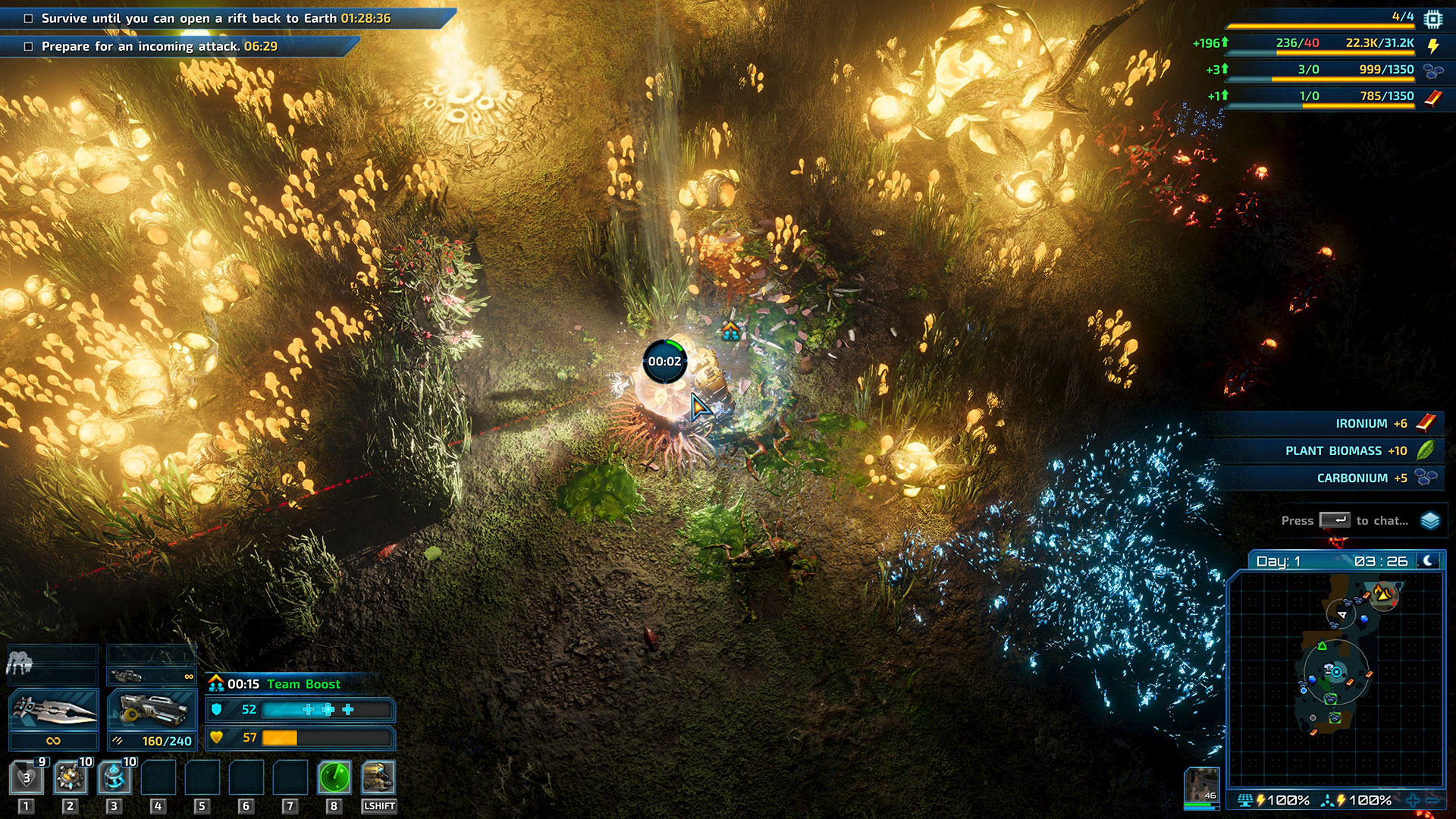
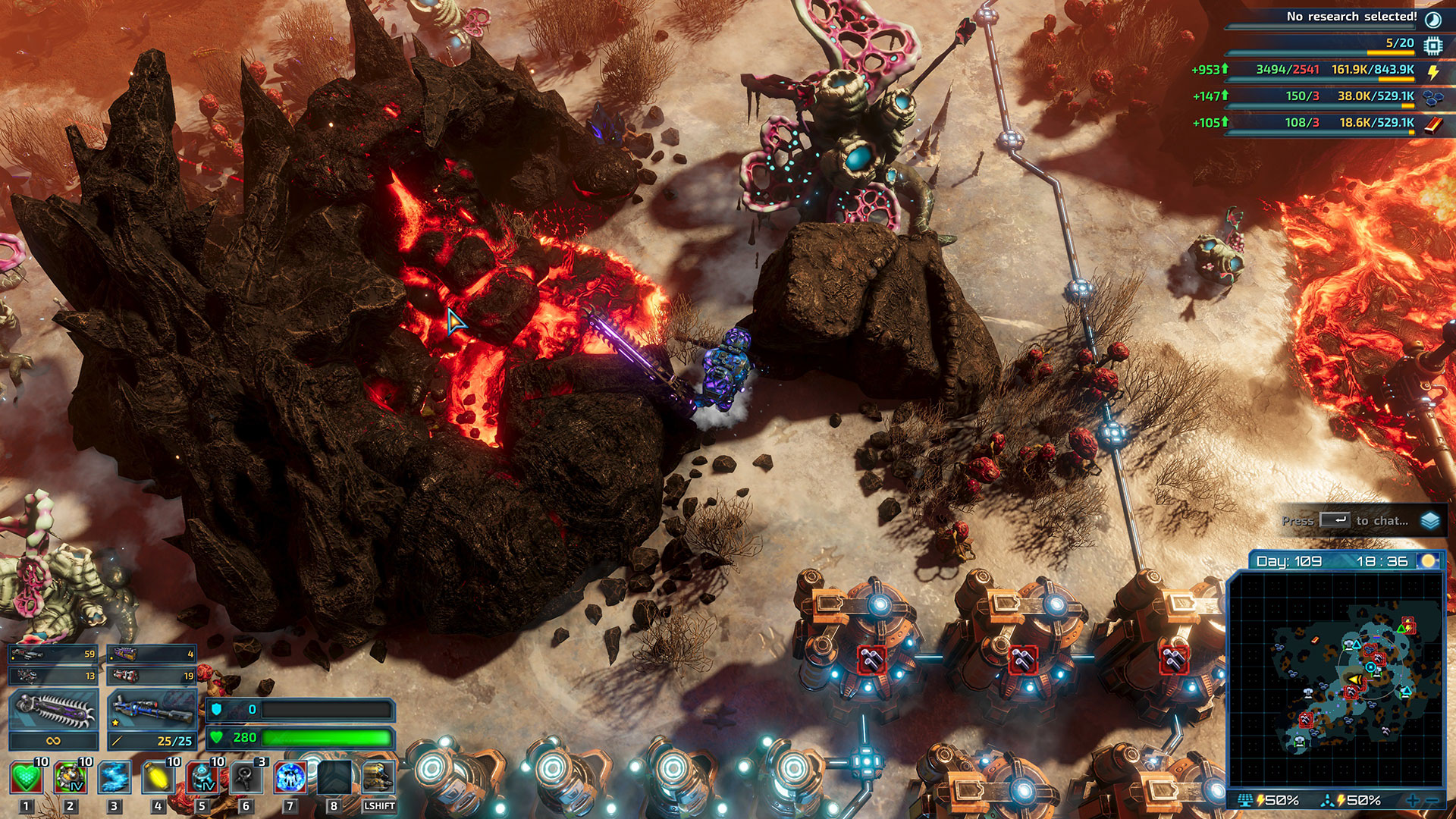
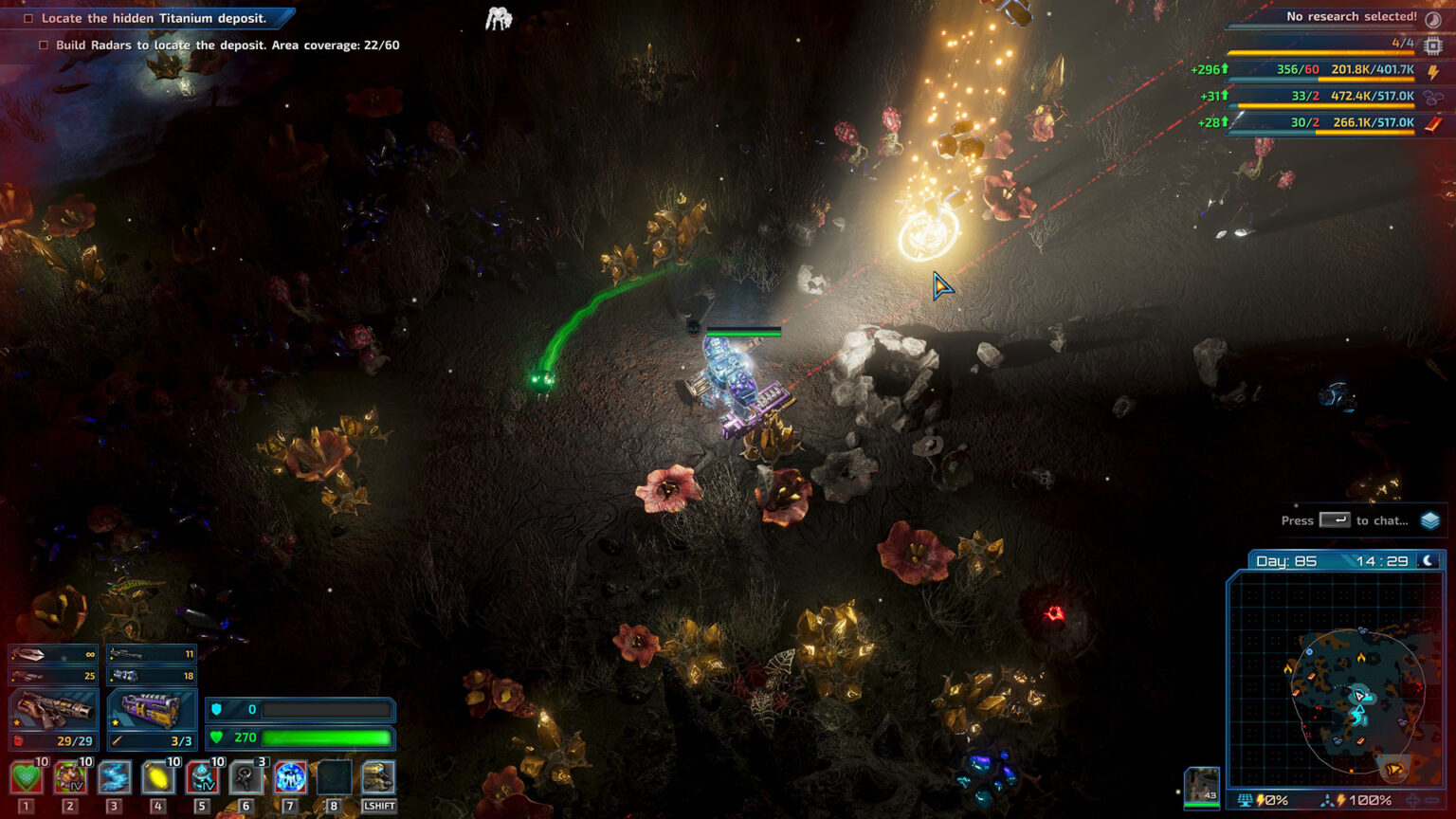
Like most RTS games, The Riftbreaker asks you to manage resources to keep your base running. Power is the most important resource, followed by AI Cores, which are needed to place buildings that use artificial intelligence, such as defensive towers. Managing power can get tedious, but there are plenty of options, from solar and wind to nuclear. Borrowing from the city-sim genre, The Riftbreaker uses power connectors to deliver electricity to buildings, which means power can be cut easily if enemies destroy one of those connectors. You’ll also have to deal with weather events and natural disasters, some of which affect the amount of energy generated, so ample energy storage is important.
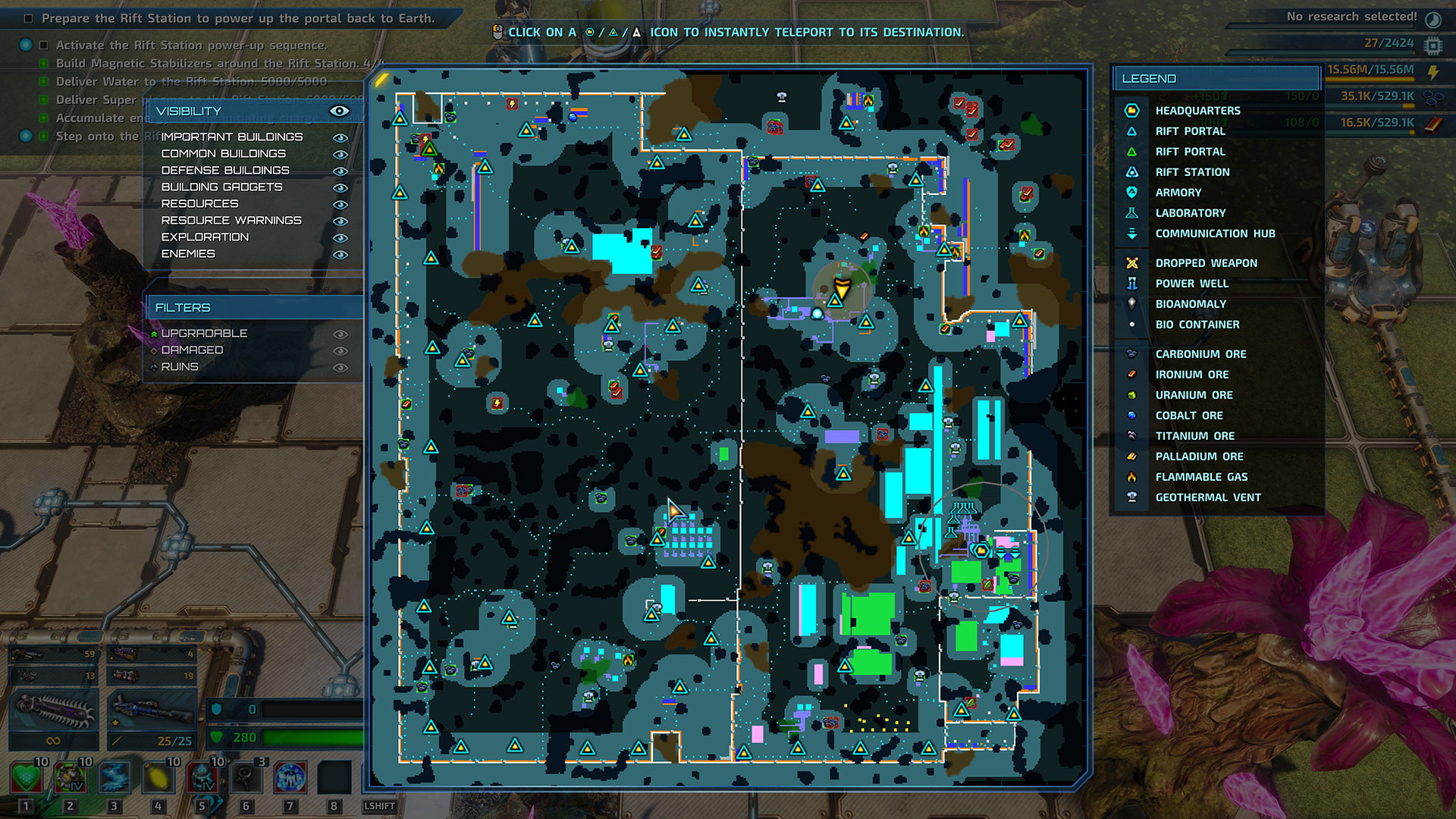
There are plenty of tools to help make things a bit easier to maintain. Obviously, there are walls and defensive towers that can be placed all over the map, but there are also teleporters for instant travel and a structure that automatically deploys drones to repair nearby buildings. Unfortunately, nearly everything relies on power, which means losing a random connector in the middle of the map can be frustrating. It’s even more annoying when you’re trying to pinpoint where power was cut off from the main grid.
All of these mechanics combine to form an addictive gameplay loop, assuming you connect with it. For us, it was pretty much an ideal game, blending everything we enjoy about RTS games and tower defense while adding the ability to outfit our mech with various weapons (you can equip six, with two active at a time) to destroy everything on the map. The Riftbreaker had us splitting our time across different activities, whether that meant uncovering the map, expanding our power grid, setting up our defenses, or gathering the resources we needed to progress.
Gears of Ore
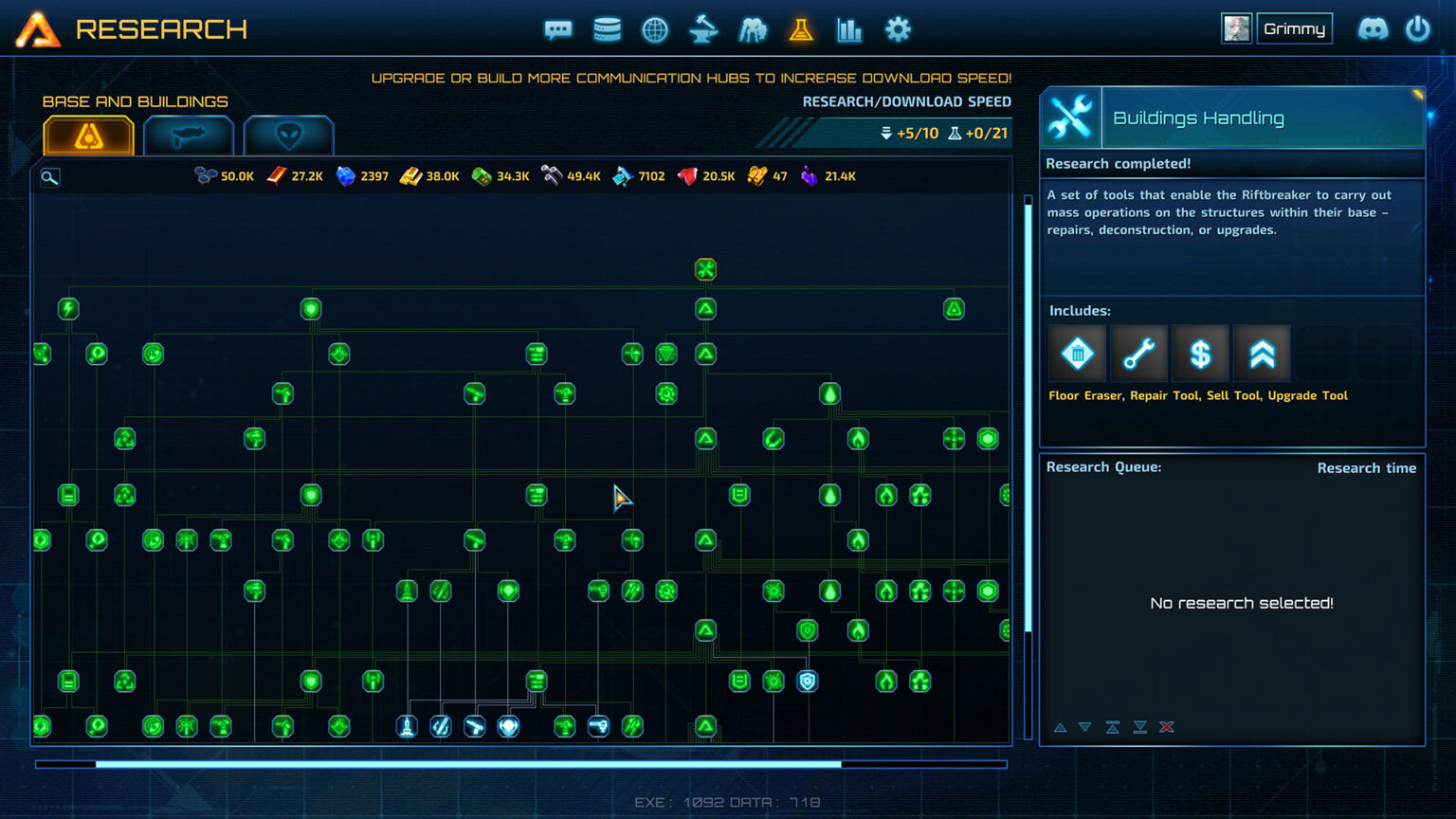
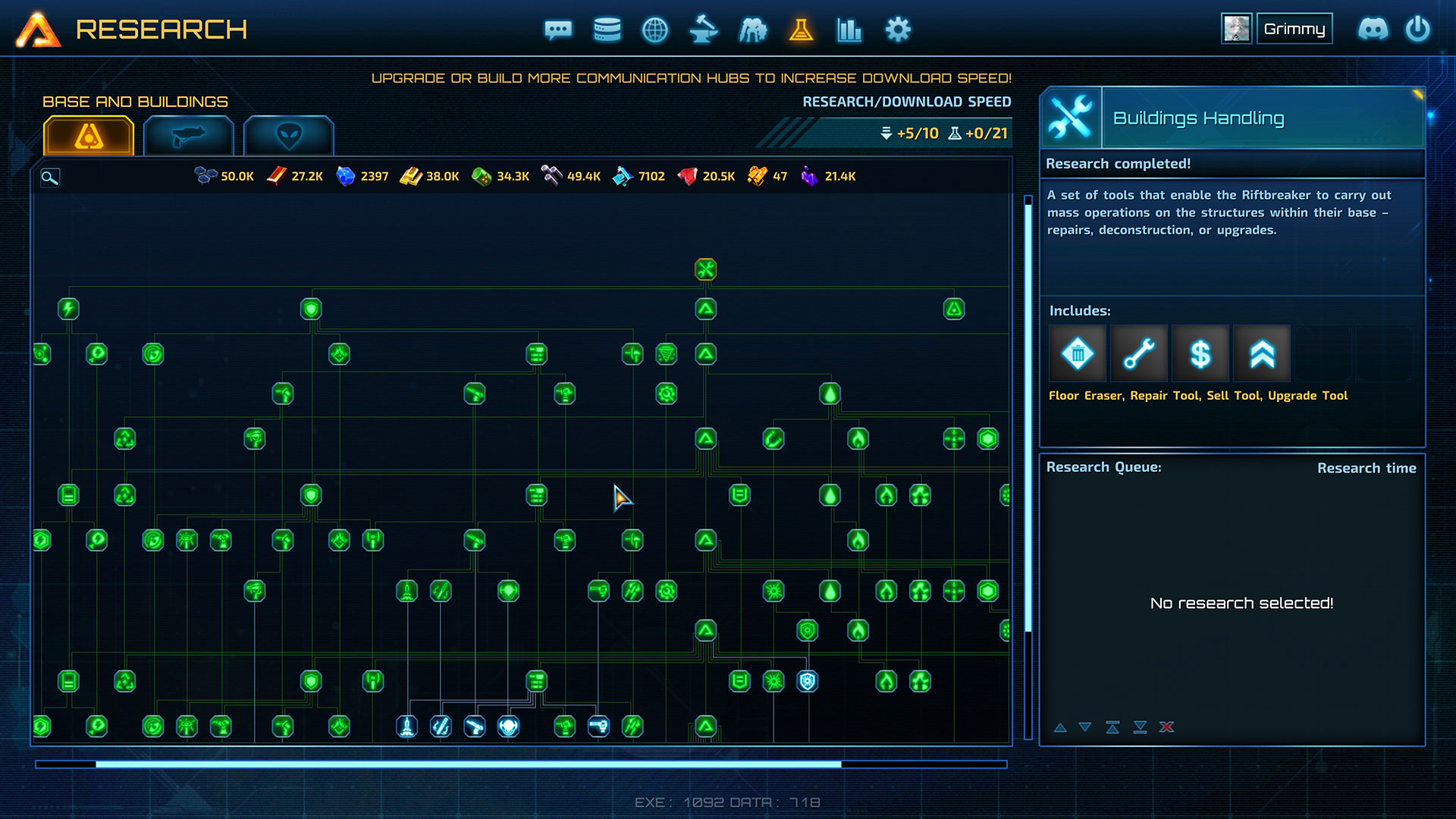
If you’ve played games like Factorio, Satisfactory, or even the recently reviewed Oddsparks: An Automation Adventure, you’ll be familiar with progressing by gathering new resources. The Riftbreaker is no different, starting off with Carbonium and Ironium before progressing to rare minerals like Palladium and Rhodonite. To complete the campaign, you’ll need to travel to various maps and find ways to mine those resources. Some of those resources will also be required for tech upgrades, which are plentiful in the game. If we had to criticize anything about research, it would be the time required. There are ways to speed things up, but much of the game’s playtime is padded by waiting for research to complete.
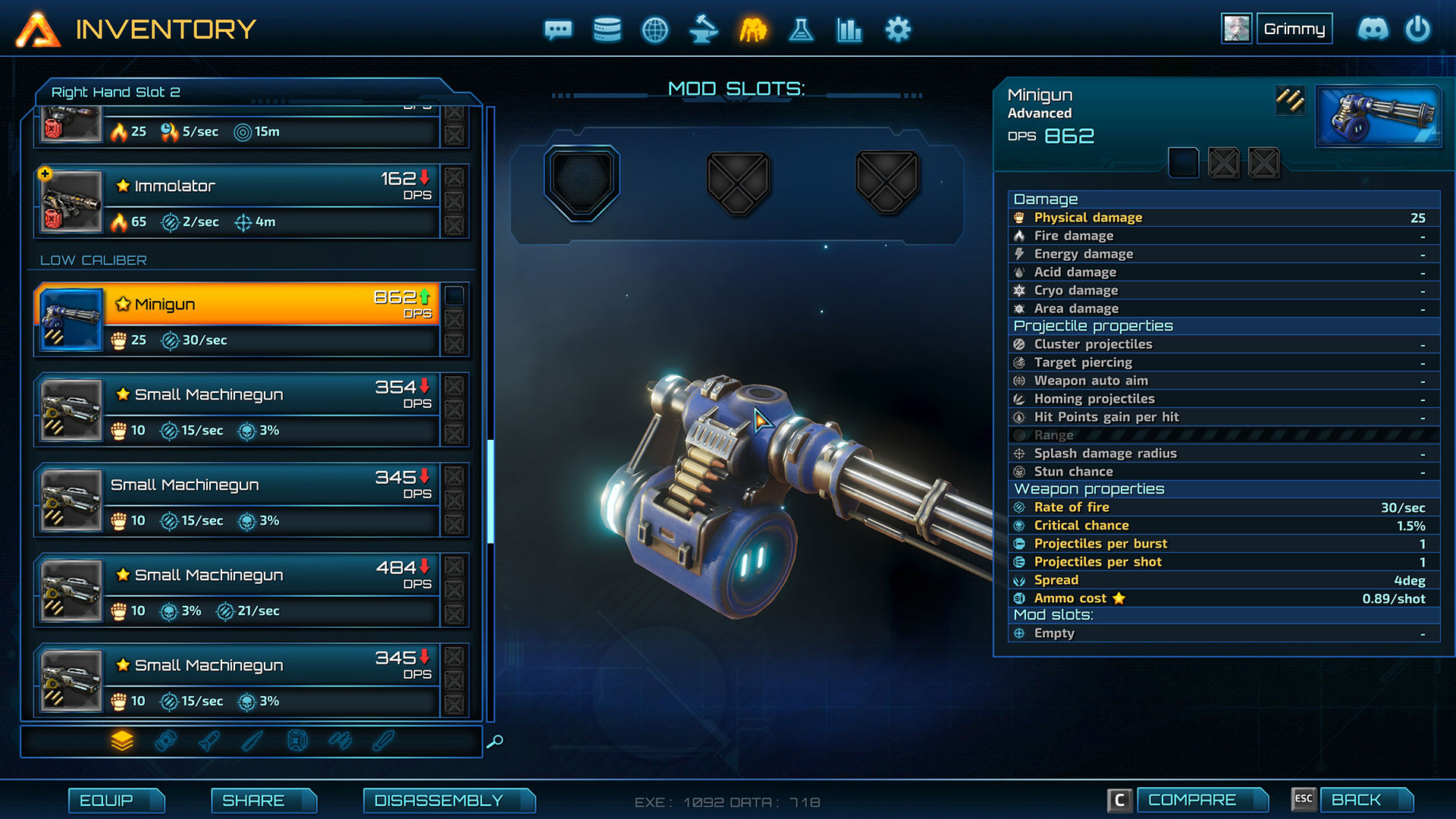
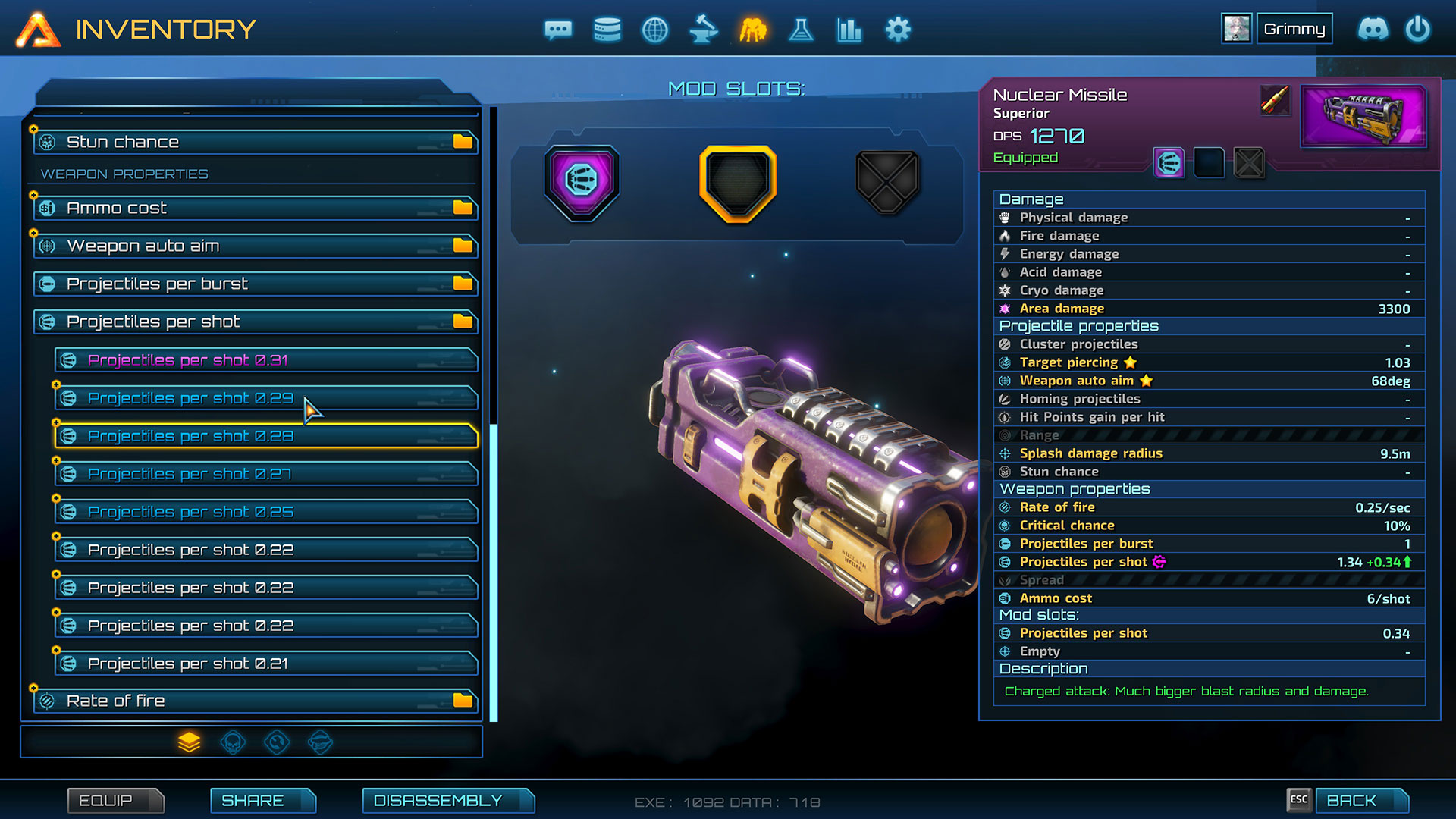
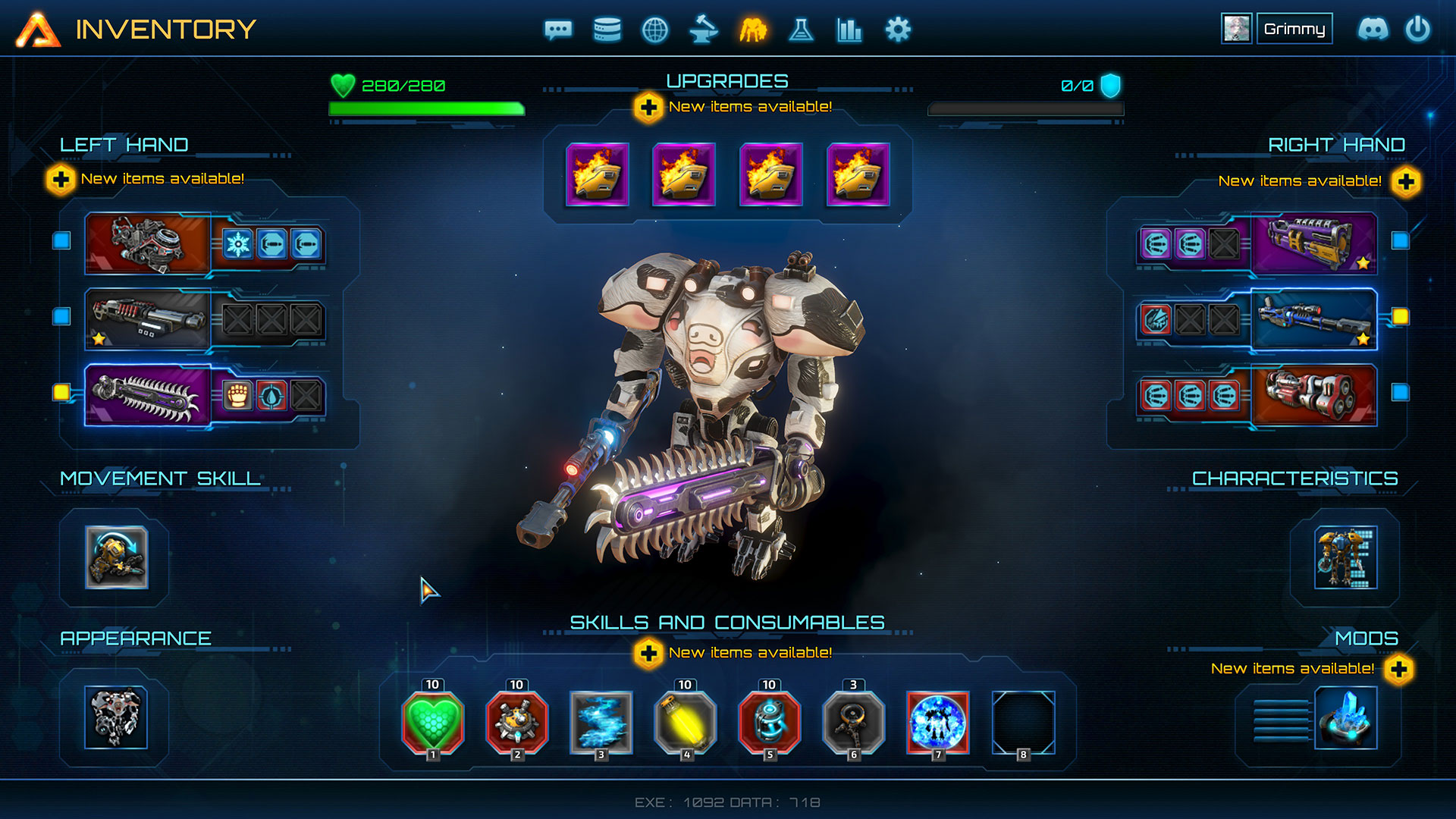
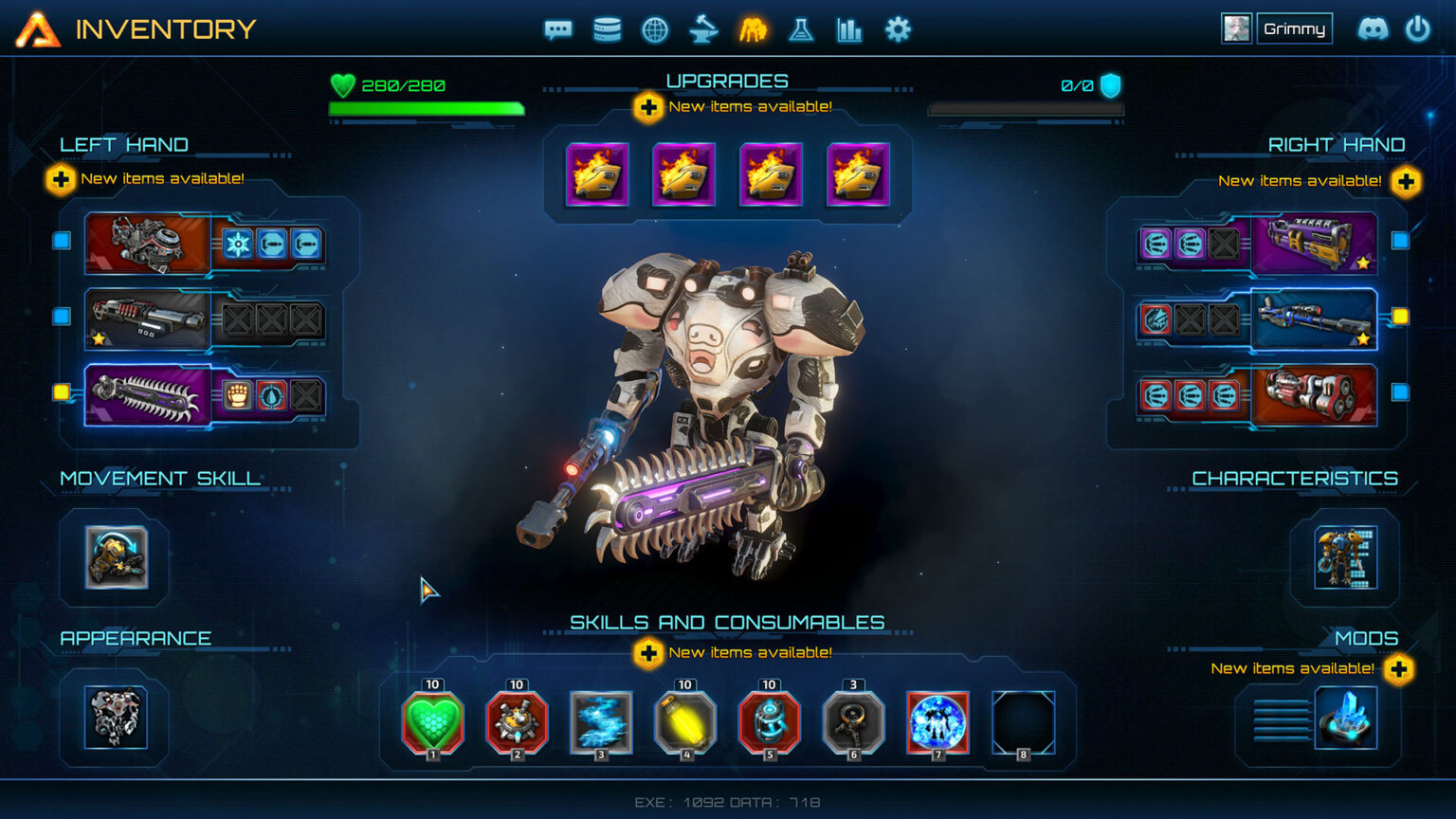
Along with upgrades to your base, structures, and defenses, there’s an arsenal of weapons, items, consumables, skills, and cosmetics that can be equipped to your mech. The weapons include melee options such as a chainsaw or sword, while ranged options are more plentiful. From shotguns to flamethrowers and from grenade launchers to nuclear launchers, there’s a little bit of everything, depending on what you’re up against. Some enemies will resist certain weapon types, which is why having six total slots really comes in handy. The weapons also come in different tiers, and upgraded versions with passives can drop when clearing enemy camps. Of course, you can craft them all, though the more powerful versions with bonuses drop from mobs.
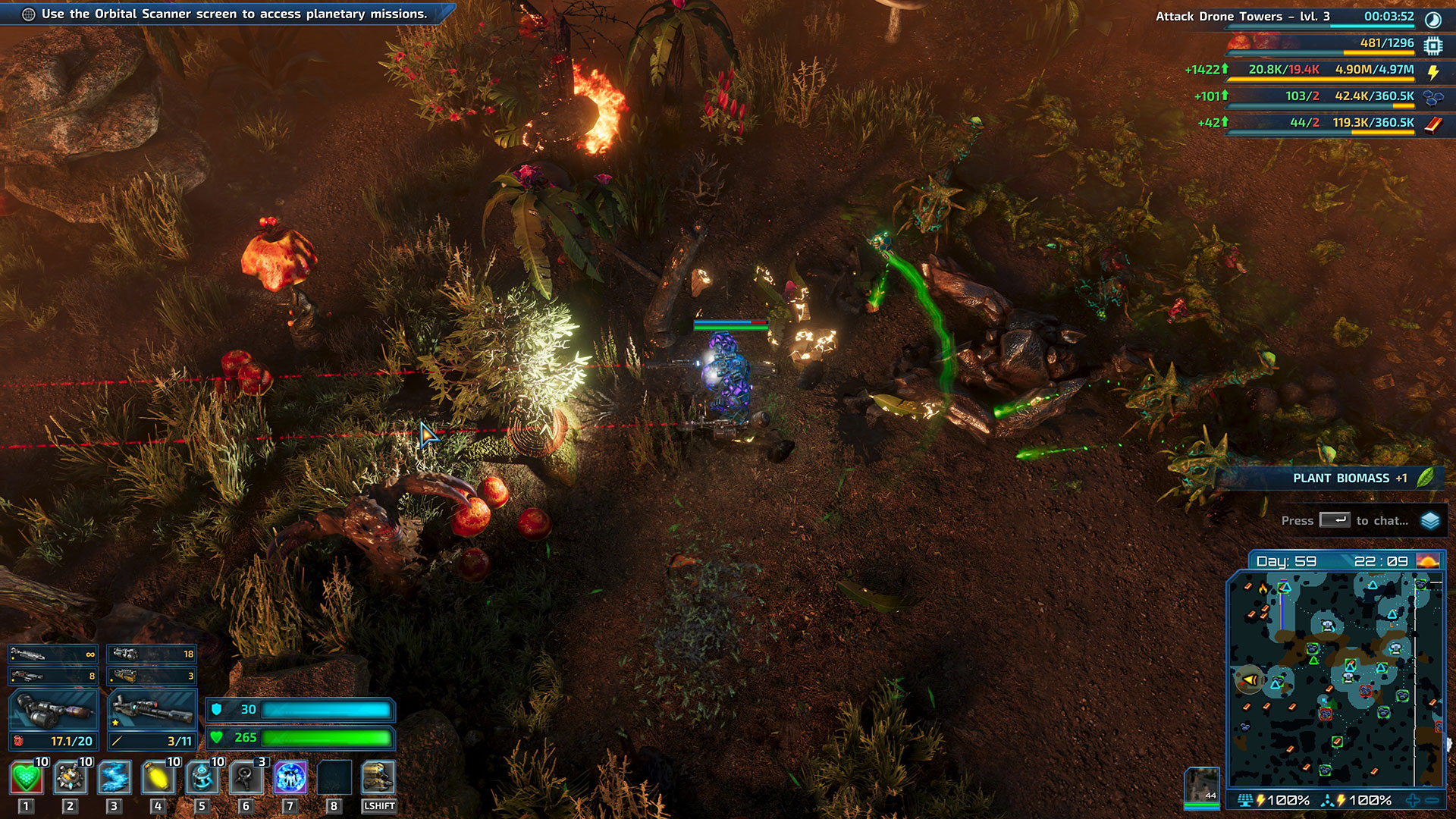
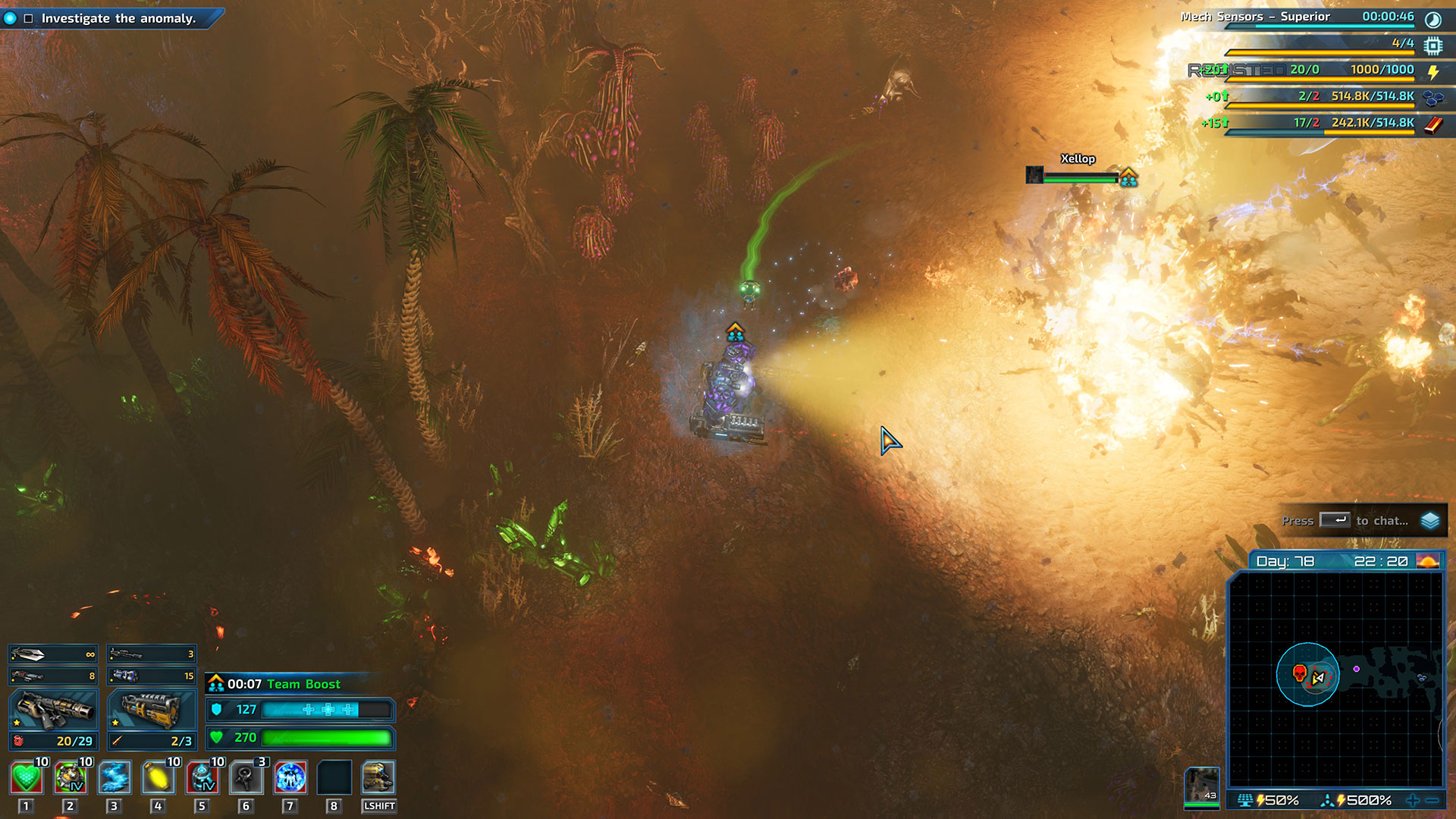
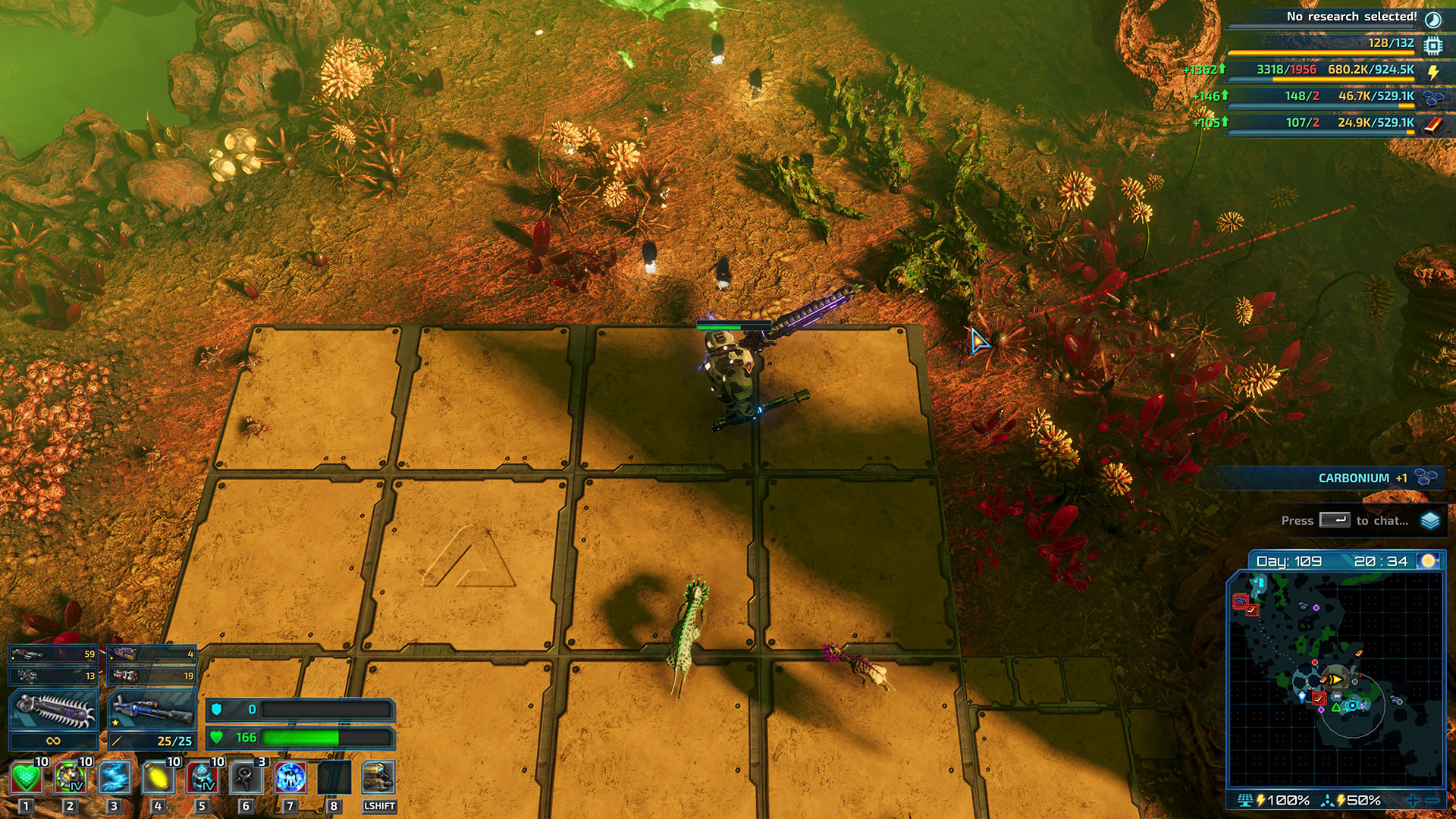
Combat, for the most part, is serviceable but isn’t particularly engaging. It’s similar to a twin-stick shooter or shoot-’em-up, in which you’ll have to carefully dodge incoming projectiles. It’s not quite bullet hell level, or what you get in a game like Vampire Survivors, but you do have to stay active. Sometimes, though, the screen can get pretty hectic, and it’s easy to lose track of everything that’s going on. Dying isn’t too punishing: on your first death, one of your weapons drops at random, but you can always go back to retrieve it. Subsequent deaths within a certain time period will result in the loss of resources. If you’re playing with friends, they’ll be able to teleport to wherever you are at any time and resurrect fallen mechs.
Break Point
As enjoyable as our overall experience was, we do have some grievances to file. For starters, some aspects of the game are poorly explained and can leave you a bit lost. From time to time, we were confused trying to unlock certain tech; even after meeting the tooltip requirements, an unmentioned extra step blocked progress. Some UI elements are hard to see and easy to overlook, such as the left and right arrows for structures and the plus signs on individual buildings when higher tiers are available.
It’s also mildly annoying to deal with completely unavoidable natural disasters, a la SimCity. Unlike a city builder, though, The Riftbreaker doesn’t offer much to help mitigate the damage caused by these disasters. You essentially wait for them to finish and let your repair bots do the work, or you run through the area and spam the repair key. We really do wish the natural disasters were more engaging rather than something we eventually ignored.
Finally, the game can feel a bit repetitive. It took us around 25 hours to complete the campaign, which feels just about right. But much of the core gameplay loop is in place after about five hours, which means you’re mostly repeating the same few tasks, though those tasks offer plenty of variety. If you find that fun, as we did, The Riftbreaker is a blast. Survival mode is also a ton of fun after you complete the campaign, especially given the amount of difficulty customization available. It’s also worth noting that the overall writing isn’t very engaging and the voice acting is average at best. It’s almost enough to make you start ignoring Ashley and Riggs whenever they speak, which isn’t a great idea because sometimes they’re explaining what you have to do.
Suit Yourself
If you’ve spent time with games like Warcraft III and StarCraft II, including many of the custom maps available in either title, you’ll feel right at home with The Riftbreaker. It’s evident the team at EXOR Studios did the same, carefully crafting an experience that blends the best of all worlds from that era. The addition of co-op was nearly everything we had hoped for with the game. It let us split roles, so I could do the things I enjoyed while someone else picked up the things I didn’t. Overall, the 25-hour campaign moves at a decent pace, but we found research timers a bit too long and some UI and UX elements frustrating.
Still, those rough edges weren’t enough to pull us away, although we weren’t overly eager to complete an entire survival run after finishing the campaign. The writing and voice work bring the game down a bit, but you can largely tune them out if they distract you. Overall, The Riftbreaker is a great time, but, more than with other games, you have to enjoy the core gameplay loop, or it can get tedious quickly.
For those who enjoy watching waves of enemies get destroyed by a properly designed wall of defenses, The Riftbreaker delivers that experience quite well. There’s plenty of work to do before you get to that point, though, and in between you’ll be smiling with glee the first time you launch a nuclear missile at a pack of alien critters. As a co-op experience, The Riftbreaker felt genuinely unique to us. It certainly scratched that itch we’ve had for a more interactive tower defense game, cleverly blending RTS elements and just enough combat to stay engaging. We may have had to wait all these years for co-op to be added to The Riftbreaker, but the team really delivered the game we hoped it would be when we first played it in 2021.
The Riftbreaker has an official release date of October 14, 2021, for PlayStation 5, Xbox Series X|S, and PC. This review is based on a purchased retail copy of the game on PC. While FullCleared does have affiliate partnerships, they do not influence our editorial content. We may, however, earn commissions for products purchased via affiliate links.
The Riftbreaker Review Gallery